Electric Wheelchair Concept Designs by Top Car Brands
Author: Ian C. Langtree - View Credentials
Published: 25 Nov 2023 - Updated: 26 Aug 2026
Publication Type: Informative
Table of Contents:
Synopsis - Definition - Overview - FAQs - Insights, Updates - Related Content
Synopsis
This information showcases speculative electric wheelchair designs that merge automotive and technology brand aesthetics with mobility aid functionality, created through AI-generated mockups and professional design work. The piece addresses a gap in wheelchair innovation by visualizing what major car manufacturers like Ferrari, Tesla, BMW, and tech giants such as Apple, Google, and Microsoft might produce if they entered the mobility aid market. These concepts highlight potential future features including lightweight materials, smart sensors, enhanced propulsion systems, improved ergonomics, and personalization options. The article proves useful for wheelchair users, healthcare professionals, and assistive technology developers by sparking conversations about design innovation in mobility devices and challenging the industry's status quo regarding aesthetic and functional improvements that could better serve people with mobility impairments.
At a Glance
- 1 - The collage arranges 48 individual concept designs across eight columns and six rows. Each thumbnail presents a distinct take on modern mobility.
- 2 - The concepts explore three, four, and six-wheel base configurations. They range from rugged off-road frames to luxury chairs with leather upholstery.
- 3 - Patient Handling, an Australian mobility and rehabilitation equipment leader, initiated the project. They asked why car makers release new vehicles yearly but never a new wheelchair concept.
- 4 - The mockups combine output from a third-party AI platform with the input of a professional designer. None of the pictured chairs are real products, and no brands were involved in creating them.
Topic Definition
- Electric Wheelchair Concept Designs
Electric wheelchair concept designs are speculative visualizations that apply the aesthetics, materials, and engineering philosophies of automotive and consumer technology brands to powered mobility aids. Rather than functioning as production-ready products, these concepts serve as a design exercise, imagining how companies known for cars, phones, and software might approach the wheelchair if they entered the market. They typically emphasize forward-looking features such as lightweight materials, smart sensors that monitor posture, advanced propulsion systems, adjustable ergonomic seating, and broad personalization options. At their core, concept designs like these exist to spark discussion, challenge the mobility aid industry's traditionally conservative approach, and encourage manufacturers to give wheelchair users the same level of design attention that luxury vehicles and premium electronics routinely receive.
Overview
Patient Handling, Australia's leaders in patient lifting, mobility, rehabilitation and disability equipment, asked the question, "Why do we get so many new vehicle designs by car makers every year but never a new electric wheelchair concept?" In fact, they raised two questions: why no major manufacturing brands have yet to try this, and how they may look if they did. That's an exciting thought! So, Patient Handling took several major Internet brands and well-known car manufacturers' recent designs and created mock-ups of what electric wheelchairs could look like if they made them.
Future Wheelchair Designs
If wheelchairs were designed by car manufacturers and Internet brands today, we might see some exciting advancements in their design, such as:
Improved Ergonomics
Wheelchairs could be designed with a greater emphasis on user comfort and posture support. Ergonomics might involve adjustable seating positions, customizable cushioning, and ergonomic backrests.
Lightweight Materials
Advancements in materials science could make wheelchairs lighter yet still sturdy and durable. Lighter materials would make them easier to maneuver and transport.
Smart Features
Wheelchairs could incorporate smart technology to enhance the user experience. For example, sensors could monitor the user's posture and provide real-time feedback or adjust seating positions accordingly. Integrated navigation systems could assist with route planning and accessibility information.
Enhanced Mobility
We might see wheelchairs with advanced propulsion systems, such as electric or hybrid options, to provide greater mobility and reduce the physical strain on users. These propulsion systems could be designed so the wheelchair is easily controlled and customizable to suit individual needs.
Accessibility Features
Future wheelchair designs could prioritize accessibility in terms of the built environment and daily activities. Accessibility tweaks might involve adjustable height, stair-climbing capabilities, and improved curb-cut navigation.
Aesthetics and Personalization
Wheelchairs of the future could have a greater emphasis on aesthetics and personalization, allowing users to choose from various colors, patterns, and styles.
View the AI created mockup images of the wheelchairs by various companies:
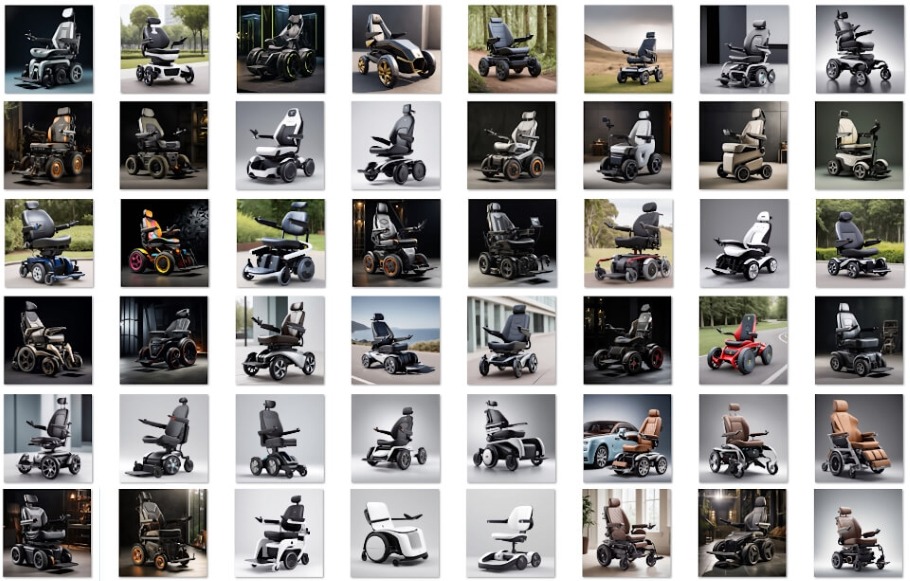
NOTE: These images were created using a 3rd party AI platform, as well as a professional designer. These are speculative ideas only, the actual design of future wheelchairs depends on various factors, including advancements in technology, user feedback, and accessibility considerations. The pictured wheelchairs are not real products nor has anyone worked with any brands to create these concepts.
Frequently Asked Questions
Which car and tech brands are featured in the wheelchair concepts
The concepts draw on styling from 19 brands including Amazon, Apple, Bentley, BMW, Ferrari, Ford, Google, Holden, Kia, Lamborghini, Land Rover, Mercedes, Microsoft, Porsche, Rolls Royce, Subaru, Tesla, Toyota, and Volvo.
Are these electric wheelchair designs available to buy
No, none of the pictured wheelchairs are real products and they cannot be purchased, as they are speculative concepts only.
Who created these wheelchair concept designs
They were produced by the Australian equipment company Patient Handling using a third-party AI platform together with the work of a professional designer.
What settings are shown in the concept images
The backdrops vary from professional studios and modern showrooms to outdoor environments such as forests and coastal roads to emphasize versatility of use.
Why has the wheelchair industry seen slower design innovation than cars
The article suggests the mobility aid sector has taken a more conservative approach, and the concepts act as a critique meant to encourage faster real-world improvement.
What accessibility features do the future designs imagine
Imagined features include adjustable height, stair-climbing capability, and improved curb-cut navigation to better handle the built environment and daily activities.
What materials could make future wheelchairs lighter
Advancements in materials science could produce frames that are lighter yet remain sturdy and durable, making the chairs easier to maneuver and transport.
Who might benefit from viewing these concept designs
Wheelchair users, healthcare professionals, and assistive technology developers can use the concepts to spark conversations about design innovation in mobility devices.
Insights, Analysis, and Developments
Editorial Note: While these wheelchair concepts remain firmly in the realm of speculation rather than production, they raise important questions about why the mobility aid industry hasn't seen the same pace of innovation as automotive and consumer technology sectors. The mockups serve as both creative exercise and critique, suggesting that wheelchair users deserve the same design attention, material quality, and feature-rich experiences that luxury car buyers and smartphone users routinely receive. If nothing else, these visualizations may push established wheelchair manufacturers to reconsider their conservative approach to design and functionality, potentially accelerating genuine improvements in real-world mobility devices that millions of people depend on daily.
 Author Credentials: Ian C. Langtree is a writer, editor, and the founder and Editor-in-Chief of Disabled World, which he established in 2004 as one of the longest-running independent resources for disability news and information. Over more than two decades, he has written and edited thousands of articles on disability rights, health, accessibility, and assistive technology. Drawing on a global perspective shaped by extensive travel and lived experience, Ian is a committed advocate of the Social Model of Disability, the framework developed by disabled activists in the 1970s that focuses on removing societal barriers rather than on individual impairments. His writing is grounded in that framework and in a lasting commitment to disability rights, accessibility, and social inclusion. To learn more about Ian's background, expertise, and accomplishments, visit his full biography.