Acesight Electronic Glasses for Visually Impaired
Author: Acesight
Published: 4 Jan 2019 - Updated: 29 Feb 2024
Publication Type: Announcement / Notification
Table of Contents:
Synopsis - Overview - Related Content
Synopsis
Acesight electronic glasses use technology that assists people with severe low vision to regain visual independence.
Overview
Massachusetts-based Zoomax (USA) Inc. recently announced the introduction of Acesight, brand new wearable electronic glasses that deliver true visual independence for people worldwide who have severe vision loss.
Working together with UCLA and MIT, Acesight created a combination of artificial vision technology using special sensors, microprocessors and algorithms, to provide visual independence for people living with severe low vision. In fact, according to the World Health Organization (WHO), an estimated 1.3 billion people around the world live with some form of vision impairment, and approximately 80% of all vision impairment globally is considered avoidable.
How Acesight Works
Acesight electronic glasses employ Augmented Reality (AR) technology and features two full HD displays that float in front of each eye. A tracking auto focus camera between the eyes captures everything the user looks at and presents everything in magnified form up to 15x normal size. A hand-held controller allows the user to adjust magnification, colors and contrast.
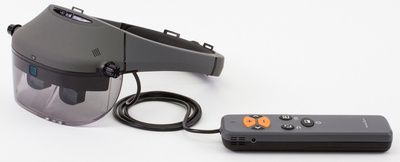
Acesight's unique algorithms enable users to see more than just magnified text. They can view shapes and objects with outlines, and view text in high contrast with a choice of foreground and background colors.

"Bionic Sight"
Illinois-resident Hayley Pelletier is 18-years old and has a variety of vision issues, including Bilateral Optic Nerve Hypoplasia (ONH), Esotropia, and Nystagmus. Hayley says of her experience with Acesight;
"I could see so many things that I couldn't see before. I watched TV from a normal distance for the first time. When I looked at my grandfather and other people around me, I was able to see facial details from far away that I could not even see up close before. Normally all I can see - even close up - is a nose or a mouth. With Acesight, it feels like I have bionic sight."
"At Zoomax, we solve vision problems through creative technology," says Vincent Lee, Chairman of Zoomax Technology Co., Limited, "Working together with UCLA and MIT, we developed a set of special sensors, micro-processors and algorithms, to form a combination of artificial vision technology to solve the problems associated with visual impairment. With Acesight, people with visual impairment can watch TV, work with the computer, see faces, and read books."

Who Can Benefit From Using Acesight?
Acesight is ideally suited to individuals with a visual acuity range from 20/100 to 20/800, and who may have eye conditions such as macular degeneration, glaucoma, and diabetic retinopathy.
Normal every day activities such as watching television, viewing faces and objects, reading/writing, playing cards, or walking around in comfort are examples of things that become difficult when severe vision loss occurs. Acesight helps people regain their visual independence so that they can continue enjoying the things they used to do.
Attribution/Source(s): This quality-reviewed publication was selected for publishing by the editors of Disabled World (DW) due to its relevance to the disability community. Originally issued as a press release by Acesight and published on 4 Jan 2019. Last updated on 29 Feb 2024. This content may have been edited for style, clarity, or brevity.