Muglin Eco-Retreat Advances Inclusive Tourism in Nepal
Author: Sarita Lamichhane - Chairperson, Prayatna Nepal
Published: 17 Apr 2026 - Updated: 22 Aug 2026
Publication Type: Submitted Article
Table of Contents:
Synopsis - Definition - Overview - FAQs - Insights, Updates - Related Content
Synopsis
This article reports on a two-day eco-retreat held in Muglin, Nepal, that brought together more than 100 participants to reshape how persons with disabilities take part in the country's tourism sector. Hosted at Motel Du Muglin and organized by Wandering Trail Adventure, Art and Soul Foundation Nepal, Project Uddeshya, Escapade Nepal, Seeing Hands Nepal, and JCI International Ichchhakamana Chapter, the gathering featured accessible rafting, swimming, and wellness activities led by professionals with disabilities themselves. Readers with disabilities, seniors, caregivers, travel planners, and tourism operators will find practical value in its coverage of accessible destination design, professional roles for blind therapists such as those from Seeing Hands Nepal, and first-hand accounts from participants including Arjun Bohara, Chiranjivi Poudel, Rikesh Koirala, and organizer Jiwan KC. The piece also outlines the economic, social, and systemic benefits of inclusive travel in Nepal, making it a useful reference for anyone interested in accessible tourism, community development, or disability advocacy in South Asia.*
At a Glance
- 1 - Muglin has been known since the 1970s mainly as a highway town famous for dal-bhat stops. The retreat aimed to recast it as a destination rather than a transit point.
- 2 - Seeing Hands Nepal, founded in 2010, employs blind massage therapists. Its team offered massage to a community group beside a river for the first time in its history.
- 3 - Chiranjivi Poudel, founder of Seeing Hands Nepal, was named World Blind Idol 2025. He called for people with disabilities to be seen as professionals and partners rather than beneficiaries.
- 4 - Organizers noted the misconception that visually impaired people are limited to roles such as street singers or begging. Participants described the retreat as a chance to show valuable skills in tourism and recreation.
Topic Definition
- Inclusive Tourism
Inclusive tourism is an approach to travel and hospitality that designs destinations, services, activities, and employment opportunities so that people of all abilities - including persons with physical, sensory, cognitive, and age-related disabilities - can participate fully as travelers, workers, and decision-makers. Rather than adding accommodations onto an existing system, inclusive tourism reshapes the system itself through universal design principles, accessible infrastructure, staff training, and the active involvement of disability-led organizations. It recognizes persons with disabilities not only as guests to be served but as professionals, guides, entrepreneurs, and cultural contributors whose participation strengthens the economic, social, and environmental value of the tourism sector for local communities and visitors alike.
Overview
In a groundbreaking initiative, the two-day eco-retreat held in a eco resort in Muglin has set a new precedent for inclusive tourism, providing a dynamic platform for person with disabilities to actively engage in Nepal's tourism sector. This event, which brought together over 100 participants, has redefined Muglin's (a small but a major highway town known for dal-bhat since 1970s) role, not as a mere transit point, but as a vibrant, inclusive destination within Nepal's tourism landscape.
The eco-retreat focused on fostering an environment where persons with disabilities could connect meaningfully with others, promoting inclusivity and challenging societal stereotypes about disability. The initiative successfully showcased how tourism professionals, community leaders, and organizations can re-imagine travel experiences to be accessible for all individuals, regardless of ability.
A Vision for Inclusivity in Tourism
The core objective of the retreat was clear: to create an inclusive environment where persons with disabilities could actively participate and contribute to the tourism experience. The event underscored that persons with disabilities are not just recipients of tourism services, but vital contributors to the industry. This philosophy echoed through personal stories and presentations that highlighted the potential of persons with disabilities in the tourism sector.
Suraj Silwal, one of the event organizers, emphasized the importance of rebranding Nepal as a destination that values culture, nature, and accessibility. said Silwal. He also urged Disability Coordination Committees to step up as advocates for inclusive tourism, promoting the idea that persons with disabilities can be active participants in the tourism sector.
Empowering Persons with Disabilities
The retreat also featured powerful testimonials from disability rights activists, including Arjun Bohara, who shared his vision for an inclusive tourism industry:
"We, too, are travelers. Our active participation is key to making sure that all people, regardless of ability, can experience the beauty and culture our country has to offer."
Similarly, Chiranjivi Poudel, Founder and CEO of Seeing Hands Nepal, and World Blind Idol 2025, called for a shift in how society views persons with disabilities in the tourism industry. "It's time we recognize them as professionals and partners, not just beneficiaries," Poudel stated.
Chiran, an internationally renowned and his team of Seeing Hands Blind massage Clinc were limited to providing professional massage which was limited to foreign guest within the 4 walled rooms of thamel, provided massage to people in community next to a river for the first time in his professional life which spanned since their founding in 2010
Breaking Stereotypes and Building Awareness
One of the significant successes of the retreat was its ability to challenge and dismantle the harmful stereotypes that often limit the roles of person with disabilities. Rikesh Koirala, an organizer and participant, noted the common misconception of visually impaired individuals being limited to roles like "street singers" or "beggars."
"This retreat has given us the chance to show that we have valuable skills and can contribute meaningfully to the tourism and recreation industries," Koirala said.
Participants also shared how the event helped them break personal biases and expand their perspectives. One visually impaired participant noted:
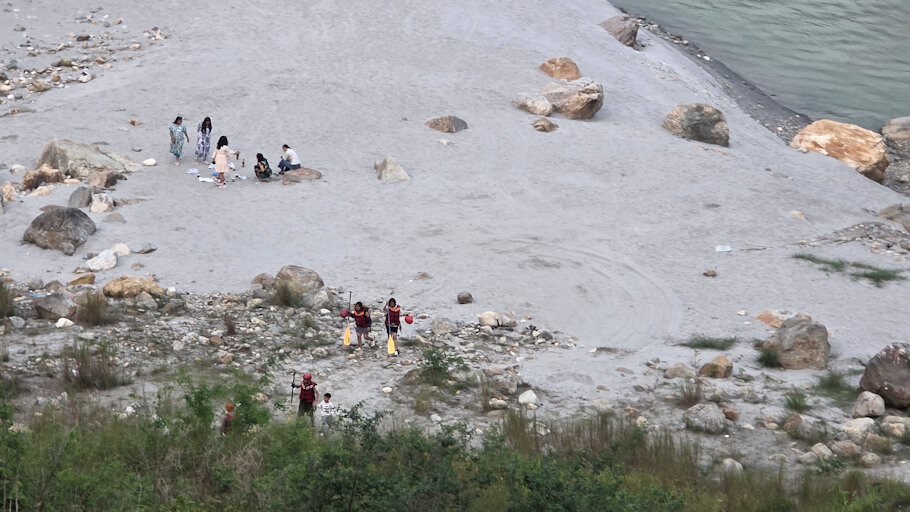
"I've always associated the Trishuli River with tragedy, but after rafting, I now see it as a place of adventure and joy." Another shared, "This is my first time interacting with someone who is visually impaired, and I've realized how much strength and resilience they have."
A Living Model for Inclusive Tourism
The retreat, hosted at Motel Du Muglin, featured over 100 attendees, including visually impaired therapists, activists, tourism professionals, and creatives. Activities such as wellness services, rafting, and swimming were specifically designed to be accessible for all, offering a blend of adventure and wellness facilitated by experts with disabilities.
Organized by organizations such as Wandering Trail Adventure, Art & Soul Foundation Nepal, Project Uddeshya, Escapade Nepal, Seeing Hands Nepal and JCI International Ichchhakamana Chapter, the event demonstrated how inclusive tourism is not just about integration, but about re-imagining the entire system to ensure accessibility, equality, and representation.
A Movement, Not Just a Trend
Jiwan KC, an organizer of the retreat, summed up the core philosophy of the event:
"Inclusive tourism isn't about simply adding people with disabilities to the existing system. It's about redesigning the system so everyone feels they belong."
This initiative signifies not only the importance of including persons with disabilities in tourism, but also the need to overhaul the entire system to ensure that everyone has equal access to opportunities in the sector.
The Far-Reaching Impact of Inclusive Tourism
The eco-retreat also highlighted the broader impact of inclusive tourism, proving that it is more than a moral imperative—it is an opportunity for substantial economic, social, and systemic change. Some of the benefits of inclusive tourism include:
- Economic Impact: Expanding the tourism market by attracting a diverse group of travelers and creating employment opportunities for persons with disabilities.
- Social Impact: Promoting dignity, respect, and understanding while challenging harmful stereotypes about person with disabilities.
- Systemic Change: Encouraging the adoption of universal design principles and accessibility standards across the tourism industry.
- Local Development: Strengthening community-based tourism initiatives and promoting sustainable, inclusive practices that benefit both travelers and local communities.
A Future of Inclusive Tourism in Nepal
This eco-retreat marks a crucial step in positioning Nepal as a global leader in inclusive, accessible, and socially responsible tourism. By re-imagining Muglin as a destination that celebrates diversity and inclusion, the retreat has set a powerful example of how tourism can foster deeper connections, elevate dignity, and drive systemic change.
For more information, please contact: projectuddeshya@gmail.com
Frequently Asked Questions
NOTE: Researched FAQs by Disabled World (DW)
Where is Muglin located in Nepal
Muglin is a highway town in central Nepal at a junction on the route between Kathmandu, Pokhara, and Chitwan, long known as a stop for dal-bhat meals along the Trishuli River.
What is accessible rafting
Accessible rafting adapts equipment, guiding, and safety support so people with disabilities, including visually impaired participants, can join white water or calm water river trips.
What is universal design in tourism
Universal design in tourism means planning places and services so they work for the widest range of people from the start, reducing the need for separate special arrangements.
How does inclusive tourism help local economies
It widens the traveler market, creates jobs for people with disabilities, and supports community based businesses, spreading tourism income more broadly across an area.
What is Seeing Hands Nepal
Seeing Hands Nepal is an organization that trains and employs blind and visually impaired people as professional massage therapists, offering skilled work and services to clients.
How can travelers with disabilities plan a trip to Nepal
They can contact disability led tour operators, ask providers about accessibility in advance, arrange guides or assistance, and confirm transport and lodging suit their needs.
What is community based tourism
Community based tourism is travel organized with and for local residents so that decisions and income stay within the community and benefit its development.
How can tourism operators make services more accessible
Operators can train staff, adapt activities and facilities, share clear accessibility information, and involve disability led groups when designing experiences.
Insights, Analysis, and Developments
Editorial Note: What unfolded in Muglin is more than a single event worth reporting - it is a quiet rebuke to the idea that accessibility is an afterthought in Nepal's tourism economy. When a highway town long known only for its dal-bhat stops becomes the setting for blind therapists guiding wellness sessions beside the Trishuli, and when visually impaired rafters reframe a river once tied to tragedy as a place of joy, the conversation shifts from charity to partnership. The organizers behind this retreat are not asking the industry to make room at the margins; they are asking it to redesign the room itself, and that is the standard by which future inclusive tourism efforts in Nepal and the wider region will be measured.*
* Editorial additions by Ian C. Langtree.