Gerontechnology: How Innovation Supports Aging Adults
Author: Ian C. Langtree - Writer/Editor for Disabled World (DW)
Published: 27 Jan 2026 - Updated: 12 Sep 2026
Publication Type: Scholarly Paper
Table of Contents:
Synopsis - Definition - Overview - FAQs - Insights, Updates - Related Content
Synopsis
We stand at a remarkable crossroads in human history where two powerful forces - rapid technological advancement and unprecedented population aging - converge to create both extraordinary challenges and transformative opportunities. Across the globe, people are living longer than ever before, yet too often our environments, products, and services remain designed for younger, non-disabled users. Enter gerontechnology: an interdisciplinary field that refuses to accept aging and disability as barriers to full participation in life. Rather than viewing older adults and people with disabilities as passive recipients of care, gerontechnology recognizes them as active agents whose diverse needs and preferences should drive innovation. From smart homes that enable independence to AI systems that detect health changes before they become crises, from voice-activated assistants that combat isolation to robotics that restore mobility - these technologies aren't simply making life easier. They're fundamentally reimagining what's possible as we age, reshaping the relationship between human limitation and technological capability, and building a future where growing older doesn't mean growing disconnected, dependent, or diminished.
At a Glance
- 1 - The term gerontechnology was coined by Dutch researchers in the late 1980s. It arose when aging demographics and rapid technology were not addressing each other purposefully.
- 2 - The field is organized into five primary domains spanning health, housing, mobility, communication, and leisure. This structure reflects how aging touches every dimension of human experience.
- 3 - The curb cut, first designed for wheelchair users, now helps parents with strollers and travelers with luggage. This inclusive design pattern lets features made for older adults improve life for everyone.
- 4 - The United Nations projects that one in six people worldwide will be over 65 by 2050, up from one in eleven in 2019. This demographic shift is driving urgent demand for technologies that support independent aging.
Topic Definition
- Gerontechnology
Gerontechnology is an interdisciplinary field combining gerontology - the scientific study of aging and older adults - with technology design and engineering to create innovations specifically addressing the needs, preferences, and challenges of aging populations. Emerging in the late 1980s when researchers recognized that demographic aging and technological advancement needed purposeful integration, gerontechnology takes a proactive, human-centered approach to developing solutions that help older adults maintain independence, health, and quality of life while preventing, delaying, or compensating for age-related changes in physical, cognitive, and social functioning. Unlike adaptive technologies created as afterthoughts, gerontechnology places aging experiences at the center of the innovation process from initial concept through final implementation. The field encompasses five primary domains - health and self-esteem, housing and daily living, mobility and transport, communication and governance, and work and leisure - recognizing that aging affects every dimension of human experience. Importantly, gerontechnology serves not only older adults developing age-related changes but also people who have lived with disabilities throughout life and now face the intersection of aging processes with existing conditions, making it relevant across diverse populations and ability spectrums throughout the entire adult lifespan.
Overview
Understanding Gerontechnology
Gerontechnology represents a fascinating convergence of two distinct fields: gerontology, the study of aging and older adults, and technology. This interdisciplinary domain focuses specifically on designing, developing, and implementing technological solutions that address the needs, preferences, and challenges faced by aging populations. The term itself emerged in the late 1980s when Dutch researchers recognized that rapidly advancing technology and increasingly aging demographics weren't having meaningful conversations with each other (Graafmans, Taipale, & Charness, 1998). Rather than simply adapting existing technologies for older users as an afterthought, gerontechnology takes a proactive approach by placing the aging experience at the center of innovation from the very beginning.
What makes gerontechnology particularly compelling is its dual mission. On one hand, it seeks to help older adults maintain independence, health, and quality of life as they age. On the other, it aims to prevent, delay, or compensate for age-related declines in functioning. This isn't about creating gadgets that make elderly people feel "less old" - it's about thoughtful innovation that recognizes aging as a natural life process deserving of dignified, effective support (Bouma, Fozard, Bouwhuis, & Taipale, 2007).
Gerontechnology: Innovation Transforming Aging & Disability
The Scope and Domains of Gerontechnology
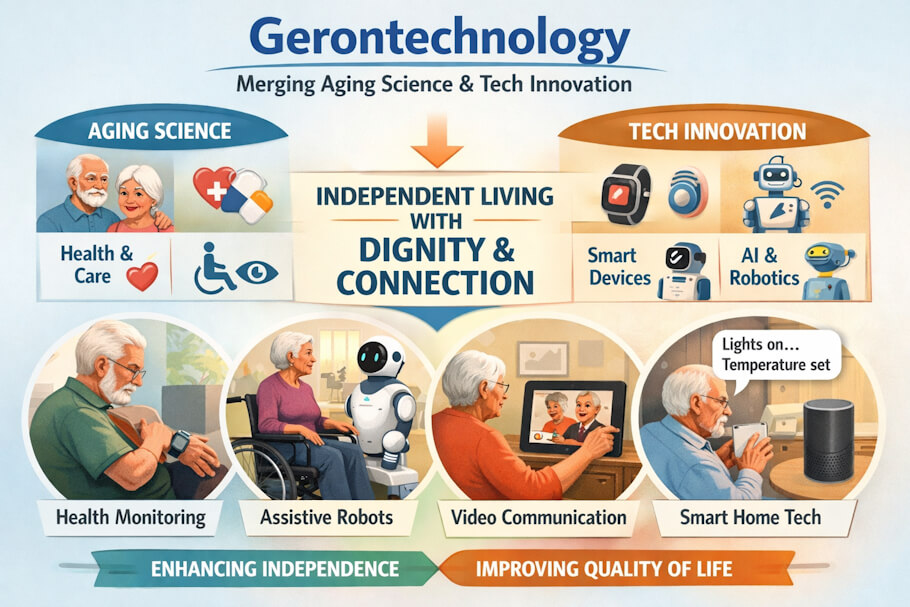
Gerontechnology isn't a single technology or even a category of devices. Instead, it encompasses a remarkably broad spectrum of innovations that touch virtually every aspect of daily living. Researchers typically organize gerontechnology into five primary domains: health and self-esteem, housing and daily living, mobility and transport, communication and governance, and work and leisure (Fozard, Rietsema, Bouma, & Graafmans, 2000).
In the health domain, we see everything from medication management systems that send reminders and track adherence to sophisticated telemedicine platforms enabling remote consultations with specialists. Wearable devices that monitor heart rate, detect falls, or track sleep patterns have become increasingly common. Some systems even use artificial intelligence to identify patterns that might indicate emerging health concerns before they become serious problems.
Housing and daily living technologies range from simple solutions like automatic lighting that responds to motion, reducing fall risks during nighttime bathroom trips, to complex smart home systems that can adjust temperature, remind residents about tasks, and even detect unusual patterns that might signal a problem. Robotic vacuum cleaners, voice-activated assistants, and adaptive kitchen equipment all fall within this category.
Mobility technologies include everything from advanced wheelchairs and walkers with built-in navigation systems to autonomous vehicles designed with older adults in mind. Even smartphone apps that help people navigate public transportation or find accessible routes through urban environments represent important gerontechnology innovations.
The Intersection of Aging and Disability
One of the most important aspects of gerontechnology often overlooked in popular discussions is its profound relevance to disability communities. The relationship between aging and disability operates in multiple directions, creating overlapping populations with shared needs but also distinct experiences (Putnam, 2002).
First, many older adults develop disabilities as they age. Vision and hearing impairments become more common. Mobility limitations emerge. Cognitive changes occur. The World Health Organization estimates that between 43% and 46% of people over 60 have disabilities (World Health Organization, 2011). For these individuals, gerontechnology isn't a luxury - it's often the difference between living independently or requiring institutional care.
Second, people who have lived with disabilities throughout their lives are now aging in unprecedented numbers. Thanks to medical advances and improved social support, individuals with conditions like cerebral palsy, spinal cord injuries, Down syndrome, and autism spectrum disorders are living much longer than previous generations. These "aging with disability" populations face unique challenges as they navigate both the typical aging process and the progression of their existing conditions (Jokisch, Schönstein, Grüneberg, & Seiffert, 2020).
Third, the aging process itself can be understood through a disability studies lens. As people age, they often experience temporary or permanent impairments that create disabling barriers when environments, products, and services aren't designed inclusively. Gerontechnology that embraces universal design principles benefits everyone across the lifespan and ability spectrum.
Impact on the General Population
While gerontechnology specifically targets aging-related needs, its influence extends far beyond older adults themselves. The general population benefits from gerontechnology innovations in numerous ways, often without even realizing the origin of these technologies.
Consider the humble curb cut - those sloped transitions between sidewalks and streets. Though originally designed for wheelchair users, they benefit parents pushing strollers, delivery workers pulling carts, travelers with rolling suitcases, and countless others. Similarly, many gerontechnology innovations follow this pattern of "inclusive design" where features intended for older adults end up improving experiences for everyone.
Voice-activated assistants like Amazon's Alexa or Apple's Siri were particularly valuable for older adults with limited mobility or vision impairments, but they've become ubiquitous household items used by people of all ages. Large, readable fonts on smartphones - a feature older users desperately needed - turned out to be easier on everyone's eyes. Automatic doors, adjustable-height kitchen counters, and lever-style door handles rather than knobs all emerged from accessibility thinking but now represent standard features in modern construction.
The general population also benefits from gerontechnology research that advances our understanding of human-technology interaction across the lifespan. When researchers study how older adults learn to use new interfaces, they uncover principles that make technology more intuitive for novice users of any age (Czaja, Boot, Charness, Rogers, & Sharit, 2018).
Furthermore, as global populations age - the United Nations projects that by 2050, one in six people worldwide will be over 65, up from one in eleven in 2019 - gerontechnology innovations help society manage the economic and social implications of demographic shifts. Technologies that enable older adults to remain productive, engaged, and independent reduce strain on healthcare systems, support multi-generational families, and preserve valuable knowledge and experience within communities.
Transforming Lives for Seniors
For older adults themselves, gerontechnology represents nothing short of a revolution in possibilities for aging well. The impact operates on multiple levels, from practical daily assistance to profound effects on autonomy, dignity, and social connection.
At the most fundamental level, gerontechnology addresses physical safety and health management. Personal emergency response systems - often worn as pendants or wristbands - allow older adults living alone to summon help if they fall or experience a medical emergency. Modern versions include automatic fall detection, GPS location tracking, and two-way communication. These devices provide peace of mind for both older adults and their family members, often making the difference between someone feeling confident enough to stay in their own home versus moving to assisted living prematurely.
Medication management technologies range from simple pill organizers with alarms to sophisticated systems that dispense medications at scheduled times, confirm when doses are taken, and alert caregivers if medications are missed. For older adults managing multiple prescriptions - which is common given that the average American senior takes four or more medications regularly - these systems reduce dangerous errors and hospitalizations (Maher, Hanlon, & Hajjar, 2014).
Remote health monitoring has perhaps seen the most dramatic advances. Devices now continuously track vital signs, blood glucose levels, and other health indicators, transmitting data to healthcare providers who can intervene before acute episodes occur. During the COVID-19 pandemic, telehealth technologies allowed older adults at high risk from the virus to continue receiving medical care without exposure risks. Many of these virtual care models have persisted because they also eliminate transportation barriers and reduce the physical demands of clinic visits for people with mobility limitations.
Cognitive support technologies help older adults experiencing mild cognitive impairment or early-stage dementia maintain independence longer. Digital calendars provide reminders about appointments and medications. GPS-enabled watches help prevent wandering and assist people who become disoriented. Voice-activated assistants answer questions, play familiar music, and provide companionship. Some experimental systems use virtual reality to provide cognitive stimulation or help people with dementia recall memories through immersive experiences.
Perhaps equally important are technologies addressing social isolation and loneliness, which pose serious health risks comparable to smoking or obesity (Holt-Lunstad, Smith, Baker, Harris, & Stephenson, 2015). Video calling platforms help older adults stay connected with geographically distant family and friends. Social networking sites designed specifically for seniors provide opportunities for connection without the overwhelming complexity of mainstream platforms. Online learning platforms offer intellectual stimulation and community around shared interests. Multiplayer video games - yes, video games - create intergenerational connection points where grandparents and grandchildren interact in shared virtual spaces.
Transportation technologies are transforming mobility for seniors who can no longer drive safely. Ride-sharing apps with simplified interfaces connect older adults with transportation on demand. Some communities now deploy autonomous shuttles specifically serving senior centers and medical facilities. Even traditional public transit has improved through real-time tracking apps and improved accessibility features informed by gerontechnology research.
Empowering People with Disabilities
The intersection of gerontechnology and disability represents one of the most promising areas for technological innovation to genuinely improve quality of life. People with disabilities - both those aging with longstanding disabilities and those developing disabilities later in life - face compounded challenges that thoughtfully designed technology can help address.
For individuals with mobility impairments, gerontechnology innovations have expanded possibilities for navigation and environmental control. Advanced power wheelchairs now incorporate sophisticated navigation systems, obstacle detection, and even computer vision capabilities that help users identify objects and read signs. Smart home technologies allow people to control lighting, temperature, door locks, and appliances through voice commands, smartphone apps, or even eye-tracking systems when other motor functions are limited. Robotic assistance devices can help with tasks like retrieving dropped items, opening doors, or manipulating objects that would otherwise be inaccessible.
Sensory disabilities benefit tremendously from technological advancement. For older adults experiencing vision loss, screen readers, voice-activated systems, and artificial intelligence-powered description tools make digital content accessible. Smart glasses can enhance remaining vision or provide audio descriptions of visual environments. For people with hearing impairments, captioning technology has become remarkably accurate, real-time translation apps bridge communication gaps, and advanced hearing aids now connect directly to smartphones and other devices while filtering background noise more effectively than ever before.
Cognitive disabilities and neurodegenerative conditions present unique challenges where gerontechnology shows particular promise. For people with dementia, GPS tracking provides safety while respecting autonomy as long as possible. Automated prompting systems can guide people through daily routines like grooming or meal preparation. Simplified interfaces reduce confusion when using everyday technology. Some experimental systems use "reminiscence therapy" through digital photo albums that automatically organize pictures chronologically or by theme, helping trigger memories and providing conversation starters.
People with intellectual and developmental disabilities who are aging benefit from technologies that support continued community participation and independence. Visual schedules displayed on tablets help with time management and transitions. Apps designed with simplified navigation support communication and social interaction. Employment technologies provide job coaching and task support, helping people remain in integrated work settings.
One particularly exciting development is the emergence of "aging in place" technologies specifically designed for people with disabilities. Historically, as people with disabilities aged and their needs became more complex, they often faced forced moves from community settings into nursing facilities. Today's smart home systems, remote monitoring technologies, and telehealth platforms make it increasingly feasible for people to receive necessary support while remaining in their chosen homes and communities (Ienca, Wangmo, Jotterand, Kressig, & Elger, 2018).
The disability rights principle of "nothing about us without us" has increasingly influenced gerontechnology development. More companies now involve people with disabilities directly in the design process, moving beyond token consultation to genuine co-design partnerships. This participatory approach yields technologies that actually meet real needs rather than addressing what non-disabled designers assume people need.
Challenges and Considerations
Despite its tremendous promise, gerontechnology faces several significant challenges that must be addressed to realize its full potential. Understanding these obstacles is essential for developing solutions that genuinely serve aging populations and people with disabilities.
The digital divide represents perhaps the most fundamental challenge. While younger generations grew up with digital technology, many older adults face barriers to adoption. These include cost - many older adults live on fixed incomes and cannot afford expensive devices or monthly service fees. Complexity also poses problems; technologies designed by young engineers for young users often include unnecessary features and confusing interfaces. Training and support resources frequently assume baseline digital literacy that many older adults lack. Language barriers compound these issues for immigrant populations and non-English speakers (Choi & DiNitto, 2013).
Privacy and security concerns carry particular weight for older populations, who are disproportionately targeted by scams and fraud. Health monitoring devices collect intimate data about bodies and behaviors. Smart home systems track daily patterns. Location tracking devices know exactly where someone is at all times. While these technologies offer benefits, they also create risks if data is breached or misused. Older adults and people with disabilities must be able to make informed decisions about what data they're willing to share and with whom, but privacy policies are often incomprehensible and meaningful consent is difficult to obtain (Zwijsen, Niemeijer, & Hertogh, 2011).
Autonomy and dignity issues arise when well-intentioned technologies inadvertently infantilize or over-monitor users. A GPS tracking device might provide safety, but it can also feel like surveillance that strips away privacy and independence. Automated reminders might help with medication adherence, but constant prompting can feel condescending. Finding the balance between support and autonomy requires ongoing dialogue with users about their preferences, which vary widely based on individual values, cultural backgrounds, and specific circumstances.
Equity concerns extend beyond individual affordability to systemic issues. Medicare and Medicaid coverage for assistive technologies remains limited and often arbitrary. Private insurance follows suit. This means that life-changing technologies often remain accessible only to more affluent individuals, exacerbating existing health disparities. Rural populations face additional barriers given limited internet infrastructure and access to training and support services (Keating & McCann, 2018).
The rapid pace of technological change creates ongoing challenges. People invest time learning to use a device, only to have it become obsolete or unsupported within a few years. Older adults who already feel technologically overwhelmed may simply give up rather than repeatedly learning new systems. Disabilities that affect learning or adaptation make this cycling through technologies even more burdensome.
Ethical questions about human connection and care arise as technology increasingly mediates relationships. A robot that provides companionship might reduce loneliness, but does it substitute for human contact in problematic ways? Video calls enable connection, but do they replace the richness of in-person interaction too readily? These aren't simple questions with clear answers, and different people will answer them differently based on their circumstances and values (Sharkey & Sharkey, 2012).
Future Directions and Emerging Technologies
The gerontechnology field continues evolving rapidly, with emerging technologies promising even more profound impacts on aging and disability experiences. Understanding these trends helps us anticipate both opportunities and challenges ahead.
Artificial intelligence and machine learning are becoming increasingly sophisticated at predicting health changes, personalizing interfaces, and providing intelligent assistance. AI systems can now analyze patterns in daily activities to detect subtle changes that might indicate emerging health problems - changes that might be invisible to human observers until they become serious. Natural language processing enables more conversational interactions with voice assistants, reducing the learning curve for older adults. Computer vision allows systems to "see" environments and provide assistance with tasks like identifying objects, reading labels, or navigating spaces (Rashidi & Mihailidis, 2013).
Robotics technology is advancing beyond simple automated vacuum cleaners to sophisticated assistance robots that can help with physical tasks, provide companionship, and even assist with care activities. Japan, facing acute population aging, has invested heavily in robotic technologies including "care robots" that help with lifting and transferring people, "communication robots" designed to reduce loneliness, and even robotic pets that provide therapeutic benefits without the care responsibilities of living animals. While cultural acceptance varies, these technologies are gradually expanding globally.
Virtual and augmented reality applications show promise for cognitive therapy, physical rehabilitation, social connection, and recreation. VR can provide immersive experiences for older adults with limited mobility - virtual travel to far-off places, attendance at concerts or sporting events, or revisiting meaningful locations from their past. For people with dementia, VR-based reminiscence therapy shows encouraging results in mood improvement and social engagement. AR applications can overlay helpful information onto real-world environments, assisting with tasks like cooking or navigation (Wiederhold, 2022).
Brain-computer interfaces, while still largely experimental, may eventually allow people with severe physical disabilities to control devices, communicate, and interact with their environments using only neural signals. This technology could be transformative for people with conditions like ALS or locked-in syndrome as they age.
Biotechnology advances including genetic therapies, regenerative medicine, and pharmaceutical interventions may delay or prevent some age-related declines entirely. While not traditionally considered "gerontechnology," these biological interventions interact with technological monitoring and delivery systems to form comprehensive approaches to healthy aging.
Internet of Things (IoT) integration creates increasingly sophisticated ecosystems where devices communicate with each other, coordinating responses and learning from patterns. A smart home might notice that someone didn't get out of bed at their usual time, check whether they're experiencing a medical emergency versus simply sleeping in, and only alert caregivers if needed. This kind of intelligent, context-aware assistance represents the future of gerontechnology (Majumder, Aghayi, Noferesti, Memarzadeh-Tehran, & Mondal, 2017).
Policy and Implementation Considerations
Realizing gerontechnology's potential requires more than just technological innovation - it demands thoughtful policies and implementation strategies that ensure equitable access and appropriate use.
Healthcare systems must evolve to recognize and reimburse gerontechnology interventions. Currently, many insurance systems will pay for expensive institutional care while refusing to cover home technologies that might prevent the need for such care. Policy reforms that allow preventive technology investments could reduce overall healthcare costs while better serving individual preferences for aging in place (Schulz, Beach, Matthews, & Courtney, 2016).
Standards and regulations need development to ensure safety and effectiveness without stifling innovation. Medical devices undergo rigorous testing before approval, but many gerontechnologies fall into regulatory gray areas. Too little oversight risks ineffective or even harmful products reaching vulnerable consumers, while too much regulation might prevent helpful innovations from emerging. Finding the appropriate balance remains an ongoing challenge.
Education and training systems must expand to support both users and professionals. Older adults and people with disabilities need accessible training opportunities to learn new technologies. Healthcare providers, social workers, and other professionals serving aging populations need education about available technologies and how to recommend appropriate solutions. Technology developers need training in aging processes, disability experiences, and participatory design methods.
Infrastructure investments - particularly in rural broadband access - are essential for ensuring that location doesn't determine whether someone can benefit from gerontechnology. Without reliable internet connectivity, many of the most promising innovations remain inaccessible to rural populations who often face the most significant challenges accessing traditional services.
Conclusion
Gerontechnology represents a powerful convergence of human understanding and technological capability, offering tools to help people age with dignity, independence, and continued engagement with life. Its impact extends from individual older adults maintaining autonomy in their homes to people with disabilities navigating aging processes, to society broadly benefiting from innovations initially designed for specific populations.
The field's greatest strength lies in its human-centered focus. At its best, gerontechnology doesn't impose technological solutions on aging populations but rather partners with older adults and people with disabilities to develop innovations that genuinely serve their needs, preferences, and values. This collaborative approach yields technologies that respect autonomy while providing support, enhance capabilities without condescension, and enable connection without replacing human relationships.
Challenges certainly remain. Issues of affordability, accessibility, privacy, and equity require ongoing attention. The rapid pace of technological change demands continuous learning and adaptation. Ethical questions about care, surveillance, and human connection need thoughtful consideration. But these challenges aren't reasons to abandon the gerontechnology project - they're calls to pursue it more thoughtfully, inclusively, and humanely.
As populations worldwide continue aging and people with disabilities live longer, fuller lives, gerontechnology will only grow in importance. The technologies we develop today will shape aging experiences for generations to come. By centering the voices and needs of older adults and people with disabilities in this development process, we can create a future where aging and disability are not barriers to flourishing but simply aspects of diverse human experience supported by thoughtful, dignified, empowering innovation.
References
Bouma, H., Fozard, J. L., Bouwhuis, D. G., & Taipale, V. (2007). Gerontechnology in perspective. Gerontechnology, 6(4), 190-216.
Choi, N. G., & DiNitto, D. M. (2013). The digital divide among low-income homebound older adults: Internet use patterns, eHealth literacy, and attitudes toward computer/internet use. Journal of Medical Internet Research, 15(5), e93.
Czaja, S. J., Boot, W. R., Charness, N., Rogers, W. A., & Sharit, J. (2018). Improving social support for older adults through technology: Findings from the PRISM randomized controlled trial. The Gerontologist, 58(3), 467-477.
Fozard, J. L., Rietsema, J., Bouma, H., & Graafmans, J. A. M. (2000). Gerontechnology: Creating enabling environments for the challenges and opportunities of aging. Educational Gerontology, 26(4), 331-344.
Graafmans, J., Taipale, V., & Charness, N. (1998). Gerontechnology: A sustainable investment in the future. IOS Press.
Holt-Lunstad, J., Smith, T. B., Baker, M., Harris, T., & Stephenson, D. (2015). Loneliness and social isolation as risk factors for mortality: A meta-analytic review. Perspectives on Psychological Science, 10(2), 227-237.
Ienca, M., Wangmo, T., Jotterand, F., Kressig, R. W., & Elger, B. (2018). Ethical design of intelligent assistive technologies for dementia: A descriptive review. Science and Engineering Ethics, 24(4), 1035-1055.
Jokisch, M. R., Schönstein, A., Grüneberg, C., & Seiffert, I. (2020). Gerontechnology - The intersection of gerontology and technology. Innovation in Aging, 4(Supplement_1), 612.
Keating, N., & McCann, L. (2018). Digital divides and social cohesion: Technology use among rural older adults. In N. Keating (Ed.), Rural ageing: A good place to grow old? (pp. 193-202). Policy Press.
Maher, R. L., Hanlon, J., & Hajjar, E. R. (2014). Clinical consequences of polypharmacy in elderly. Expert Opinion on Drug Safety, 13(1), 57-65.
Majumder, S., Aghayi, E., Noferesti, M., Memarzadeh-Tehran, H., & Mondal, T. (2017). Smart homes for elderly healthcare - Recent advances and research challenges. Sensors, 17(11), 2496.
Putnam, M. (2002). Linking aging theory and disability models: Increasing the potential to explore aging with physical impairment. The Gerontologist, 42(6), 799-806.
Rashidi, P., & Mihailidis, A. (2013). A survey on ambient-assisted living tools for older adults. IEEE Journal of Biomedical and Health Informatics, 17(3), 579-590.
Schulz, R., Beach, S. R., Matthews, J. T., & Courtney, K. (2016). Willingness to pay for quality of life technologies to enhance independent functioning among baby boomers and the elderly adults. The Gerontologist, 56(5), 991-999.
Sharkey, A., & Sharkey, N. (2012). Granny and the robots: Ethical issues in robot care for the elderly. Ethics and Information Technology, 14(1), 27-40.
Wiederhold, B. K. (2022). Metaverse games: Game changer for healthcare? Cyberpsychology, Behavior, and Social Networking, 25(5), 267-269.
World Health Organization. (2011). World report on disability. WHO Press.
Zwijsen, S. A., Niemeijer, A. R., & Hertogh, C. M. (2011). Ethics of using assistive technology in the care for community-dwelling elderly people: An overview of the literature. Aging & Mental Health, 15(4), 419-427.
Frequently Asked Questions
Is gerontechnology only for older adults
No, it also serves people who have lived with disabilities throughout their lives and now face aging alongside existing conditions, and many of its innovations benefit users of all ages.
How is gerontechnology different from assistive technology
Assistive technology is often created as an adaptation after a product already exists, while gerontechnology places the aging experience at the center of design from the very first concept.
What is aging in place technology
It refers to smart home systems, remote monitoring, and telehealth tools that let people receive the support they need while remaining in their own homes and communities rather than moving to institutional care.
Does health insurance cover gerontechnology devices
Coverage is currently limited and inconsistent, and many systems will pay for institutional care while declining to cover home technologies that could prevent the need for it.
What role does artificial intelligence play in gerontechnology
AI analyzes patterns in daily activity and vital signs to detect subtle changes that may signal emerging health problems, and it powers conversational voice assistants and computer vision tools that ease everyday tasks.
What are the main privacy risks of gerontechnology
Health monitors, smart home sensors, and location trackers collect intimate data about bodies, routines, and whereabouts, which creates risk if that information is breached or misused without informed consent.
How does gerontechnology help reduce social isolation
Video calling, senior-friendly social networks, online learning communities, and multiplayer games help older adults stay connected with family and peers and take part in shared activities.
What is the principle of nothing about us without us in this field
It is a disability rights value calling for people with disabilities to be genuine co-design partners in technology development so that products meet real needs rather than assumptions.
Insights, Analysis, and Developments
Editorial Note: The story of gerontechnology is ultimately a story about human dignity, possibility, and connection. It reminds us that technology, at its finest, serves not to replace human experience but to enrich it - not to solve the "problem" of aging but to support the journey. As we look toward a future where aging populations grow worldwide and people with disabilities live longer, more integrated lives, the technologies we develop today will profoundly shape tomorrow's experiences of later life. The challenge before us isn't purely technical; it's deeply human. Can we create innovations that truly serve diverse needs without imposing one-size-fits-all solutions? Can we provide support without stripping away autonomy? Can we build connection without replacing the irreplaceable warmth of human presence? The answers lie not in laboratories alone but in genuine partnerships between technology developers and the communities they aim to serve. When we listen carefully to older adults and people with disabilities - not as subjects to be studied but as experts in their own lives - we discover that gerontechnology's greatest promise isn't about gadgets or code. It's about creating a world where every person, regardless of age or ability, can continue growing, contributing, and flourishing throughout their entire lifespan.
 Author Credentials: Ian is the founder and Editor-in-Chief of Disabled World, a leading resource for news and information on disability issues. With a global perspective shaped by years of travel and lived experience, Ian is a committed proponent of the Social Model of Disability, a transformative framework developed by disabled activists in the 1970s that emphasizes dismantling societal barriers rather than focusing solely on individual impairments. His work reflects a deep commitment to disability rights, accessibility, and social inclusion. To learn more about Ian's background, expertise, and accomplishments, visit his full biography.