Low FODMAP Diet Chart: Foods to Eat and Foods to Avoid
Author: Ian C. Langtree - Writer/Editor for Disabled World (DW)
Published: 30 Jan 2026 - Updated: 28 Aug 2026
Publication Type: Informative
Table of Contents:
Synopsis - Definition - Overview - FAQs - Insights, Updates - Related Content
Synopsis
This information provides a practical dietary reference developed through clinical research to help individuals manage gastrointestinal symptoms associated with irritable bowel syndrome and similar conditions. The guide is authoritative because the low FODMAP diet was developed by researchers at Monash University and has been validated through multiple clinical trials as an effective intervention for reducing digestive discomfort. This resource is particularly useful for people with disabilities or chronic conditions who experience gastrointestinal symptoms that affect their daily functioning, quality of life, and ability to participate in activities. The straightforward food lists make it easier for seniors and others to identify safe food choices without extensive nutrition knowledge.
At a Glance
- 1 - Researchers at Monash University first categorized FODMAPs in the early 2000s. Their work reshaped treatment for functional gastrointestinal disorders.
- 2 - The diet is a diagnostic tool rather than a permanent way of eating. Foods are removed briefly, then reintroduced to pinpoint individual triggers.
- 3 - FODMAPs resist digestion in the small intestine and ferment in the colon. This creates gas while osmosis draws water into the bowel, causing discomfort.
- 4 - Artificial sweeteners ending in the letters -ol, such as sorbitol and mannitol, are polyols that should be eliminated in the first phase. Working with a registered dietitian helps protect nutritional balance throughout the process.
Topic Definition
- Fermentable Oligosaccharides, Disaccharides, Monosaccharides, and Polyols (FODMAP)
FODMAP - an acronym standing for Fermentable Oligosaccharides, Disaccharides, Monosaccharides, and Polyols - refers to a specific group of short-chain carbohydrates that resist complete digestion in the small intestine. Unlike other nutrients that get broken down and absorbed early in the digestive process, FODMAPs travel relatively intact through the small intestine until reaching the colon, where resident bacteria ferment them as an energy source. This fermentation produces gases, particularly hydrogen, while the osmotic properties of FODMAPs simultaneously draw water into the intestinal lumen. In most people, these processes occur without consequence, but individuals with sensitive digestive systems - particularly those with irritable bowel syndrome - experience these normal physiological events as uncomfortable symptoms including bloating, abdominal pain, altered bowel habits, and excessive gas. The FODMAP family encompasses diverse carbohydrates found throughout the food supply: fructans in wheat and onions, galacto-oligosaccharides in legumes, lactose in dairy products, excess fructose in certain fruits and honey, and polyols in stone fruits and artificial sweeteners. What unites these chemically distinct compounds is their shared mechanism of causing digestive distress through malabsorption, fermentation, and osmotic effects - a recognition that transformed treatment approaches for functional gastrointestinal disorders when Australian researchers at Monash University first systematically categorized and studied them in the early 2000s.
Overview
Understanding the Low FODMAP Diet: A Guide to Managing Digestive Health
The low FODMAP diet has emerged as an evidence-based approach to managing digestive discomfort, particularly for individuals with irritable bowel syndrome (IBS). FODMAP stands for Fermentable Oligosaccharides, Disaccharides, Monosaccharides, and Polyols - types of carbohydrates that can be poorly absorbed in the small intestine, leading to bloating, gas, abdominal pain, and other gastrointestinal symptoms.
The diet works by temporarily restricting foods high in these fermentable carbohydrates, then systematically reintroducing them to identify specific triggers. This isn't meant to be a permanent elimination diet, but rather a diagnostic tool to help you understand your body's unique responses to different foods.
High FODMAP foods to avoid include many common items: fruits like apples and pears, dairy products containing lactose, wheat-based foods, legumes, and certain vegetables like onions and garlic. Artificial sweeteners ending in "-ol" such as sorbitol and mannitol should also be eliminated during the initial phase.
Fortunately, plenty of nutritious alternatives remain available. Low FODMAP fruits include bananas, blueberries, and strawberries. Vegetables like carrots, potatoes, and spinach are safe choices. Rice, oats, and gluten-free products can replace wheat-based starches, while lactose-free dairy and hard cheeses provide calcium without triggering symptoms.
Working with a registered dietitian familiar with the low FODMAP protocol is highly recommended, as proper implementation requires careful planning to ensure nutritional adequacy while effectively identifying food triggers. Most people find they can reintroduce many foods after the elimination phase, allowing for a more varied and sustainable long-term diet.
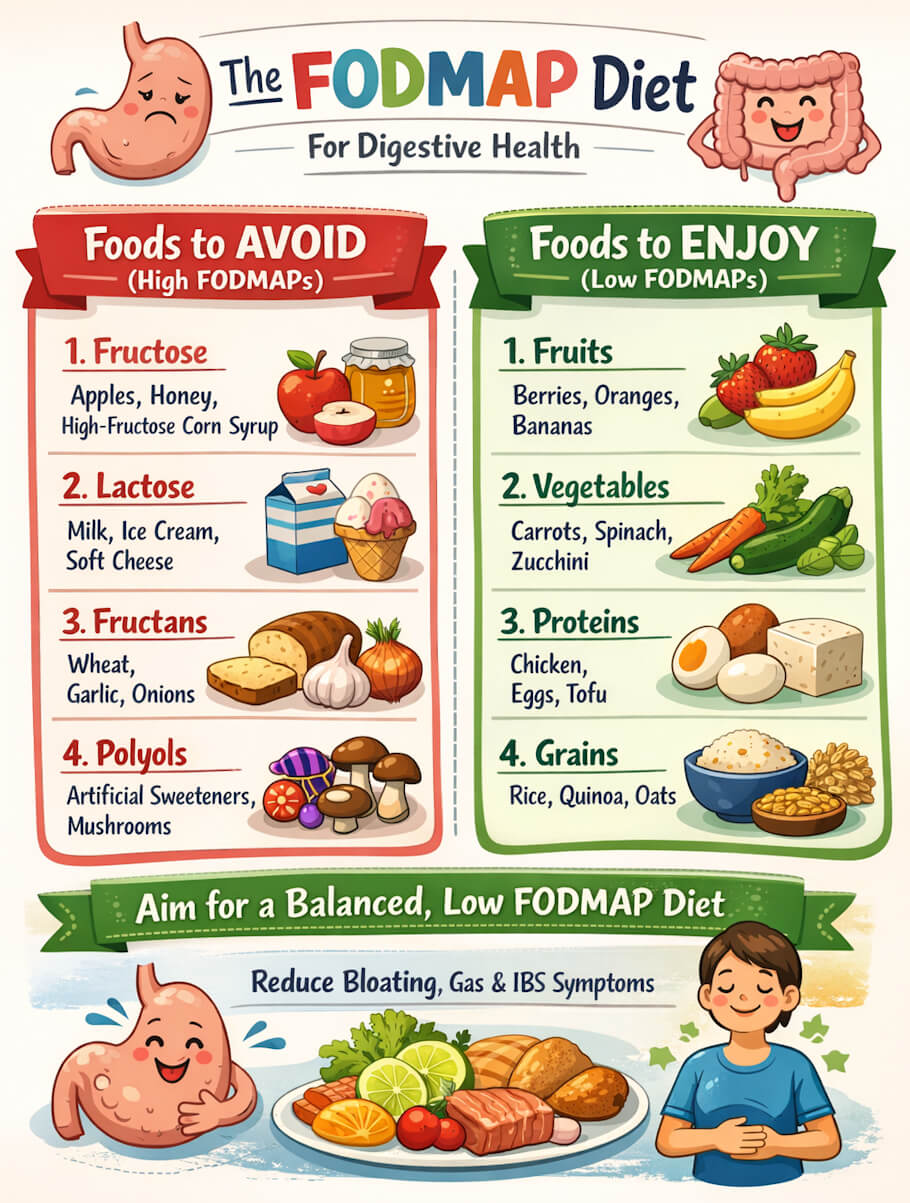
| A low FODMAP diet can help reduce gastrointestinal symptoms such as bloating, gas, and irritable bowel syndrome (IBS). See the chart below for a list of high and low FODMAP foods. |
| Avoid These Foods |
|---|
| Foods on the FODMAP avoidance list should be temporarily eliminated because they contain specific types of carbohydrates that are poorly absorbed in the small intestine. When these carbohydrates reach the colon undigested, they become rapidly fermented by gut bacteria, producing excess gas, and they also draw water into the intestinal tract through osmosis. This combination of fermentation and fluid accumulation can trigger uncomfortable digestive symptoms like bloating, cramping, diarrhea, and abdominal pain, particularly in people with sensitive digestive systems or conditions like irritable bowel syndrome. By avoiding these foods during the elimination phase, individuals can identify which specific carbohydrate types are problematic for their unique digestive system, then strategically reintroduce them to determine personal tolerance levels. |
| Excess Fructose |
| Sweeteners: Fructose, High fructose corn syrup, Corn syrup, honey. Fruits: Apple, mango, nashi, pear, canned fruit in natural juice, watermelon. Concentrated fructose: concentrated fruit, large servings of fruit, dried fruit, fruit juice. |
| Lactose |
| Milk: Milk from cows, goats, or sheep. Cheese: Soft, unripened cheeses like Cottage, Cream, Mascarpone, Ricotta Other: Custard, Ice cream, Yogurt |
| Fructans |
| Fruit: Custard apple, persimmon, watermelon. Cereals: Wheat and rye in large amounts (e.g. bread, crackers, cookies, couscous, pasta). Other: Asparagus, Beetroot, Broccoli, Brussels sprouts, Cabbage, Eggplant, Fennel, Garlic, Leek, Okra, Onions, Shallots, Chicory, Dandelion, Inulin. |
| Galactans |
| Legumes: Beans, baked beans, chickpeas, kidney beans, lentils. |
| Polyols |
| Vegetables: Green bell pepper, mushroom, sweet corn. Sweeteners: sorbitol (420), mannitol (421), isomalt (953), maltitol (965), xylitol (967). Other: Apple, Apricot, Avocado, Blackberry, Cherry, Lychee, Nashi, Nectarine, Peach, Pear, Plum, Prune, Watermelon. |
| Eat These Foods |
| Foods emphasized in the low FODMAP diet below should be eaten because they're naturally low in fermentable carbohydrates that can trigger digestive symptoms in sensitive individuals. These options allow the gut to rest and heal while still providing essential nutrients, fiber, and energy without causing excessive gas, bloating, or discomfort. By choosing these well-tolerated alternatives, people with IBS or other digestive conditions can maintain a balanced, nutritious diet while identifying their specific triggers and managing their symptoms effectively. Once the elimination phase is complete and tolerance levels are established, many of these foods continue to serve as reliable staples that support both digestive comfort and overall health. |
| Fruit |
| Banana, Blueberry,Boysenberry, Cantelope, Cranberry, Durian, Grape, Grapefruit, Honeydew melon, Kiwi, Lemon, Mandarin, Passionfruit, Pawpaw, Raspberry, Rockmelon, Star anise, Strawberry, Tangelo. |
| Vegetables |
| Alfalfa, Artichoke, Bamboo shoots, Beat shoots, Bok choy, Carrot, Celery, Choko, Choy sum, Endive, Ginger, Green beans,, Olives, Parsnip, Potato, Pumpkin, Red bell pepper, Silver beet, Spinach, Summer squash (yellow), Swede, Sweet potato, Taro, Tomato, Turnip, Yam, Zucchini. |
| Starch |
| Gluten free bread or cereal products, 100% spelt bread, Rice, Oats, Polenta.
Other: arrowroot, millet, psyllium, quinoa, sorgum, tapioca. |
| Dairy |
| Milk, lactose-free milk, oat milk, rice milk, soy milk (check for additives). Yogurt (lactose free). Ice cream substitutes, Gelati, Sorbet. Cheeses: Hard cheeses, Brie, Camembert. Butter substitutes (e.g. olive oil). |
| Other |
| Sweeteners, Sucrose, Glucose, Artificial Sweeteners not ending in "-ol", Sugar in small quantities, Honey substitutes, Small quantities of Golden Syrup, Maple Syrup, Molasses, Treacle. |
Frequently Asked Questions
Is the low FODMAP diet meant to be followed forever
No, it is a short-term diagnostic approach rather than a permanent eating plan. After the elimination phase most people reintroduce many foods to enjoy the widest possible diet while managing symptoms.
How long does the elimination phase usually last
The strict elimination phase typically lasts around two to six weeks depending on individual response. A dietitian can help determine when to begin reintroducing foods based on symptom improvement.
Can children follow a low FODMAP diet
Children may follow it only under professional supervision because they have specific growth and nutrition needs. A pediatric dietitian can adapt the plan to protect healthy development.
Does the low FODMAP diet cure irritable bowel syndrome
It does not cure the condition but helps identify and manage the foods that trigger symptoms. Many people experience significant relief once they understand their personal tolerance levels.
Can I drink coffee or tea on a low FODMAP diet
Black coffee and many plain teas are generally suitable in moderate amounts. Care is needed with added milk, sweeteners, or strong herbal blends that may contain higher FODMAP ingredients.
Is a low FODMAP diet suitable for vegetarians and vegans
Yes, it can be adapted with low FODMAP plant proteins such as firm tofu, tempeh, and certain nuts and seeds. Planning is important to maintain adequate protein, fiber, and micronutrients.
Will a low FODMAP diet affect my gut bacteria
Restricting fermentable carbohydrates can reduce the diversity of beneficial gut bacteria over time. This is a key reason the diet is intended to be temporary and followed by reintroduction.
Do I need testing before starting a low FODMAP diet
It is wise to consult a healthcare provider first to rule out other conditions with similar symptoms. Proper assessment ensures the diet is the right choice for your situation.
Insights, Analysis, and Developments
Editorial Note: While the low FODMAP diet has shown remarkable success in clinical settings, it's worth noting that individual tolerance varies significantly. What triggers symptoms in one person may be perfectly tolerable for another, which is why the reintroduction phase is so critical. Many people discover they can enjoy small amounts of certain high FODMAP foods without problems, or that only specific categories affect them. The goal isn't to follow the most restrictive diet possible, but to find the right balance that minimizes symptoms while maximizing food variety and enjoyment. For those who've struggled with unexplained digestive issues for years, this systematic approach can be life-changing, finally providing answers and a clear path toward better gut health.
 Author Credentials: Ian is the founder and Editor-in-Chief of Disabled World, a leading resource for news and information on disability issues. With a global perspective shaped by years of travel and lived experience, Ian is a committed proponent of the Social Model of Disability, a transformative framework developed by disabled activists in the 1970s that emphasizes dismantling societal barriers rather than focusing solely on individual impairments. His work reflects a deep commitment to disability rights, accessibility, and social inclusion. To learn more about Ian's background, expertise, and accomplishments, visit his full biography.