Is Social Media Addiction a Real Clinical Disorder?
Author: Michigan State University - Paige Higley
Published: 15 Apr 2026 - Updated: 20 Aug 2026
Publication Details: Peer-Reviewed | Research, Study, Analysis
Table of Contents:
Synopsis - Definition - Overview - FAQs - Insights, Updates - Related Content
Synopsis
This research, drawn from a peer-reviewed commentary published in the journal Nature, addresses one of the more contested questions in modern mental health: whether social media use qualifies as a clinical addiction. Written by Dar Meshi, an associate professor at Michigan State University who studies the psychology of technology, the piece is grounded in decades of behavioral and neurological research and offers a measured, evidence-based look at what current science does and does not support. It is particularly relevant to mental health practitioners, researchers, policymakers, and anyone - including young people, seniors, and those with underlying mental health conditions - who may be affected by or curious about the growing legal and clinical debate surrounding social media use.*
At a Glance
- 1 - A March 25 California trial awarded a plaintiff $6 million over social media harm.
- 2 - The DSM-5 was published in 2013, before most problematic-use evidence existed.
- 3 - Active habits like posting and messaging link to positive well-being, unlike passive scrolling.
- 4 - The APA website hosts social media addiction content that conflicts with its own diagnostic guidance.
Topic Definition
- Social Media Addiction
Social media addiction refers to a pattern of compulsive, excessive engagement with social media platforms that interferes with daily functioning, relationships, or psychological well-being. Unlike substance-based addictions, it lacks a universally accepted clinical definition and has not yet been formally designated as a diagnosable disorder by major psychiatric bodies such as the American Psychiatric Association. Debate among researchers centers on whether the neurological and behavioral markers observed in heavy social media users - including changes in reward-related brain activity and impaired decision-making - are sufficient and consistent enough to meet established criteria for addictive disorders, or whether they reflect a broader range of internet-use behaviors that resist simple categorization.
Overview
Academic Expert: Is Social Media Addictive?
Is social media addictive? Why a formal diagnosis is still out of reach.
On March 25, a California trial awarded $6 million to a plaintiff who argued that the addictive qualities of social media had caused her harm. Google and Meta, which were the companies that were found liable, disagree with the verdict and intend to appeal.
Dar Meshi, an associate professor of advertising and public relations at the Michigan State University College of Communication Arts and Sciences, studies the psychology of technology use, including social media. He recently authored a commentary for the journal Nature about social media addiction and can discuss what an addictive behavior is, whether or not social media is addictive, and if social media addiction should be taken more seriously.
Answers are excerpts from Meshi's Nature commentary.
What are the impacts of excessive social media use?
Case-based evidence has linked excessive social media use to psychological distress and impaired functioning in some people, for example, through job loss, relationship problems and academic failure. This use has been associated with differences in the structure and activity of reward-related brain regions and with impaired decision-making. Such features are observed in substance-use disorders too.
But the issue is complex. Outcomes associated with social media use vary widely, depending on how and why people use the platforms. 'Active' habits such as posting, commenting and messaging have been linked to positive well-being - unlike passive scrolling. And social media can provide social support to marginalized groups, such as young people from sexual and gender minorities.
What's more, the field's literature is dominated by research that is correlational, not causal - mine included. Another issue is that researchers are still debating how to measure social media addiction, including the threshold at which social media becomes problematic.
Do these impacts mean that social media is addictive?
Despite more than two decades of study on social media use, many researchers like me are wary of using the label of 'addiction.' That's because there is no general agreement on whether social media use can meet current standards for addictive disorders. More rigorous research is needed, along with guidance from professional bodies such as the American Psychiatric Association, or APA. This could help to establish whether social media addiction is a clinical phenomenon - and, if so, which criteria could be used to diagnose it.
What makes a behavior a clinical addiction?
In the United States, a formal designation of social media addiction as a clinical disorder can only come from the APA. Its Diagnostic and Statistical Manual of Mental Disorders, also commonly referred to as DSM, defines these conditions and guides clinical assessment and research. The fifth, and most recent, edition of the DSM was published in 2013, before much of the evidence around problematic social media use had accumulated.
For the APA to categorize a behavior phenomenon as an addictive disorder, the phenomenon has to meet a range of benchmarks. These include showing that the behavior causes real harm in a person's life, that it is linked to an underlying biological process and that the benefits of labeling it as a disorder outweigh potential harms such as stigma.
In 2013, the APA considered social media addiction to be part of general internet addiction, which did not meet these criteria.
Could social media become classified as an addiction in the future?
No new diagnostic guidance was provided in a 2022 update to the DSM-V, nor could I find any mention of social media or addictive behaviors in plans for the future of the DSM, which were published in January. Yet the APA's website has educational information on "social media addiction," showing a lack of alignment with its diagnostic guidance.
What is the issue with the misuse of the term 'addiction'?
Wrong use of the term addiction could lead to everyday behaviors being pathologized. Medicalizing an intense behavior because of poor methods and measures - in effect, lowering the threshold for what counts as addiction - could waste medical resources and strain health care systems. Wrongly diagnosed people could experience stigma and be prescribed unnecessary medication.
By contrast, formally designating social media use as an addiction would provide mental health practitioners with standard diagnostic criteria, thus improving screening and the development of treatments. It would also give researchers guidelines for categorizing study participants, making addiction research more robust.
Should social media be taken seriously as an addiction?
The APA must engage with the current research around social media use. Its future plans include establishing subcommittees that will focus on various aspects of mental disorders - biomarkers, socio-economic determinants, impaired functioning and more. It is crucial that each subcommittee includes experts in behavioral addictive disorders. Current evidence can then be used to determine whether problematic social media use should be defined as addictive and - if so - to delineate clear criteria for diagnosis, with decisions being revisited over time.
Knowing what users do and see on platforms would improve researchers' understanding of individual differences in social media use and its impacts. Policymakers could require social media companies to provide secure access to anonymized behavioral data, or identifiable data with user consent, under strict privacy safeguards.
There's an urgent need for better information about what constitutes social media addiction. Its existence should not be debated in the courts and by jurors, but by trained experts, determined by data.
Frequently Asked Questions
NOTE: Researched FAQs by Disabled World (DW)
Can you get treatment for social media addiction if it is not an official diagnosis?
Yes, clinicians can treat the underlying issues such as anxiety, compulsive behavior, or low mood through therapy even though social media addiction itself has no formal diagnostic code.
How is social media addiction different from internet addiction?
Internet addiction is a broad term covering many online activities, while social media addiction focuses specifically on compulsive use of platforms built around social interaction and content sharing.
What is the DSM and why does it matter for this debate?
The DSM is the Diagnostic and Statistical Manual of Mental Disorders published by the American Psychiatric Association, and it sets the criteria that determine whether a behavior is officially recognized as a clinical disorder.
Who is Dar Meshi?
Dar Meshi is an associate professor of advertising and public relations at Michigan State University who studies the psychology of technology use and authored a commentary on the topic in the journal Nature.
Does dopamine cause social media addiction?
Social media use can trigger dopamine-related reward responses, but scientists caution that this alone does not prove clinical addiction, since many normal enjoyable activities also involve dopamine.
Why do some researchers avoid the word addiction for social media?
Many researchers avoid the label because there is no agreement that social media use meets established standards for addictive disorders, and misusing the term could pathologize ordinary behavior.
What are warning signs of problematic social media use?
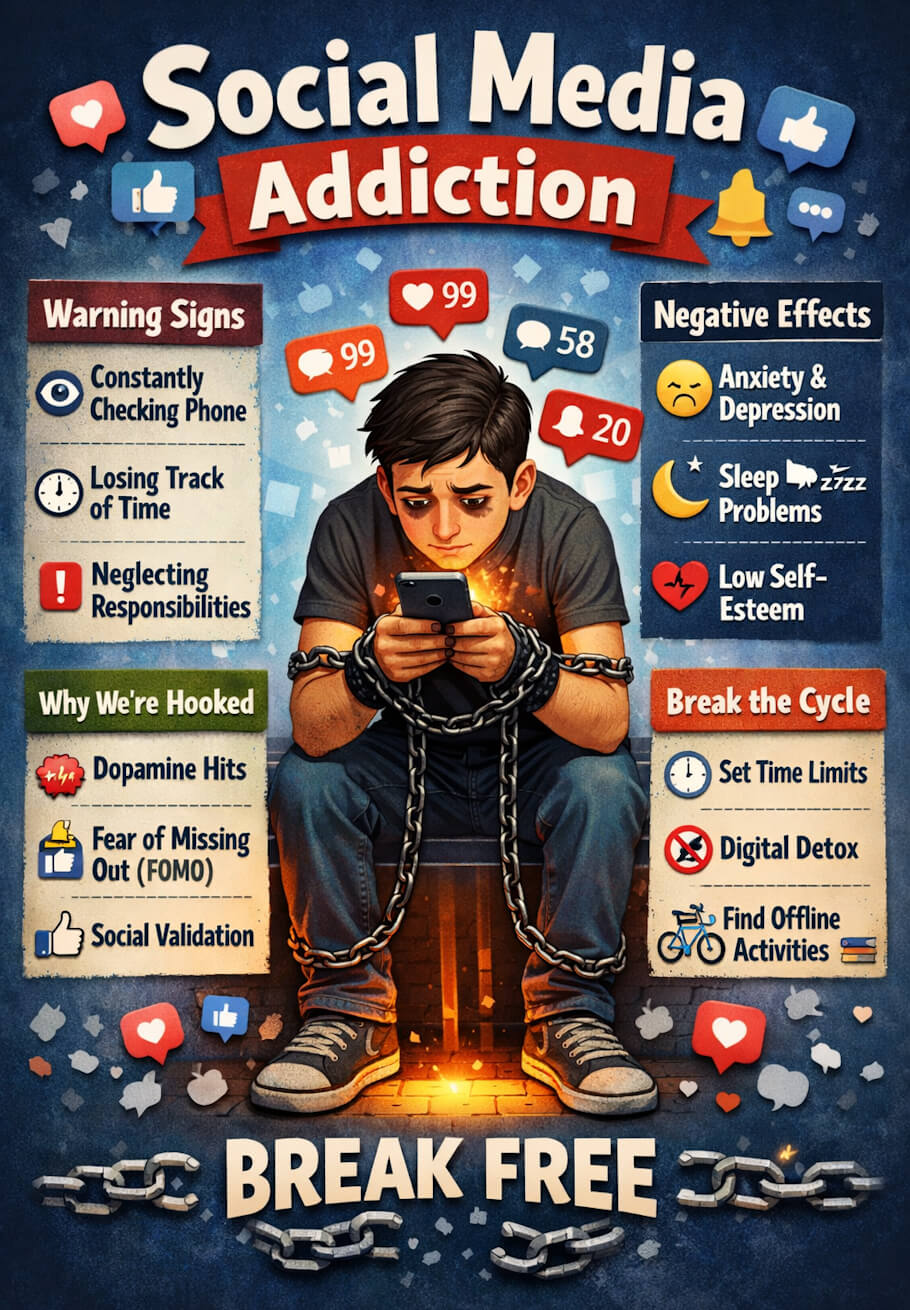
Common signs include constantly checking your phone, losing track of time, neglecting responsibilities, and continued use despite negative effects on work, school, or relationships.
How can someone reduce excessive social media use?
Helpful strategies include setting daily time limits, taking periodic breaks or a digital detox, turning off nonessential notifications, and replacing screen time with offline activities.
Insights, Analysis, and Developments
Editorial Note: The courtroom may have rendered a verdict, but science has not - and that distinction matters enormously. As courts continue to hear cases that hinge on whether social media is clinically addictive, the gap between legal judgments and scientific consensus becomes harder to ignore. Meshi's commentary is a timely reminder that the language of addiction carries real clinical weight, and that misapplying it - or prematurely codifying it - risks doing as much harm as good. The call for the American Psychiatric Association to engage seriously with behavioral addiction research is not just an academic formality; it is a prerequisite for any meaningful public health response.*
Attribution/Source(s): This peer reviewed publication was selected for publishing by the editors of Disabled World (DW) due to its relevance to the disability community. Originally authored by Michigan State University - Paige Higley and published on 15 Apr 2026, this content may have been edited for style, clarity, or brevity.
* Editorial additions by Ian C. Langtree.