Inflatable Packabocce Courts Set Standard for Special Olympics
Author: James Heffield, Packaworld Communications
Published: 13 Jun 2023 - Updated: 17 Dec 2025
Publication Type: Event
Table of Contents:
Synopsis - Overview - Insights, Updates - Related Content
Synopsis
This product information details how Packabocce courts - lightweight, portable inflatable bocce courts created in Wellington, New Zealand - have become the standard for Special Olympics competitions worldwide. Originally designed in 2013, these courts can be set up or taken down in minutes and include wheelchair-accessible gates, removing traditional barriers to participation in bocce, now the third most popular sport in Special Olympics with over 400,000 players globally.
The information is authoritative because it comes from the manufacturer and Disabled World, a quality-reviewed publication focused on disability-related topics, and includes documentation of their adoption across major international competitions including state games in the USA, European National Games, and the World Summer Games. For athletes with mobility challenges and event organizers in schools, clubs, and communities, this accessibility innovation means bocce can be played in settings previously limited by the cost and space requirements of traditional wooden or stone courts.*
Overview
Inflatable bocce courts developed in New Zealand will grace the stage of the world's largest inclusive sporting event this month when they are used at the Special Olympics World Games in Berlin, Germany.
The World Games will attract 7,000 athletes from around 170 countries - including 39 athletes from New Zealand - for nine days of competition starting on Saturday (17 June).
The 'Packabocce' courts designed by Wellington-based Packaworld will be used for the World Games' bocce competition, played at the Messe Berlin exhibition grounds. Bocce - a sport with similarities to bowls but played within a walled court - is enjoyed by more than 400,000 people in Special Olympics globally, making it the third most played sport, behind only football and golf.

Packaworld Chief Executive Peter Roberts said he was delighted the courts were being used at the pinnacle of Special Olympics competition.
"When we developed the courts back in 2013, we had no idea of how popular they would become. It's fantastic to see them becoming the global standard for bocce competitions and helping to grow a sport that truly does cater for people of all abilities."
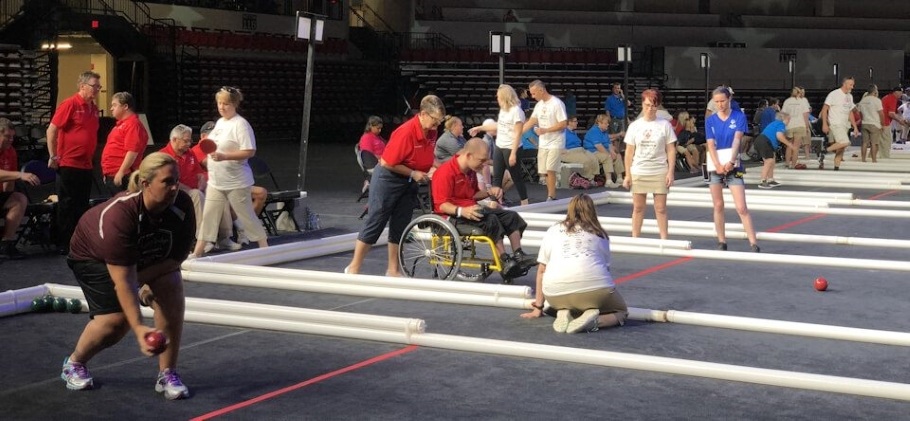
The Packaworld courts are 18.3 meters long by 3.65 meters wide and include wheelchair accessible gates to allow access for any athletes with mobility issues. Unlike traditional bocce courts made of wood, the Packabocce courts are lightweight and can be inflated or deflated in minutes, making them easy to transport and setup, and simple to store.
The courts debuted at a local Special Olympics bocce competition in Wellington in 2013 and have since hit the big time, being used as the court of choice for many Special Olympics State Games in the USA, National Games across Europe and the Asia-Pacific, and Regional Games in Latin America.
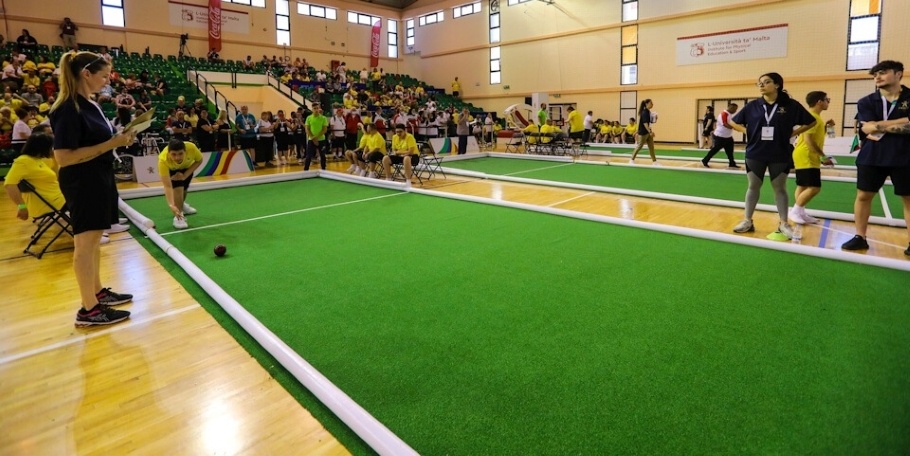
Today, hundreds of Packabocce courts are sold annually, including to Special Olympics event and program organizers, schools, clubs, social leagues, festival and event organizers, and even cruise ship companies.
"Seeing the difference the courts make is humbling. Business growth is fantastic, but seeing the way the courts are helping to bring bocce to people and communities that wouldn't otherwise get the chance to play is what really drives us. Sport is a big part of growing up in New Zealand and it's fantastic to be able to play a small part in sharing that sporting lifestyle with the world."
Roberts will be at the Special Olympics World Games as part of its Honored Guest Program to observe the event and cheer on the athletes from all nations.
The Special Olympics World Summer Games are held every four years. This year's event will feature 26 sports and will be supported by a cohort of more than 20,000 volunteers.
Insights, Analysis, and Developments
Editorial Note: The evolution of Packabocce courts illustrates how practical design innovation can remove genuine barriers to participation in sport. By addressing the logistical constraints of traditional bocce courts - their weight, setup time, and accessibility limitations - Packaworld essentially democratized access to a sport that already welcomes people of varying abilities. What began as a local product for Wellington competitions has reshaped how bocce is organized internationally, suggesting that sometimes the most meaningful inclusion happens not through policy mandates but through unglamorous engineering: making things easier to use, transport, and access for everyone.*
Attribution/Source(s): This quality-reviewed publication was selected for publishing by the editors of Disabled World (DW) due to its relevance to the disability community. Originally authored by James Heffield, Packaworld Communications and published on 13 Jun 2023, this content may have been edited for style, clarity, or brevity.
* Editorial additions by Ian C. Langtree.