Wheelchair Adventurer Nick Wilson on Adaptive Outdoor Access
Author: Disabled Adventurer
Published: 15 Jun 2026 - Updated: 13 Aug 2026
Publication Type: Submitted Article
Table of Contents:
Synopsis - Definition - Overview - FAQs - Insights, Updates - Related Content
Synopsis
This article covers UK disabled veteran and wheelchair adventurer Nick Wilson's first trip to the United States, where he delivered talks on adaptive outdoor adventure at Abilities Expo Chicago before traveling to Scranton, Pennsylvania, to explore all-terrain powerchair technology and visit an outdoor activity facility serving disabled people and wounded veterans. For wheelchair users, people with mobility impairments, disabled veterans, caregivers, seniors, and anyone researching adaptive outdoor equipment and access, this is a timely and grounded look at what is already possible - and what remains within reach - when it comes to giving disabled people real access to the natural world.*
At a Glance
- 1 - Nick Wilson's US trip was the first time he had ever flown as a wheelchair user - a significant personal milestone on top of an already complex journey involving three flights and six vehicle transfers.
- 2 - 33 National Parks across the United States currently provide all-terrain powerchairs with joystick control - a standard of access that Nick is actively working to replicate across outdoor venues and charities in the UK.
- 3 - Patriots Cove, an outdoor activity center in Pennsylvania, provides all-terrain powerchairs so that disabled people and wounded veterans can take part in outdoor activities that would otherwise be inaccessible to them.
Topic Definition
- Adaptive Outdoor Recreation
Adaptive outdoor recreation refers to the practice of enabling people with physical disabilities, including wheelchair users, amputees, and veterans with mobility impairments, to participate in outdoor activities through the use of specialized equipment, modified terrain access, and purpose-built programming. Central to this field are all-terrain powerchairs - motorized wheelchairs engineered to navigate uneven, rugged, or natural surfaces that standard chairs cannot manage - alongside hand-powered off-road cycles, adaptive kayaks, and other assistive technologies. The goal is not to replicate able-bodied outdoor experiences, but to create genuine, independent, and dignified access to the natural environment for people who would otherwise be excluded from it.
Overview
Uk Wheelchair Adventurer Visits U.S. to Explore the Future of Adaptive Outdoor Adventure
Disabled Adventurer Nick Wilson has spoken at Abilities Expo Chicago before traveling to Pennsylvania to explore how all-terrain powerchairs can open up the outdoors.
UK wheelchair adventurer and accessibility advocate Nick Wilson has taken his outdoor access mission to the United States, beginning with two talks at Abilities Expo Chicago before traveling to Scranton, Pennsylvania, for a week focused on adaptive adventure, all-terrain powerchairs and disabled people's access to the outdoors.
Nick, a disabled veteran, wheelchair user, speaker and founder of Disabled Adventurer, described the trip as "the biggest accessibility challenge of my life" before leaving the UK.
The journey involves three flights, six vehicle transfers, two hotels and around ten different venues. It is also the first time Nick has flown as a wheelchair user.
Despite the scale of the challenge, Nick said the US trip has had "an incredible start", with his wheelchair surviving the flight and his first few days in Chicago filled with new conversations, experiences and examples of what better access can look like.
Nick said:
"Thankfully my chair survived the flight out and I wasn't totally broken by it either, but 12 hours of travel has taken a toll. I'm sure the full impact will be felt when I'm finally home, but for now I'm relishing every moment, experience and interaction."
At Abilities Expo Chicago, Nick delivered two talks. The first, The Mountain Inside of Me, focused on his solo ascent of Mount Snowdon using the RockClimber all-terrain prototype powerchair, and the mental journey of adapting to life as a wheelchair user while living with a declining spinal condition.
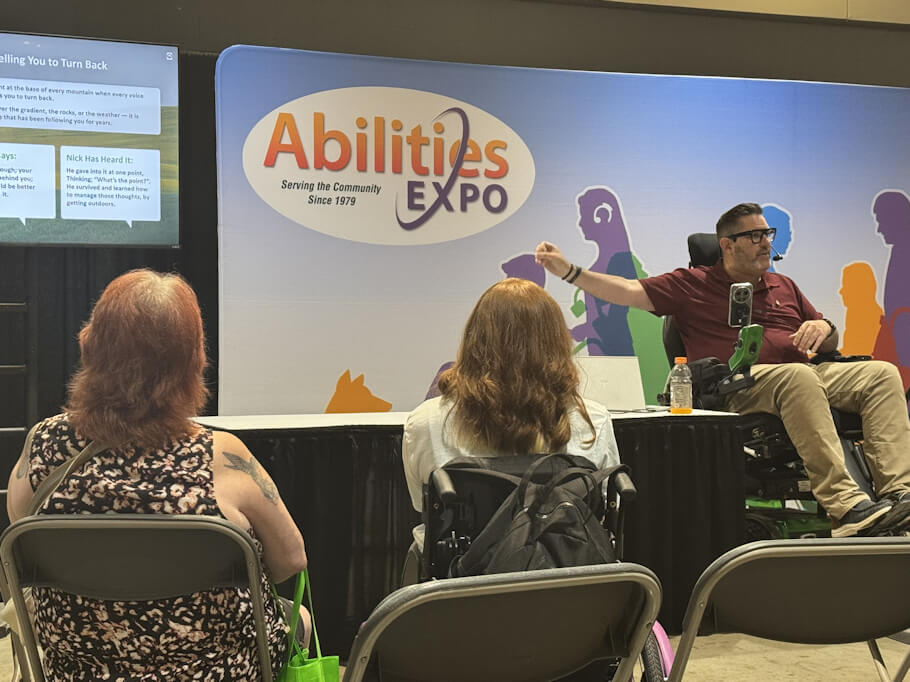
His second talk, Adaptive Outdoor Adventure, explored the barriers that stop disabled people accessing the outdoors, the equipment and opportunities already available, and where Nick believes adaptive adventure could go with the right development, investment and support.
Nick said:
"The outdoors is not just fresh air and pretty views. For a lot of us, it is identity. It is freedom. It is therapy with mud on it."
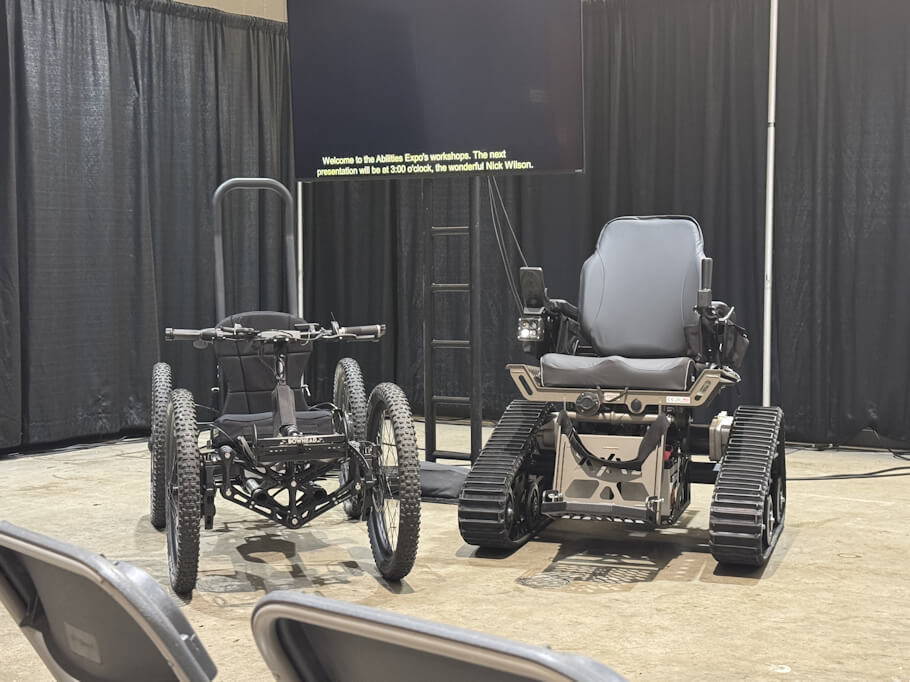
Nick will now spend a week in Scranton with Quantum Rehab US, a manufacturer of complex power wheelchairs. His visit will include a tour of the production site, conversations with the research and development team about all-terrain chairs and battery technology, and meetings with the corporate team.
He will also visit Patriots Cove, an outdoor activity center providing all-terrain powerchairs so disabled people and wounded veterans can access the outdoors and take part in a wider range of activities.
Nick added:
"I've found 33 National Parks across the US providing access to all-terrain powerchairs with joystick control, and that is what I'm trying to achieve through my work in the UK."
The trip forms part of Nick's wider campaign to fund and donate all-terrain powerchairs to outdoor venues and charities, creating lasting access for disabled people and wounded veterans.
About Disabled Adventurer
Disabled Adventurer is a UK-based platform and mission led by Nick Wilson, a disabled war veteran, wheelchair user, speaker and wheeled adventurer. Through lived-experience advocacy, content, public speaking and practical partnerships, Nick works to challenge barriers, change perceptions and make the outdoors more accessible for disabled people and wounded veterans.
For more information, sponsorship opportunities or to donate, visit: www.disabledadventurer.com
Frequently Asked Questions
NOTE: Researched FAQs by Disabled World (DW)
What is an all-terrain powerchair and how does it differ from a standard wheelchair
An all-terrain powerchair is a motorized wheelchair engineered with features like knobby tires or rubber tracks and reinforced frames so it can cross grass, gravel, mud, sand, and uneven natural ground. A standard wheelchair is built for flat, hard, indoor and paved surfaces and typically bogs down or tips on the rough terrain these adaptive chairs are designed to handle.
How much does an all-terrain powerchair typically cost
Prices vary widely depending on the model, motor, battery capacity, and whether tracks or wheels are used, but purpose-built all-terrain powerchairs generally run into the thousands of dollars and can reach the price of a small vehicle. This high cost is a major reason advocates focus on funding and donating them to shared venues so many people can benefit from a single chair.
How can a wheelchair user prepare for long air travel with their own chair
Preparation usually involves notifying the airline in advance, labeling the chair with handling instructions, documenting its condition with photos, removing or securing loose parts and batteries according to airline rules, and requesting that the chair be gate checked and returned at the aircraft door. Carrying spare parts, a repair kit, and manufacturer contact details also helps if damage occurs during the journey.
What kinds of outdoor activities can disabled people take part in using adaptive equipment
With the right equipment, disabled people can take part in trail exploration, off-road cycling using hand-powered cycles, kayaking with adaptive craft, fishing, camping, and reaching viewpoints and natural areas that were once out of reach. All-terrain powerchairs specifically open up hiking-style access across parks, woodlands, and rugged coastal or mountain paths.
Are there physical or mental health benefits to spending time outdoors for people with disabilities
Time in nature is widely associated with reduced stress, improved mood, better sleep, and a stronger sense of independence and identity, and these benefits apply to disabled people just as much as anyone else. For many wheelchair users and veterans, outdoor access also provides a valuable form of therapy, social connection, and renewed confidence.
How can someone find outdoor venues or parks that offer adaptive equipment
Good starting points include contacting park and recreation authorities directly, searching accessibility directories, checking disability sports and adventure charities, and asking equipment manufacturers which sites use their chairs. Calling ahead to confirm availability, booking requirements, terrain suitability, and staff support is strongly recommended before visiting.
How can individuals or organizations support the goal of expanding adaptive outdoor access
Support can take the form of donating to campaigns that fund and place all-terrain powerchairs at venues, sponsoring equipment, volunteering at outdoor activity centers, and encouraging local parks to invest in adaptive access. Raising awareness and advocating with landowners and policymakers also helps push accessible outdoor recreation from a rare offering toward a standard expectation.
Insights, Analysis, and Developments
Editorial Note: Nick Wilson's US trip puts a human face on a gap in access that exists in countries far beyond the UK. The fact that 33 American National Parks already offer joystick-controlled all-terrain powerchairs signals what is achievable when investment and intention align - and underscores just how far behind many countries still are. His visit to Quantum Rehab and Patriots Cove is not just a personal adventure; it is practical research with a direct goal of expanding what disabled people and wounded veterans can do outdoors. The outdoors has long been treated as an optional luxury for people with disabilities, when the evidence - and advocates like Nick - make clear it is nothing of the sort.*
Attribution/Source(s): This quality-reviewed publication was selected for publishing by the editors of Disabled World (DW) due to its relevance to the disability community. Originally issued as a press release by Disabled Adventurer and published on 15 Jun 2026. Last updated on 13 Aug 2026. This content may have been edited for style, clarity, or brevity.
* Editorial additions by Ian C. Langtree.