Nepal KAP+A Audit Examines Disability Inclusion Gaps
Author: Sarita Lamichhane
Published: 12 May 2026 - Updated: 20 Aug 2026
Publication Type: Announcement
Table of Contents:
Synopsis - Definition - Overview - FAQs - Insights, Updates - Related Content
Synopsis
This article reports on a validation and consultation workshop organized by Prayatna Nepal in Kathmandu, where stakeholders reviewed draft findings from the Knowledge, Attitude, Practice and Accessibility (KAP+A) Audit of thematic rights-based organizations in Nepal. Moderated by Sarita Lamichhane and presented by lead researcher Maheshwor Ghimire, the audit represents the first systematic integration of accessibility into the conventional KAP framework in the country, examining physical, digital, informational, and procedural accessibility alongside institutional knowledge and practice. Findings document persistent gaps in inclusive hiring, disability-disaggregated data collection, reasonable accommodation budgeting, internal mobility systems, accessible toilets, and digital communication platforms within organizations that publicly advocate for human rights. The information will interest disability rights advocates, persons with disabilities, civil society practitioners, policy researchers, women and LGBTQI+ persons facing intersectional exclusion, and seniors concerned with how institutional accessibility shapes meaningful participation in governance, advocacy, and leadership across Nepal's rights-based sector.*
At a Glance
- 1 - The audit was originally planned for at least 15 organizations but was completed with 10.
- 2 - The workshop was moderated by Sarita Lamichhane, with findings presented by lead researcher Maheshwor Ghimire.
- 3 - Feedback gathered during the validation workshop will be incorporated into the final report before it is published.
- 4 - Participants proposed strengthening inclusion through a broader GEDSI quality approach built into institutional systems, rather than relying on standalone disability policies.
Topic Definition
- Knowledge, Attitude, Practice and Accessibility (KAP+A) Audit
The Knowledge, Attitude, Practice and Accessibility (KAP+A) audit is an institutional assessment framework that extends the conventional Knowledge, Attitude and Practice (KAP) methodology used in social research by adding accessibility as a fourth measurable dimension. Within disability inclusion work, the framework evaluates not only what organizations know, believe, and do regarding the rights of persons with disabilities, but also whether their physical premises, digital platforms, informational materials, and procedural systems are genuinely accessible to disabled staff, members, and constituents. The approach is designed to surface gaps between policy commitments and institutional practice, examining areas such as inclusive hiring, disability-disaggregated data, reasonable accommodation budgeting, leadership representation, and meaningful participation in governance, so that disability inclusion becomes embedded in core organizational structures rather than treated as a peripheral concern within broader gender, equality, and social inclusion frameworks.
Overview
Validation program on Comprehensive Assessment Report: Knowledge, Attitude, Practice, and Accessibility (KAP+A) Audit of Thematic Rights-Based Organizations in Nepal
A validation and consultation workshop on the "Knowledge, Attitude, Practice and Accessibility (KAP+A) Audit of Thematic Rights-Based Organizations in Nepal" was successfully organized by Prayatna Nepal on Monday in Kathmandu. The program brought together representatives from mainstream human rights organizations, women's rights groups, youth-led organizations, disability rights activists, and civil society stakeholders to discuss the draft findings of the KAP+A audit and identify pathways for strengthening disability inclusion within Nepal's civil society mechanism.
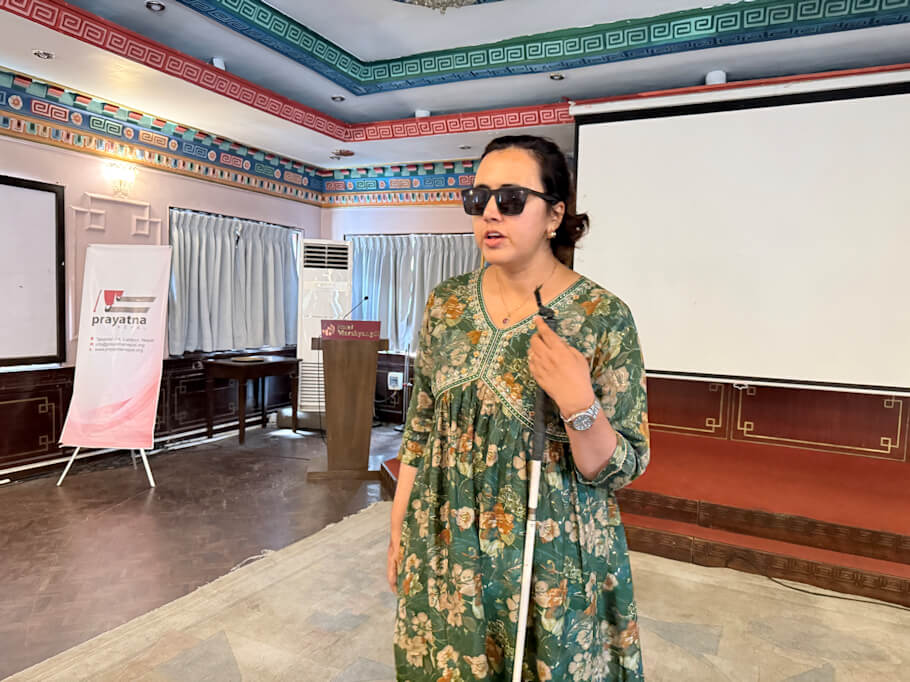
The program was moderated by Ms. Sarita Lamichhane, while the draft report and major findings were presented by disability rights activist and lead researcher Mr. Maheshwor Ghimire.
During the workshop, organizers highlighted that while the Knowledge, Attitude and Practice (KAP) approach has long been used in social research and institutional assessments, this study is the first of its kind in Nepal to systematically integrate "Accessibility" alongside KAP, forming the KAP+A framework. The study assessed not only institutional understanding and practices related to disability inclusion, but also physical, digital, informational, and procedural accessibility within thematic rights-based organizations.
The draft report revealed significant gaps between policy commitments and institutional practices. Findings indicated that disability inclusion within many mainstream organizations continues to be treated as a secondary or peripheral issue under broader GESI or GEDSI frameworks, rather than being institutionalized through dedicated mechanisms and practical accessibility measures. The study identified major barriers in physical infrastructure, digital accessibility, inclusive hiring, disability-disaggregated data collection, budgeting for reasonable accommodation, and organizational policy commitments.
The assessment further showed that while many organizations publicly advocate for inclusion and human rights, accessibility remains structurally weak. Toilets, internal mobility systems, and digital communication platforms were identified as some of the least accessible areas. The report also highlighted that many organizations still rely on temporary consultation with persons with disabilities rather than ensuring meaningful participation in governance, employment, leadership, and program design processes.
Sharing the rationale behind the study, the organizers stated that the audit aimed to examine why disability continues to remain outside the core institutional structure of many mainstream organizations despite progressive legal and constitutional commitments in Nepal. The assessment also explored the intersectional exclusion faced by women, girls, LGBTQI+ persons, and individuals from marginalized communities with disabilities.
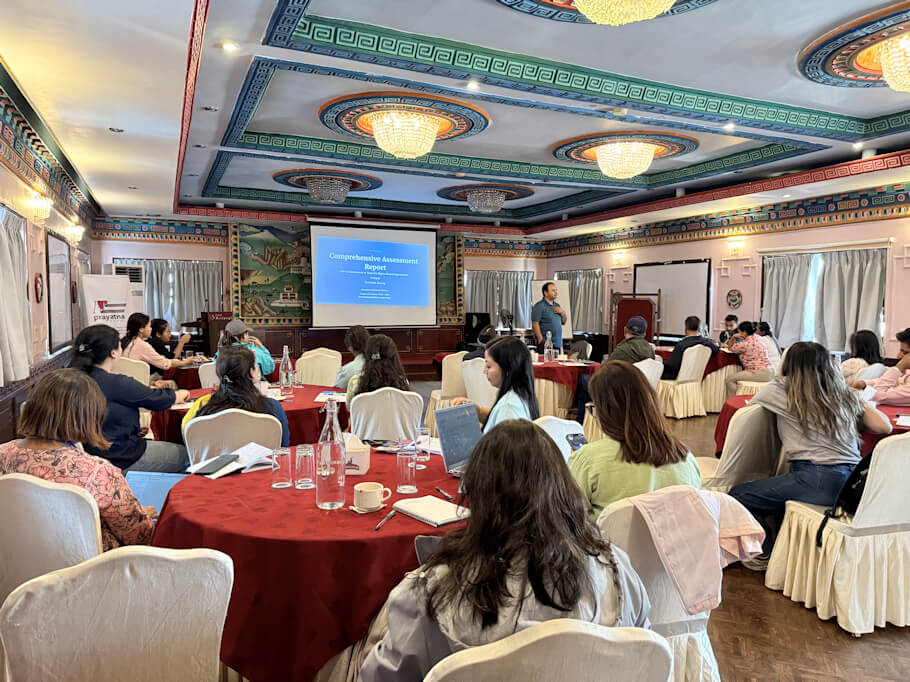
During the discussion session, one organizational representative suggested that instead of developing separate disability inclusion policies alone, organizations should strengthen disability inclusion through a broader GEDSI quality approach integrated into institutional systems and governance structures. Another participant emphasized the need for the report to include more practical and actionable recommendations that organizations can realistically implement to strengthen disability-inclusive initiatives.
Participants also appreciated the roadmap proposed in the draft report, particularly its focus on long-term institutional transformation, accessibility audits, inclusive procurement systems, disability representation, and evidence-based policy reform. One participant acknowledged that the research document could serve as an important reference point for future institutional reforms within Nepal's civil society sector.
Speaking during the workshop, Ms. Sarita Lamichhane clarified that the objective of the study was not to single out or criticize any thematic mainstream organization. She emphasized that the purpose of the audit is to encourage collective reflection, collaboration, and shared responsibility for building disability-inclusive civil society mechanisms in Nepal.
"We are not here to point fingers at any organization. Our intention is to build collective efforts toward meaningful disability inclusion within civil society structures," she stated.
The organizers also shared that the initial plan was to conduct the KAP+A audit with at least 15 organizations. However, due to difficulties in securing sufficient time and institutional ownership from organizations during the assessment process, the study was ultimately completed with 10 participating organizations.
The workshop concluded with a collective commitment from participants to strengthen accessibility, institutional accountability, and inclusive participation within Nepal's civil society sector. Participants stressed the importance of moving beyond symbolic inclusion and ensuring that persons with disabilities are meaningfully engaged in decision-making, leadership, advocacy, and organizational systems.
The organizers informed that the recommendations and feedback collected during the validation workshop will be incorporated into the final version of the KAP+A assessment report before publication.
Frequently Asked Questions
NOTE: Researched FAQs by Disabled World (DW)
What does the acronym GESI stand for
GESI stands for Gender Equality and Social Inclusion, a framework used by many organizations to address the participation and rights of marginalized groups within their programs and structures.
How is GEDSI different from GESI
GEDSI adds Disability to the framework, standing for Gender, Equality, Disability and Social Inclusion, which brings explicit attention to disabled people alongside other equity concerns.
Who conducted the KAP+A audit in Nepal
The audit was organized by Prayatna Nepal, a disability rights organization, with the workshop held in Kathmandu to review and validate the draft findings with stakeholders.
What is a validation workshop in research
A validation workshop is a meeting where stakeholders review draft findings, check their accuracy and relevance, and offer feedback that is used to refine the final report before publication.
Why add accessibility to the traditional KAP model
Adding accessibility captures whether an organization's physical, digital, informational, and procedural systems are usable in practice, revealing gaps that knowledge, attitude, and practice measures alone can miss.
What is disability-disaggregated data
Disability-disaggregated data is information broken down to show how disabled people are represented and affected, allowing organizations to track inclusion and identify gaps rather than relying on general totals.
What is meant by reasonable accommodation
Reasonable accommodation refers to practical adjustments, such as accessible facilities, assistive tools, or flexible procedures, that allow disabled people to participate on an equal basis without undue burden.
Could the KAP+A framework be used outside Nepal
Yes, the framework offers a measurable method that other countries and sectors could adapt to examine whether their own institutions turn inclusion commitments into accessible practice.
Insights, Analysis, and Developments
Editorial Note: The findings emerging from this validation workshop reflect a broader pattern observed across many rights-based sectors, where stated commitment to inclusion frequently outpaces practical accessibility on the ground. By extending the established KAP methodology with an accessibility dimension, Prayatna Nepal has given civil society a measurable framework for examining whether organizational values translate into the physical, digital, and procedural realities encountered by persons with disabilities. The conversation initiated in Kathmandu signals a shift from symbolic representation toward structural accountability, and the final report may serve as a reference point for similar institutional reflection in other countries with comparable civil society landscapes.*
* Editorial additions by Ian C. Langtree.