Planning for the Future: Aging, Family, and Your Disabled Adult Child
Author: Kathleen M. Cleaver
Published: 28 Aug 2024 - Updated: 22 Feb 2026
Publication Type: Informative
Table of Contents:
Synopsis - Overview - Insights, Updates - Related Content
Synopsis
This article explores practical approaches to planning for the future while living with disabilities or age-related challenges, blending personal narratives with actionable advice. It discusses topics like financial preparedness, accessible housing options, legal considerations for long-term care, and building meaningful support systems. Geared toward individuals with disabilities, seniors, and their families, the piece balances realistic concerns - such as navigating bureaucratic hurdles and preserving independence - with encouraging insights on setting achievable goals. By highlighting relatable experiences and offering step-by-step guidance on topics like advance directives or adaptive technology, it provides a roadmap for those seeking to maintain autonomy while addressing uncertainties. The down-to-earth tone and focus on both logistical and emotional aspects make it a reassuring resource for anyone looking to create stability in later life or amid changing health needs.*
Overview
A road map is in place when planning ahead for your "normal children." Saving money for college or trade school, obtaining a job and earning enough money to live on their own. Even leaving a nest egg for them when you pass is usually not complicated. It is not so simple when you have a disabled child who needs assistance in all aspects of care.
My sister, Barbara, was born when I was seven-and-a -half years old. Having two older brothers, I was thrilled to have a sister. If you have followed my blogs you know that my sister has multiple disabilities and requires assistance for her physical, medical, financial, safety and social needs. My sister is labeled as " severely disabled". As a young child, I didn't know what that meant. I knew my sister was different from other children, but that didn't bother me. She was my best friend and my companion. From the time my sister was a toddler until I gave birth to my first child I was my mother's helper and then the primary support person when my parents became ill.
Twenty-nine years after the birth of my sister I gave birth to Tricia, my oldest of three daughters. Tricia is multiply disabled due to hypoxia from a complicated birth. Helping my parents with my sister became more difficult. Fortunately, I had wonderful aunts who helped when I couldn't. Caring for both girls also educated me in the services, the financial and legal responsibilities, and the need for long term planning when your child is disabled and needs supportive care.
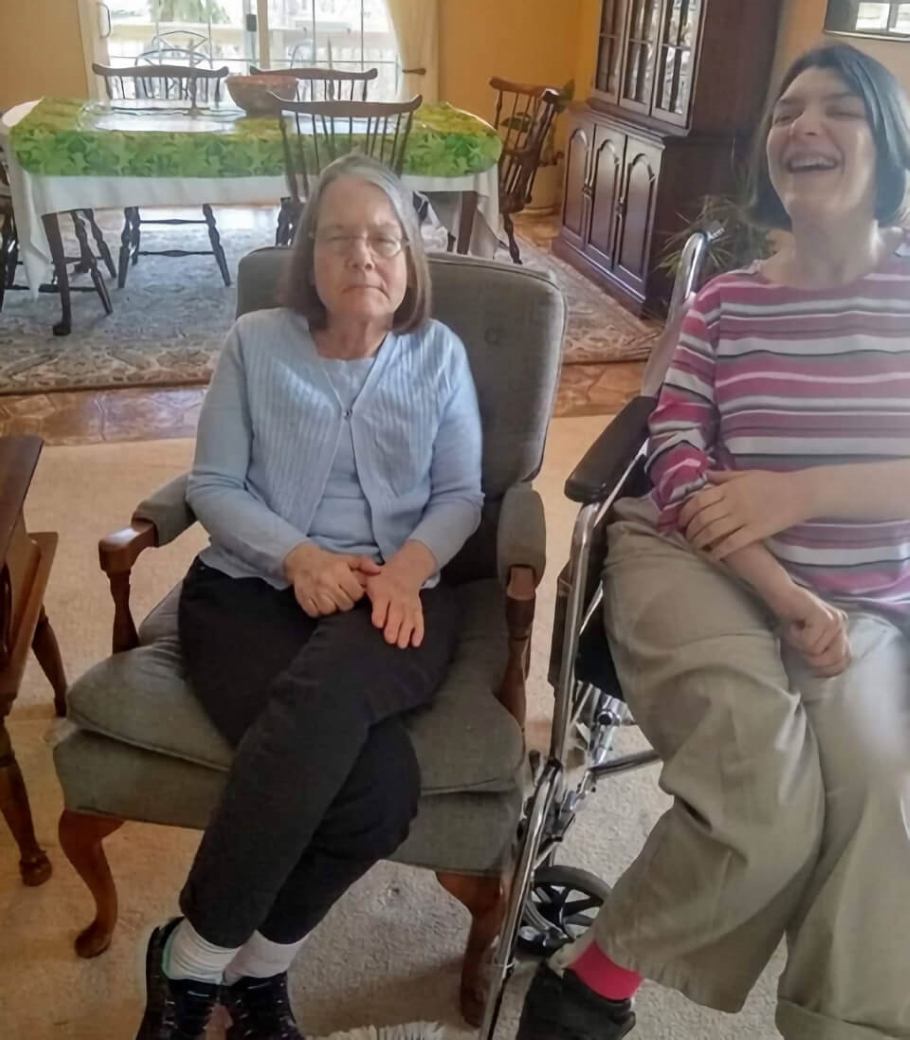
First and foremost, parents need to talk to their family about plans for their adult disabled child when they can no longer provide the care. Is a family member willing to provide full- time care? In turn, family members need to be honest about what their plans are. This should be a frequent conversation as plans can change. I thought I would take care of my sister full-time until I realized that caring for two severely disabled adults was arduous. Fortunately, we had investigated and made plans for alternative living arrangements for my sister. The transition was easy for her and my family. MY advice is to keep your options open. Make sure your family is aware of your plans. Have plans for alternative living arrangements to avoid emergency placement in a facility not of your choice or liking.
Make sure your family is aware of the needs and benefits of your disabled loved one. Prepare a Letter of Intent or written Care Plan for your disabled loved one.
"A Letter of Intent is a nonbinding document that passes vital information about a person with disabilities to future caregivers. It may include not only information about your child's benefits and resources but also such things as your child's medical history & treatment plans, medications, daily care needs, favorite activities, habits, sleeping and eating preferences and many other important aspects of your child's daily routine, who their doctors are, their list of medications, etc. While these items may be second nature to you, it is important not to take them for granted. After all, in many cases, your child's future caregivers assume their role in caring for your child without having actually lived a day in your shoes." - (MyPinkLawyer Life & Legacy Estate Planners)
I never thought much about wills and estate planning until my father passed away and I accompanied my mother to an appointment with her lawyer to review the documents that my father had drawn up. It was there I learned the importance of keeping wills, powers of attorney, and estate documents up-to-date for my mother and my sister and for my family. It is important to find an estate lawyer who is knowledgeable about disability law. The lawyer will help you navigate the laws pertaining to how an estate affects the services, the care and any government funding your loved one receives.
Topics that should be discussed:
- Should I have power of attorney or guardianship for my loved one? What is the difference between the two documents?
- How should I choose a power of attorney or guardian?
- What is the difference between payable upon death and a beneficiary?
- What is a Special Needs Trust? How is it set up?
- What is an irrevocable burial account? How do I fund it?
- What is a living will? Can I be the voice for my loved one if I don't want "extraordinary medical measures" for him/her?
- What is an AbleNow Account?
- How do different living arrangements affect the government funding my loved one receives?
After the papers are drawn up, review them with your family. Make sure they know where to access them when needed.
Planning the future for when you can no longer take care of a loved one can be heart-wrenching for you. Planning ahead will allow you to direct what is best for your loved one and your family. It will give you comfort knowing that your loved one is happy and well cared for.
Insights, Analysis, and Developments
Editorial Note: The conversations Kathleen describes aren't easy ones - most families would rather avoid contemplating their own mortality or acknowledging the vulnerability of those they love most fiercely. Yet what emerges from her decades of experience caring for both her sister and daughter is something approaching hard-won wisdom: that planning isn't a morbid exercise in worst-case scenarios, but rather an act of profound love and respect. The disabled adults in our lives deserve more than hastily arranged emergency placements or family members scrambling to decipher cryptic benefit statements after a funeral. They deserve the dignity of foresight. By treating future planning as an ongoing family dialogue rather than a crisis to be managed later, we acknowledge that our loved ones' lives will continue - and thrive - beyond our own capacity to provide direct care. The paperwork may be tedious, the legal distinctions arcane, and the emotional weight considerable, but these preparations ultimately represent our final gift: the assurance that those who depend on us will remain surrounded by thoughtful care, even when we can no longer provide it ourselves.*
 Author Credentials: Kathleen M. Cleaver holds a Bachelor’s degree in elementary education and the education of children whose primary disability is a visual impairment (TVI). During her thirty-year career as a teacher, Kathleen received the Penn-Del AER Elinor Long Award and the AER Membership Award for her service and contributions to the education of children with visual impairments. She also received the Elizabeth Nolan O’Donnell Achievement Award for years of dedicated service to St. Lucy Day School for Children with Visual Impairments. Explore Kathleen's complete biography for comprehensive insights into her background, expertise, and accomplishments.
* Editorial additions by Ian C. Langtree.