The Top 10 Global Causes of Death Worldwide in 2021
Author: Ian C. Langtree - Writer/Editor for Disabled World (DW)
Published: 7 Jan 2026 - Updated: 14 Sep 2026
Publication Type: Data & Statistical Analysis
Table of Contents:
Synopsis - Definition - Overview - FAQs - Insights, Updates - Related Content
Synopsis
Every year, millions of lives end across our planet, each death telling a story of human vulnerability and the complex challenges facing global health systems. Understanding what claims the most lives isn't just an exercise in statistics - it's a roadmap for saving lives. The patterns revealed in mortality data guide research funding, shape healthcare policies, and help communities prepare for the health challenges they're most likely to face. From the predictable progression of chronic diseases to the sudden emergence of global pandemics, the leading causes of death worldwide reflect both timeless human struggles and evolving modern threats. As we examine the top ten killers claiming lives in 2021 - the most recent year with comprehensive global data - we see a world in transition, where traditional cardiovascular threats persist alongside new infectious diseases, while age-related conditions increasingly dominate as populations live longer than ever before.
At a Glance
- 1 - HIV/AIDS fell from seventh place in 2000 to twenty-first following a 61% drop in deaths. Expanded antiretroviral therapy drove this decline.
- 2 - Diabetes deaths have surged by 95% since 2000, one of the fastest-growing causes of mortality. It entered the top 10 list for the first time.
- 3 - Dementia deaths fall disproportionately on women, who account for 68% of the global total. This partly reflects women's longer life expectancy.
- 4 - Ischaemic heart disease deaths rose by 2.7 million since 2000, the largest increase of any condition. Aging populations and lifestyle factors drive the trend.
Topic Definition
- Global Causes of Death
Global causes of death are the medical conditions, diseases, and events responsible for the greatest share of human mortality across all countries in a given year, as tracked by international health agencies such as the World Health Organization. These rankings combine reporting from national health systems, hospital records, and statistical modeling to estimate how many lives each condition claims, then group them into communicable diseases that spread between people, noncommunicable diseases tied to chronic and lifestyle factors, and perinatal or injury-related causes. Public health officials rely on this information to decide where research money goes, how hospitals and clinics are staffed, and which prevention programs deserve priority, since a small handful of conditions - led by heart disease, stroke, and respiratory illness - consistently account for well over half of all deaths worldwide.
Overview
The Global Mortality Landscape
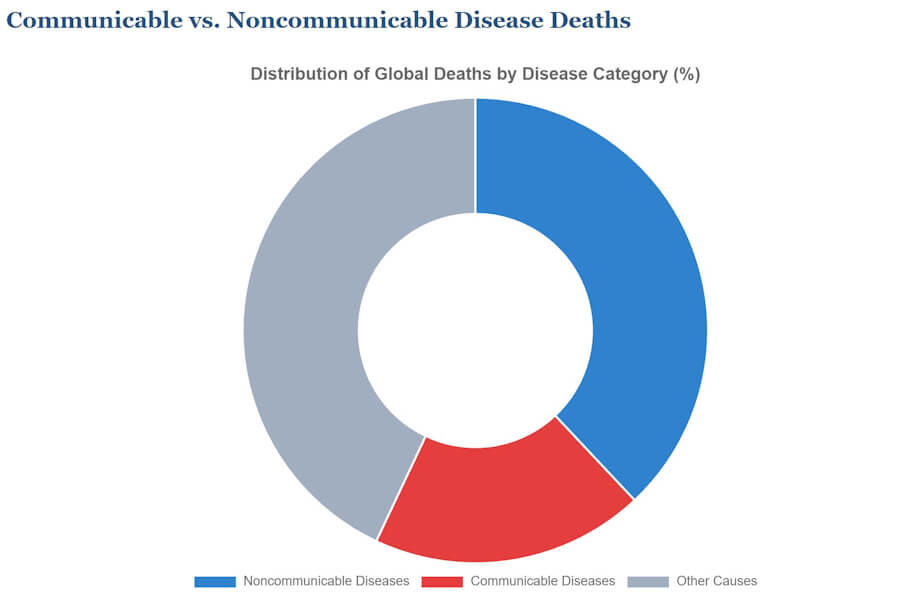
In 2021, approximately 68 million people died worldwide, with the top 10 causes accounting for 39 million deaths - representing 57% of all mortality (World Health Organization, 2024). This concentration reveals how a relatively small number of conditions drive the majority of global deaths, offering clear targets for public health intervention.
The leading causes of death have shifted dramatically over recent decades. While infectious diseases once dominated mortality statistics, noncommunicable diseases now claim the majority of lives globally. In 2021, seven of the top ten causes were noncommunicable conditions, accounting for 38% of all deaths worldwide (World Health Organization, 2024). This transition reflects improvements in sanitation, vaccination programs, and antimicrobial treatments, alongside increases in life expectancy and lifestyle-related risk factors.
Key Finding: Cardiovascular and respiratory conditions dominate the top causes, with ischaemic heart disease and stroke together responsible for approximately 23% of all deaths globally.
Top 10 Causes of Death Worldwide (2021)
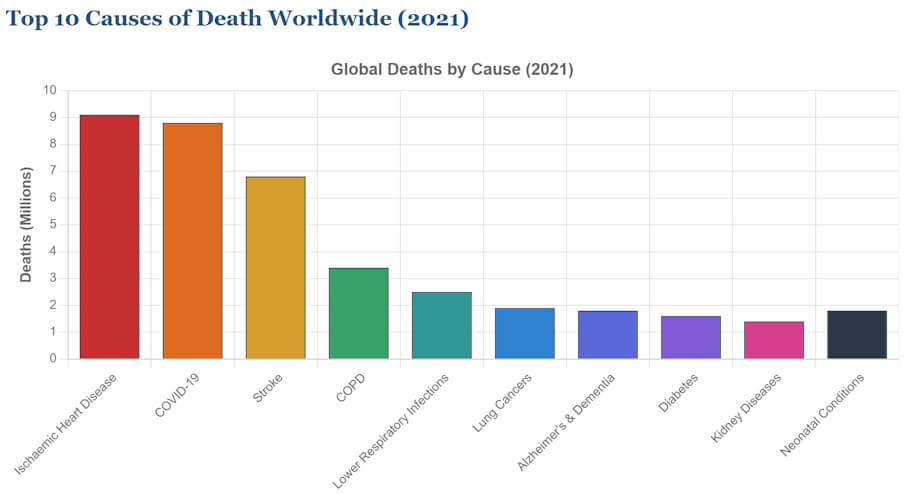
Ranking the Top 10 Causes
| Rank | Cause of Death | Deaths (Millions) | % of Total Deaths | Type |
|---|---|---|---|---|
| 1 | Ischaemic Heart Disease | 9.1 | 13% | Noncommunicable |
| 2 | COVID-19 | 8.8 | 13% | Communicable |
| 3 | Stroke | 6.8 | 10% | Noncommunicable |
| 4 | Chronic Obstructive Pulmonary Disease | 3.4 | 5% | Noncommunicable |
| 5 | Lower Respiratory Infections | 2.5 | 3.7% | Communicable |
| 6 | Trachea, Bronchus, and Lung Cancers | 1.9 | 2.8% | Noncommunicable |
| 7 | Alzheimer's Disease and Dementia | 1.8 | 2.6% | Noncommunicable |
| 8 | Diabetes Mellitus | 1.6 | 2.4% | Noncommunicable |
| 9 | Kidney Diseases | 1.4 | 2.1% | Noncommunicable |
| 10 | Neonatal Conditions | 1.8 | 2.6% | Communicable/Perinatal |
Source: World Health Organization Global Health Estimates, 2024
Detailed Analysis of Each Cause
1. Ischaemic Heart Disease (9.1 Million Deaths)
Ischaemic heart disease, also known as coronary artery disease, remains humanity's deadliest condition. This disease occurs when the blood vessels supplying the heart become narrowed or blocked, typically due to the buildup of fatty deposits called plaques. The result can be chest pain (angina) or, more severely, a heart attack when blood flow is completely blocked.
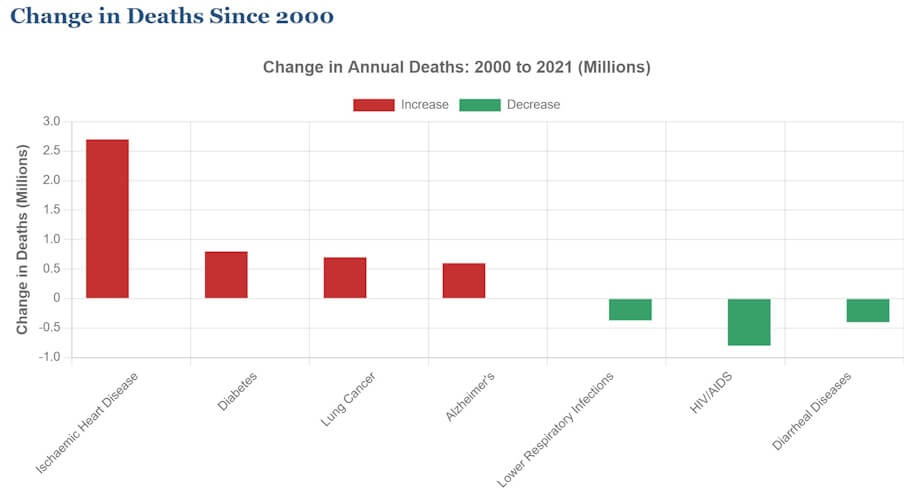
The numbers are staggering and growing. Since 2000, deaths from ischaemic heart disease have risen by 2.7 million - the largest increase of any disease (World Health Organization, 2024). This upward trend reflects multiple factors: aging populations living longer, the global spread of Western dietary patterns high in processed foods and saturated fats, increasingly sedentary lifestyles, and rising rates of diabetes and hypertension, which are key risk factors.
2. COVID-19 (8.8 Million Deaths)
The coronavirus pandemic dramatically reshaped global mortality patterns, with COVID-19 emerging as the second leading cause of death in 2021. This novel infectious disease, caused by the SARS-CoV-2 virus, spread rapidly worldwide after its emergence in late 2019.
COVID-19's position on this list represents an unprecedented public health crisis. In just two years, a previously unknown pathogen claimed more lives annually than stroke or chronic lung disease - conditions that have killed humans for millennia. The virus pushed other causes down by one ranking position (World Health Organization, 2024). While vaccines and treatments have since reduced its impact, COVID-19 demonstrated how quickly a new infectious disease can alter global mortality patterns.
3. Stroke (6.8 Million Deaths)
Stroke occurs when blood flow to part of the brain is interrupted, either by a blockage (ischaemic stroke) or by bleeding (hemorrhagic stroke). Without oxygen, brain cells begin dying within minutes, potentially causing lasting brain damage, disability, or death.
Before COVID-19's emergence, stroke held the second position among causes of death. Responsible for approximately 10% of all deaths worldwide, stroke particularly affects older adults but increasingly strikes younger people as well (World Health Organization, 2024). Major risk factors include high blood pressure, smoking, diabetes, high cholesterol, and atrial fibrillation. Many of these risk factors are modifiable, meaning stroke prevention is possible through lifestyle changes and medication.
4. Chronic Obstructive Pulmonary Disease (3.4 Million Deaths)
COPD is a progressive lung disease that makes breathing increasingly difficult. The term encompasses several conditions, primarily chronic bronchitis and emphysema, which often coexist. Patients experience persistent cough, mucus production, and shortness of breath that worsens over time.
Tobacco smoking causes approximately 80-90% of COPD cases, though long-term exposure to air pollution, occupational dusts, and indoor cooking smoke also contribute significantly, particularly in low- and middle-income countries. Accounting for roughly 5% of global deaths, COPD typically develops over decades, with symptoms often not appearing until significant lung damage has occurred (World Health Organization, 2024).
5. Lower Respiratory Infections (2.5 Million Deaths)
This category includes pneumonia, bronchitis, and other infections affecting the lungs and airways. Lower respiratory infections remain the deadliest communicable disease globally aside from COVID-19, though deaths have declined by 370,000 since 2000 (World Health Organization, 2024).
These infections disproportionately affect young children and elderly adults, whose immune systems may be compromised. Bacterial, viral, and fungal pathogens all cause lower respiratory infections, with pneumonia being the most common and deadly form. Vaccines against pneumococcus and influenza, along with improved access to antibiotics, have helped reduce mortality, though these infections remain a major threat, particularly in resource-limited settings.
6. Trachea, Bronchus, and Lung Cancers (1.9 Million Deaths)
Lung cancer has become increasingly deadly, with deaths rising from 1.2 million in 2000 to 1.9 million in 2021 (World Health Organization, 2024). These cancers develop when abnormal cells grow uncontrollably in the lungs or airways, often spreading to other parts of the body before symptoms appear.
Tobacco smoking remains the leading cause, responsible for about 85% of cases. However, non-smokers also develop lung cancer, with causes including secondhand smoke exposure, radon gas, asbestos, air pollution, and genetic factors. Lung cancer is particularly lethal because it's often detected at advanced stages when treatment options are limited. The five-year survival rate remains low compared to many other cancers.
7. Alzheimer's Disease and Other Dementias (1.8 Million Deaths)
Dementia refers to a group of brain disorders that progressively impair memory, thinking, and daily functioning. Alzheimer's disease accounts for 60-80% of cases, though vascular dementia and other forms also contribute to this category.
This cause of death affects women disproportionately, with 68% of dementia deaths occurring in women globally (World Health Organization, 2024). This gender disparity partly reflects women's longer life expectancy, as dementia risk increases significantly with age. The number of people living with dementia worldwide is projected to nearly triple by 2050 as populations age. Currently, there's no cure, though treatments can temporarily slow symptom progression in some patients.
8. Diabetes Mellitus (1.6 Million Deaths)
Diabetes is a chronic condition affecting how the body processes blood sugar (glucose). Type 1 diabetes occurs when the pancreas produces little or no insulin, while Type 2 diabetes develops when the body becomes resistant to insulin or doesn't produce enough. Type 2 accounts for about 90% of cases.
Diabetes deaths have surged by 95% since 2000, representing one of the fastest-growing causes of mortality globally (World Health Organization, 2024). Additionally, diabetes contributes to an estimated 530,000 kidney disease deaths and about 11% of cardiovascular deaths annually (World Health Organization, 2024). The condition damages blood vessels throughout the body, increasing risk for heart attack, stroke, kidney failure, blindness, and amputations. Rising obesity rates and sedentary lifestyles drive increasing diabetes prevalence worldwide.
9. Kidney Diseases (1.4 Million Deaths)
This category includes chronic kidney disease and acute kidney failure, conditions where the kidneys lose their ability to filter waste products and excess fluids from the blood. Kidney disease often progresses silently for years before symptoms appear.
Diabetes and high blood pressure cause the majority of chronic kidney disease cases. The interconnection between these conditions creates a dangerous cycle: kidney disease worsens diabetes and hypertension, which in turn further damage the kidneys. Many kidney disease deaths are linked to diabetic kidney disease, with approximately 530,000 kidney deaths directly attributed to diabetes annually (World Health Organization, 2024). Chronic kidney disease is particularly costly to treat, with dialysis and kidney transplantation requiring substantial healthcare resources.
10. Neonatal Conditions (1.8 Million Deaths)
Neonatal conditions affect newborns in the first 28 days of life, including premature birth complications, birth asphyxia (lack of oxygen during delivery), infections, and birth defects. Despite ranking tenth overall, these conditions represent the leading cause of death in children under five years old.
Most neonatal deaths occur in low- and middle-income countries where access to quality prenatal and obstetric care is limited. Many of these deaths are preventable with interventions like skilled birth attendants, emergency obstetric care, neonatal resuscitation, and treatment for infections. Progress has been made - neonatal mortality rates have declined significantly over the past few decades - but disparities between rich and poor countries remain stark.
Communicable vs. Noncommunicable Disease Deaths
Trends and Shifts in Global Mortality
The evolution of leading causes of death reveals profound changes in global health over the past two decades. Several diseases have dropped off the top 10 list entirely, while others have emerged as major threats.
HIV/AIDS, which ranked as the seventh leading cause of death in 2000, has fallen to twenty-first place following a 61% reduction in deaths (World Health Organization, 2024). This remarkable achievement resulted from expanded access to antiretroviral therapy, which transformed HIV from a death sentence to a manageable chronic condition in much of the world.
Similarly, diarrheal diseases have dropped from sixth to thirteenth place, with deaths falling by 45% since 2000 (World Health Organization, 2024). Improvements in water quality, sanitation infrastructure, and oral rehydration therapy have saved countless lives, particularly children in developing nations.
Meanwhile, certain noncommunicable diseases have risen in prominence. Diabetes entered the top 10 causes of death for the first time, while Alzheimer's disease and dementia have climbed the rankings as populations age and people live longer with other conditions controlled.
Geographic and Demographic Variations
The leading causes of death vary dramatically depending on a country's income level. High-income nations face primarily noncommunicable diseases, with seven of the top ten causes being conditions like heart disease, dementia, and cancer - diseases often associated with aging populations and lifestyle factors.
In contrast, low-income countries contend with a double burden: both infectious diseases and rising noncommunicable conditions. Lower respiratory infections, diarrheal diseases, malaria, and HIV/AIDS remain major killers in resource-limited settings, while heart disease and stroke also claim increasing numbers of lives.
Age profoundly influences mortality patterns. For children under five, infectious diseases and neonatal conditions dominate. Working-age adults die primarily from injuries, cardiovascular disease, and cancer. Elderly populations face death predominantly from cardiovascular disease, cancer, dementia, and respiratory conditions.
Prevention and Public Health Implications
Many leading causes of death are preventable or can be significantly delayed through known interventions. For cardiovascular diseases - the top killer - controlling blood pressure, reducing cholesterol, stopping smoking, maintaining healthy weight, exercising regularly, and managing diabetes can dramatically reduce risk. These same interventions help prevent stroke, diabetes, and kidney disease.
For respiratory infections and COVID-19, vaccines provide powerful protection. For lung cancer and COPD, tobacco control remains the single most effective intervention. For dementia, there's growing evidence that cardiovascular health measures, cognitive stimulation, and social engagement may reduce risk.
The concentration of deaths in just ten causes represents both a challenge and an opportunity. Focusing resources on preventing and treating these conditions could substantially reduce global mortality. However, this requires sustained political commitment, adequate healthcare funding, and public health systems capable of delivering preventive services and treatment at scale.
Change in Deaths Since 2000
Frequently Asked Questions
How does the World Health Organization collect global mortality data
The World Health Organization gathers death records from national civil registration systems, hospital reporting, and verbal autopsy surveys, then applies statistical modeling to fill gaps in countries with incomplete data. This produces the Global Health Estimates used to rank causes of death.
What is the difference between communicable and noncommunicable diseases
Communicable diseases spread from person to person or through vectors and include infections like COVID-19 and lower respiratory infections. Noncommunicable diseases are not transmissible and develop from chronic, genetic, or lifestyle factors, such as heart disease, cancer, and diabetes.
Why is there a delay before global death statistics are published
Compiling worldwide mortality figures requires collecting, verifying, and standardizing records from nearly 200 countries with varying reporting capacities. This validation process means comprehensive global data typically lags several years behind the current date.
Which cause of death is most preventable
Cardiovascular conditions such as ischaemic heart disease and stroke are among the most preventable through blood pressure control, healthy diet, exercise, and stopping smoking. Tobacco control alone would sharply reduce deaths from lung cancer and chronic obstructive pulmonary disease.
How do causes of death differ between rich and poor countries
High-income countries face mostly noncommunicable diseases linked to aging and lifestyle, such as heart disease, dementia, and cancer. Low-income countries carry a double burden of infectious diseases like malaria and respiratory infections alongside rising chronic conditions.
What are the leading causes of death for young children
Children under five die most often from neonatal conditions and infectious diseases, including premature birth complications, birth asphyxia, pneumonia, and diarrheal illness. Many of these deaths are preventable with skilled birth care and vaccination.
Are cancer deaths counted as a single cause or separately
Cancer is generally reported by specific type rather than as one combined category, which is why trachea, bronchus, and lung cancers appear as their own entry. Grouping all cancers together would place them much higher in the overall rankings.
How might the leading causes of death change in the coming decades
As populations age and live longer, conditions like dementia and diabetes are expected to climb the rankings, with dementia cases projected to nearly triple by 2050. Continued progress against infectious diseases may further shift mortality toward chronic illness.
Insights, Analysis, and Developments
Editorial Note: The leading causes of death worldwide paint a complex portrait of human health in the 21st century - a narrative of both progress and persistent challenges. We've achieved remarkable victories against infectious killers that once ravaged humanity, yet we face mounting casualties from chronic diseases linked to how we live, what we eat, and how our societies are structured. The sudden emergence of COVID-19 as the second leading cause of death reminded us that infectious diseases remain an existential threat capable of upending global health within months. Meanwhile, aging populations and lifestyle factors steadily push conditions like dementia and diabetes higher on the list. Understanding these patterns isn't merely academic - it's essential for allocating research funding, designing health systems, and implementing policies that save lives.
The good news is that many of these deaths are preventable with existing knowledge and tools. The challenge lies in mustering the collective will to prioritize prevention, ensure equitable access to healthcare, and address the social and environmental factors that make people sick in the first place. Every number in these statistics represents a person who mattered to someone, and every prevented death represents a victory worth fighting for.
 Author Credentials: Ian is the founder and Editor-in-Chief of Disabled World, a leading resource for news and information on disability issues. With a global perspective shaped by years of travel and lived experience, Ian is a committed proponent of the Social Model of Disability, a transformative framework developed by disabled activists in the 1970s that emphasizes dismantling societal barriers rather than focusing solely on individual impairments. His work reflects a deep commitment to disability rights, accessibility, and social inclusion. To learn more about Ian's background, expertise, and accomplishments, visit his full biography.