Evo PT Self-Balancing All-Terrain Mobility Transporter
Author: EVO Mobility
Published: 6 Nov 2025 - Updated: 27 Aug 2026
Publication Type: Product Release, Update
Table of Contents:
Synopsis - Definition - Overview - FAQs - Insights, Updates - Related Content
Synopsis
This product announcement introduces the Evo PT, a UK-manufactured self-balancing personal transporter that offers genuine advantages for people with mobility limitations, including seniors and those with disabilities. Unlike conventional electric wheelchairs, this two-wheeled device uses an Auto Safety Gyro System that maintains balance automatically while users control movement through body weight shifts and either a joystick or steer bar for turning. The device's all-terrain capability - handling indoor surfaces, outdoor paths, beaches, and nature trails - addresses a significant gap in mobility solutions for individuals who want to venture beyond smooth, flat surfaces.
At a current price of £12,640 (with VAT exemption available), the Evo PT presents a mid-range option in the assistive mobility market, featuring practical specifications including a 20-38 km range, on-the-spot turning capability, and the ability to handle 20% inclines and modest obstacles. For those exploring alternatives to traditional wheelchairs or mobility scooters, particularly individuals seeking greater versatility in outdoor environments, this British-designed product represents an interesting option worth investigating through demonstration bookings.*
At a Glance
- 1 - The Evo PT turns on the spot with a 0.0 m turning radius. It weighs 43 kg with batteries and carries a maximum load of 120 kg.
- 2 - Users control forward and backward motion by shifting their body weight. Turning is handled by either a joystick model or a steer bar version.
- 3 - The device climbs inclines of up to 20% and clears obstacles up to 4 cm going up and 15 cm coming down. It offers a selectable top speed of 6 or 9 km/h to suit different settings.
- 4 - An Auto Safety Gyro System works as an independent mechanism that maintains balance and security at all times. Regenerative motor braking and anti-tip protection are included, and live demonstrations can be booked directly with Evo Mobility.
Topic Definition
- Self-Balancing Personal Transporter
A self-balancing personal transporter is a powered mobility device that keeps itself upright using gyroscopic sensors and motors, allowing a seated or standing user to move without manually managing balance. Instead of the four wheeled footprint found on most electric wheelchairs and scooters, this type of device typically rides on two wheels and responds to subtle shifts in the user's body weight for forward and backward travel, with a joystick or steer bar handling turns. The self-balancing approach keeps the platform compact, enables tight on the spot turning, and can improve traction across mixed surfaces such as paths, grass, sand, and trails. Because the design depends on active electronic stabilization, safety features like anti-tip protection, regenerative braking, and a dedicated balance system are central to how these transporters work, and a hands-on trial is usually recommended so users can adjust to the gyroscopic controls before relying on the device day to day.
Overview
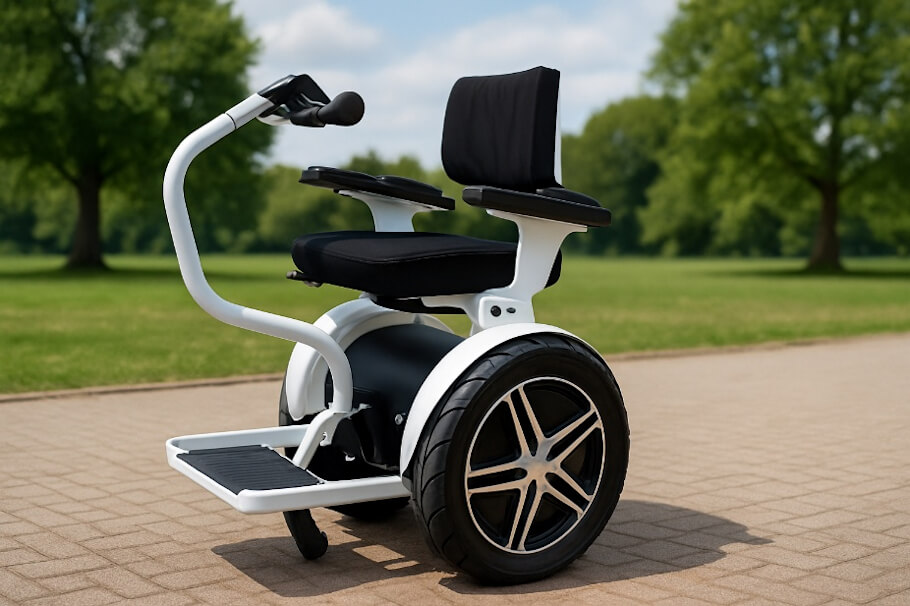
Evo Mobility Ltd is proud to announce the launch of the Evo PT, a revolutionary UK-manufactured self-balancing personal transporter that redefines mobility for users with diverse accessibility needs. The Evo PT is not just an electric wheelchair - it's a versatile and robust two-wheeled solution designed for indoor, outdoor, and off-road use, delivering freedom, control, and confidence.
Designed with a focus on safety, comfort, and affordability, the Evo PT is ideal for navigating everyday life - from home and shopping trips to outdoor adventures like nature trails, the beach is all now possible.
"We created the Evo PT to give people more than just mobility - we wanted to deliver independence and a sense of empowerment," said a spokesperson from Evo Mobility. "With cutting-edge self-balancing technology, users can move safely and freely across various terrains."
The Evo PT uses a unique Auto Safety Gyro System, an independent safety mechanism that always ensures balance and security.
Forward and backward motion is controlled by shifting body weight, while a joystick or the steer bar version allows smooth left and right turns. With this intuitive system, users are always in full control, without the need to manually balance.
Accessibility Without Compromise
Priced affordably at £12,640 the Evo PT offers value without sacrificing quality. VAT exemption is available with a valid certificate; the company can help with this process.
Flexible finance options are also available through Evo Mobility's partner finance providers.
Product Demonstrations and Brochures Live demonstrations can be easily booked via the website or by simply giving us a call.
Brochures and further product details are available on request.
Product Specifications
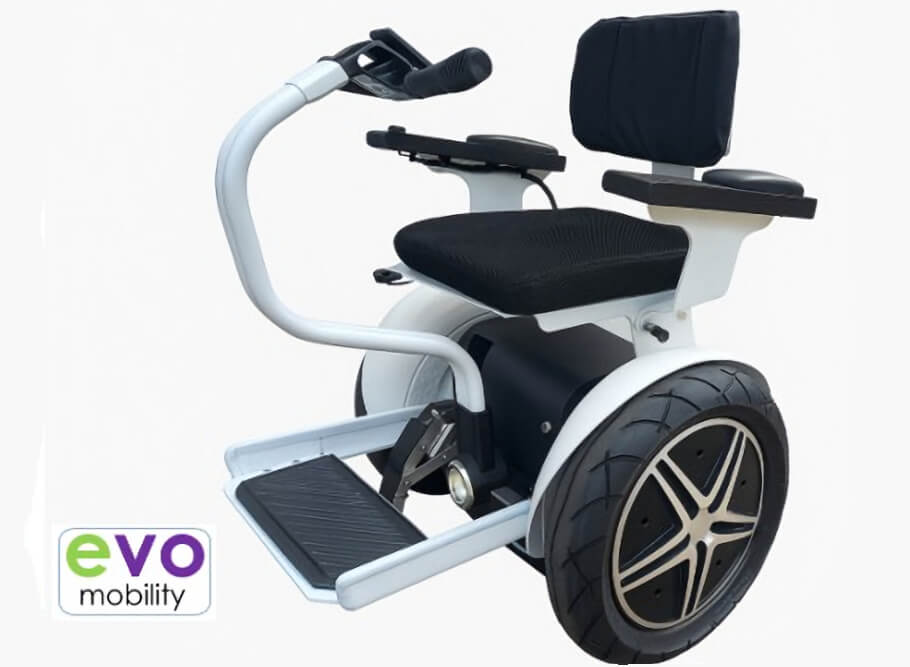
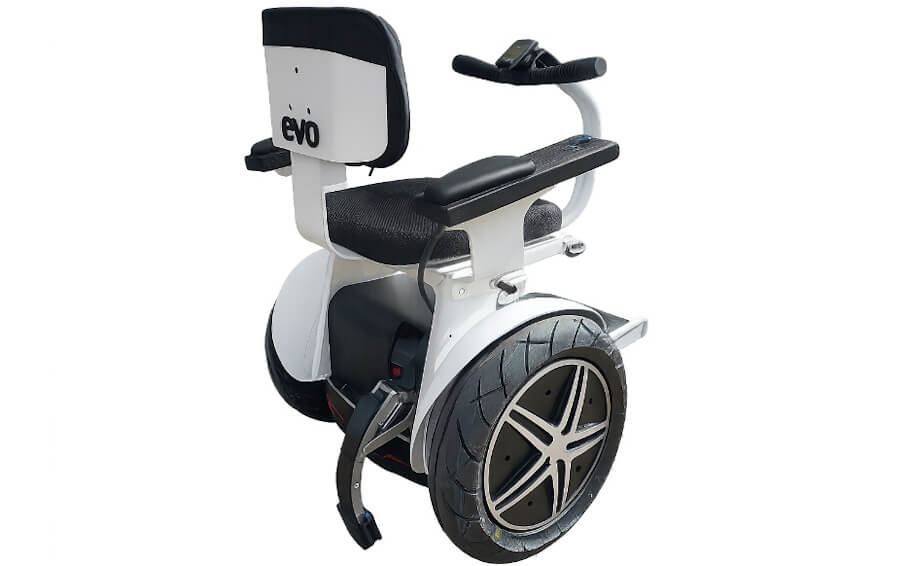
- Type: Two-wheeled, self-balancing personal transporter
- Top Speed: 6 or 9 km/h (selectable)
- Range: 20 - 38 km
- Turning Radius: 0.0 m (on-the-spot turning)
- Weight: 43 kg (with batteries)
- Max Load: 120 kg
- Obstacle Clearance: Up to 4 cm (ascend), 15 cm (descend)
- Grade ability: Up to 20% incline
- Battery: 11.2 Ah / 55 V Lithium-ion
- Control: Gyroscopic motion + joystick and steer bar steering models available.
- Frame: Lightweight aluminum
- Seat: Adjustable, padded with foldable backrest
- Braking System: Regenerative electric motor braking
- Anti-Tip Protection: Included
- Colour White/black
Evo Mobility
Evo Mobility is a subsidiary of Propel Energy Ltd a UK-based mobility innovation company committed to redefining independence through advanced personal transport solutions. All products are designed and assembled in the UK with safety, functionality, and freedom in mind.
Office: Evo Mobility, Unit 2, Greaves Way Industrial Estate, Leighton Buzzard, Bedfordshire, LU7 4UB.
Tel: 01525 376916.
Evo Mobility is a trade name of Propel Energy Ltd
Frequently Asked Questions
NOTE: Researched FAQs by Disabled World (DW)
How long does it take to learn to use a self-balancing mobility device
Most users need a short period of practice to get comfortable with weight shift controls and gyroscopic steering. A supervised demonstration is the best way to judge the learning curve before buying.
Can the Evo PT be used safely in wet or rainy weather
Buyers should confirm weather performance directly with Evo Mobility before use in rain or on wet ground. Testing the device in the conditions you expect to face is always recommended.
Is VAT exemption available on the Evo PT
Yes, VAT exemption is available with a valid certificate. The company states it can help users through that process.
How is the Evo PT different from a mobility scooter
A mobility scooter usually rides on three or four wheels and steers with handlebars. The Evo PT uses two wheels, self-balancing technology, and body weight shifts for movement, which allows on the spot turning.
What battery does the Evo PT use and how far can it travel
The device runs on an 11.2 Ah and 55 V lithium-ion battery. Its stated range is 20 to 38 km depending on conditions and use.
Can the Evo PT handle beaches and nature trails
Yes, it is designed for indoor, outdoor, and off-road use including beaches and trails. Users are advised to test it on the specific terrain relevant to their lifestyle.
Are finance options available for the Evo PT
Flexible finance options are offered through partner finance providers. Details can be arranged directly with Evo Mobility.
Where is the Evo PT designed and made
The Evo PT is designed and assembled in the United Kingdom. It is produced by Evo Mobility, a trade name of Propel Energy Ltd based in Leighton Buzzard, Bedfordshire.
Insights, Analysis, and Developments
Editorial Note: The Evo PT enters a mobility market where innovation has often lagged behind user needs, particularly for those seeking adventure beyond paved surfaces. While self-balancing technology has proven itself in consumer products, its application to accessibility devices remains relatively uncommon, making this UK-manufactured transporter noteworthy in its approach to solving real-world mobility challenges. The device's ability to handle beaches, trails, and uneven terrain could meaningfully expand recreational opportunities for users who have felt limited by conventional wheeled mobility aids. However, potential buyers should thoroughly test the device on terrain types relevant to their lifestyle, verify its performance in various weather conditions, and carefully consider the learning curve associated with gyroscopic controls. As with any significant mobility purchase, hands-on demonstration and professional assessment of individual needs remain essential steps before committing to this innovative but relatively untested platform in the accessibility market.*
Attribution/Source(s): This quality-reviewed publication was selected for publishing by the editors of Disabled World (DW) due to its relevance to the disability community. Originally authored by EVO Mobility and published on 6 Nov 2025, this content may have been edited for style, clarity, or brevity.
* Editorial additions by Ian C. Langtree.