Family Support After Spinal Cord Injury Rehab Discharge
Author: Massimo Lorusso
Published: 27 Sep 2026
Publication Type: Submitted Article
Table of Contents:
Synopsis - Definition - Overview - FAQs - Insights, Updates - Related Content
Synopsis
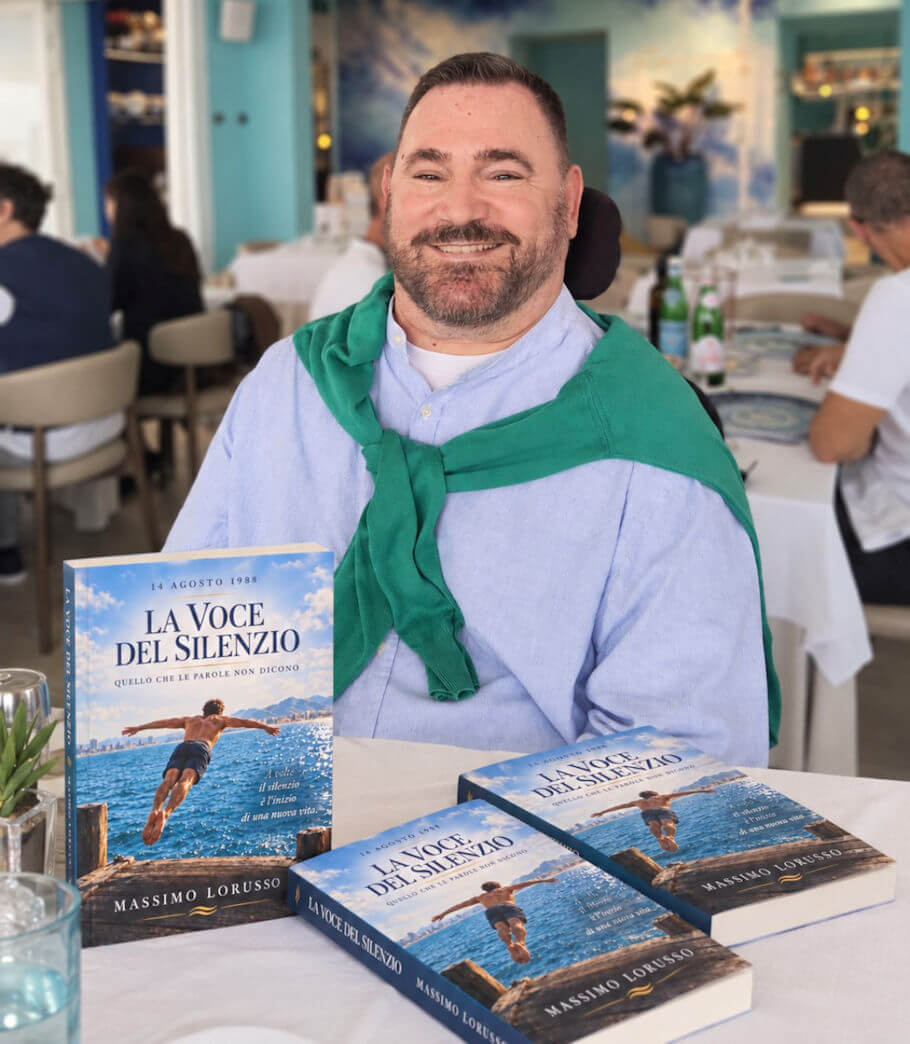
This information is a first-person account from a man who sustained a cervical spinal cord injury in 1988 after diving into the sea in Rimini at seventeen. He draws on nearly four decades of lived experience, along with his autobiography La Voce del Silenzio - Quello che le parole non dicono, to look at what happens to a family once hospital rehabilitation ends. His main point is that discharge sends the whole family into its own rehabilitation, not just the patient. He supports this with World Health Organization guidance, which calls long-term management after spinal cord injury indispensable and notes that informal carers often face stress, role strain, financial burden and social isolation. The account is useful because it pairs personal detail with a practical framework. That makes it relevant for people with high support needs, family caregivers, aging parents, rehabilitation professionals and policymakers who want to know whether support at home actually protects relationships and personal autonomy over the long term.*
At a Glance
- 1 - The author left a post-rehab facility in Viserbella di Rimini after only two days, choosing to make home the center of his life.
- 2 - His mother, who learned every detail of his physical care after 1988, later lived for years with Alzheimer's disease and died in August 2019.
- 3 - He argues that inaccessible housing, lack of respite, poor transport and inflexible services are failures of systems, not failures of family character.
- 4 - A power wheelchair, environmental controls and voice technology do not make him self-sufficient. They remove unnecessary moments when another person must act for him.
Topic Definition
- Long-Term Family Caregiving After SCI
Long-term family caregiving after spinal cord injury (SCI) is the ongoing practical, physical and emotional support that relatives give a person with a spinal cord injury once formal hospital and rehabilitation care has ended. It usually covers help with transfers, bathing, dressing, positioning, night-time care and daily routines, and it often lasts for decades. Because this support comes mostly from informal, unpaid carers, it can change family roles and bring stress, financial strain and isolation unless paid personal assistance, respite services, accessible housing and assistive technology share the load. Good long-term caregiving keeps the injured person in charge of their own decisions and protects the independence, health and relationships of the family members who provide the help
Overview
The Family After Discharge: What 38 Years Taught Me About Long-Term Support
Rehabilitation has a discharge date. Family life does not.
That difference has shaped almost everything I have learned since 1988, when a dive into the sea in Rimini at seventeen changed my physical life permanently. Hospitals taught me how a body with a cervical spinal cord injury had to be managed. What nobody could fully teach my family was how to build an ordinary life around needs that would not disappear after rehabilitation ended.
To understand why that mattered, it helps to know that my story did not begin with spinal cord injury.
My parents, Michele and Rosa, came from southern Italy to the Milan area and built a family of eight children. Money was limited, but our home was full: brothers and sisters talking over one another, my mother cooking, my father working hard to support us, Sunday meals, arguments that disappeared as soon as someone truly needed help. Long before care became a medical word in my life, I had already learned that a family is an arrangement of responsibilities, affection, sacrifice and very ordinary routines.
Then, at seventeen, those routines had to be rebuilt.
After months of hospital and rehabilitation, my parents were frightened about bringing me home. They had not been trained for everything that would now be required. The bathroom needed adapting. Transfers, washing, dressing, positioning and night-time care had to be learned. For a short period, instead of returning directly to Milan, I went to a facility in Viserbella di Rimini.
I stayed two days.
I did not leave because I had suddenly become physically independent. I was not. I left because I wanted home to remain the centre of my life, and my family and I were prepared to learn what that decision required.
My mother learned how to move me, wash and dress me, position my body and manage transfers safely. My niece Evelyn also became an important and consistent part of that practical support. They learned through repetition, fear, mistakes, patience and responsibility.
That experience taught me something rehabilitation systems should never forget: when a person goes home with significant support needs, the family is not simply receiving the patient back. The family itself is entering a new phase of rehabilitation.
The World Health Organization describes long-term management after spinal cord injury as indispensable, not optional. It also notes that people with more severe injuries may require ongoing support largely provided by informal carers, who can experience stress, role strain, financial burden and social isolation. Those words describe a structural reality that families often discover privately.
The first danger is obvious: exhaustion.
The second is less visible: a person who loves you can gradually become identified only by what they do for you.
A mother becomes "the caregiver." A wife becomes "the caregiver." A relative becomes "the one who helps." Their own work, rest, relationships, ambitions and identity can shrink around the needs of another person.
I have never believed that this should be considered the natural price of love.
Needing help does not mean that one life should consume another.
This becomes even clearer over decades, because family roles never remain fixed. The person who receives care at one stage may later become the person trying to support someone else emotionally. The strong parent ages. Children become adults. Relationships change. Illness enters other parts of the family.
My mother, who had learned to care for me after 1988, later lived for years with Alzheimer's disease. She died on 4 August 2019. Watching the woman who had once learned every detail of my physical care gradually need care herself changed the meaning of dependence for me again.
My father, whose working life had helped sustain our large family, later developed Parkinson's disease. My daughter Sara grew from the baby I first held just before the events of August 1988 into an adult with her own life. Sonia, whom I met in 2016 and later married, became part of a family story that had already crossed generations.
None of these relationships can be understood if I am described only as "the person who needs assistance."
I am also a son, father, husband, brother and writer. The people around me are not extensions of my care plan. They have lives of their own.
That is why long-term support must do more than keep a person safe.
Good support should protect relationships.
It should make it possible for a family member to be a spouse rather than an unpaid service system. It should allow a mother to remain a mother, not only a pair of hands. It should allow the person receiving help to make decisions rather than turning every practical dependency into a transfer of authority.
Assistive technology matters here too. The World Health Organization emphasizes that assistive products can improve functioning, independence and participation, while also reducing some of the demands placed on carers. I have experienced that directly. A power wheelchair, environmental controls, voice technology and other tools do not make me self-sufficient. They do something more realistic: they remove some unnecessary moments in which another person would otherwise have to act for me.
That matters to both people.
If I can control part of my environment myself, someone else does not have to interrupt what they are doing. If I can dictate my writing, another person does not have to become my hands at a keyboard. If a service is accessible and reliable, my family does not have to compensate for every failure in the environment.
This is also why I reject the idea that "wanting is enough." A family can be loving, determined and resourceful and still be overwhelmed by inaccessible housing, inflexible services, lack of respite, poor transport or inadequate support. Those are not failures of character. They are failures of systems.
Personal responsibility matters where real choices exist. Institutions and services have a different responsibility: to create the conditions in which those choices can actually be exercised.
Thirty-eight years after my rehabilitation began, I no longer think the most important question is whether a person with high support needs can become independent in the conventional sense.
I would ask something broader.
Can the person continue to direct their own life?
Can the people who love them continue to have lives of their own?
Can support change as the family changes?
Can technology remove unnecessary dependence?
Can services prevent love from becoming exhaustion?
A successful discharge should not be measured only by whether someone made it home.
The real test comes years later: whether home remains a place where several lives can continue, rather than a place where one person's needs quietly absorb everyone else's.
My autobiography, "La Voce del Silenzio - Quello che le parole non dicono" ("The Voice of Silence - What Words Do Not Say"), is the primary narrative source for the personal episodes in this article. It tells the wider family story before and after 1988.
Frequently Asked Questions
NOTE: Researched FAQs by Disabled World (DW)
What is respite care for families supporting someone with a spinal cord injury?
Respite care is short-term replacement care that gives family caregivers a planned break. It can be provided at home by a trained aide, at an adult day program, or through a brief stay in a residential facility, and it helps reduce caregiver burnout.
Can family members be paid for caregiving after a spinal cord injury?
In many regions, yes. Programs such as Medicaid self-directed care, Veterans Affairs caregiver support, and some provincial or state home care programs allow eligible family members to be paid, although rules and eligibility vary widely by location.
What assistive technology helps people with cervical spinal cord injuries live more independently?
Common tools include power wheelchairs with alternative controls, voice-activated smart home systems, environmental control units, speech recognition software, mouth sticks, eye-gaze computer access, and adapted phones. These tools can reduce how often a caregiver needs to step in for routine tasks.
How can caregivers prevent injury when helping with transfers?
Caregivers should get hands-on training from a physical or occupational therapist, use proper body mechanics, and consider equipment such as transfer boards, ceiling lifts, or mechanical patient lifts. Using lifts for dependent transfers greatly lowers the risk of back injury.
What home modifications are most important after a spinal cord injury?
Priorities usually include a step-free entrance or ramp, wider doorways, a roll-in shower, grab bars, an accessible bedroom on the main floor, and enough turning space for a wheelchair. An occupational therapist can do a home assessment to guide these changes.
What support is available for the mental health of family caregivers?
Caregivers can use counseling, caregiver support groups, peer mentoring programs run by spinal cord injury organizations, and employee assistance programs. Talking with a primary care doctor about stress, sleep problems, or low mood is also an important step.
How does aging affect people who have lived with a spinal cord injury for decades?
Long-term spinal cord injury can bring earlier shoulder wear, reduced bone density, cardiovascular changes, skin problems, and increased fatigue. Support needs often grow over time, so care plans and equipment should be reviewed regularly.
What is self-directed personal assistance?
Self-directed personal assistance is a model where the disabled person hires, trains, schedules, and supervises their own support workers, often using public funding. It keeps control over daily routines with the individual and can take pressure off family members.
Insights, Analysis, and Developments
Editorial Note: Most discussion of spinal cord injury centers on the acute phase: surgery, stabilization and the months of therapy before someone goes home. This account moves the focus to the decades that come after, when roles inside a family shift in ways no care plan anticipates. A parent who once learned transfers and positioning may later need care herself. A child grows into an adult with a separate life. A spouse joins a family story that was already complicated. The author's argument is simple and hard to dismiss: support should be judged by whether everyone in the household can keep a life of their own, not only by whether the disabled person is safe. For caregivers, social workers, rehabilitation teams and anyone designing home and community services, the questions he raises - about self-direction, respite, accessible environments and technology that reduces unnecessary dependence - are a practical checklist for measuring whether long-term support is really working.*
* Editorial additions by Ian C. Langtree.