Disabled, Not Done: Building Recovery in Tennessee
Author: Adam Watson
Published: 13 Jul 2026 - Updated: 9 Aug 2026
Publication Type: Submitted Article
Table of Contents:
Synopsis - Definition - Overview - FAQs - Insights, Updates - Related Content
Synopsis
This article, written by Adam Watson, offers a first-person account of how a severe brachial plexus injury in 2018 reshaped his relationship with work, ability, and purpose, and how that experience shaped his vision for a recovery model rooted in real responsibility rather than encouragement alone, drawing on a background in firefighting, emergency medicine, offshore operations, and working-dog training, he argues that recovery is an ecosystem problem in which the environment around a person determines whether they gain meaningful responsibility and skill-building opportunities, and he describes The Sanctuary, a developing capability platform in the Sevierville, Gatlinburg, and Pigeon Forge area, designed so disabled people, veterans, and first responders can practice practical field skills, work alongside dogs, and contribute to stewardship, making it a thoughtful and honest read for anyone rebuilding after disruption, including seniors and people living with disabilities who want agency rather than pity.*
At a Glance
- 1 - The author draws on a wide field background including offshore operations, survival instruction, and working-dog training to define capability as what a person can do when conditions become difficult.
- 2 - Working dogs are central to the method because they require timing, awareness, and consistency, while outdoor terrain is valued for giving a person immediate feedback.
- 3 - The Sanctuary remains in development, with no finalized campus, land, public-agency authority, rescue role, or medical claim being made.
Topic Definition
- Adaptive Capability
Adaptive capability (or capacity) is the practice of restoring what a person can meaningfully do after an injury or impairment, not by ignoring the limitation but by clearly identifying it, designing a safe and lawful method to work around it, testing that method in real conditions, and then measuring the actual results. Unlike approaches that focus only on encouragement or treatment, adaptive capability treats the surrounding environment - responsibility, useful pressure, feedback, and community - as part of the outcome, so that a person regains agency through genuine contribution rather than passive recovery.
Overview
Disabled, Not Done: Building Recovery Through Capability in East Tennessee
In 2018, a severe brachial plexus injury left me with major functional loss of my right arm. The injury changed how I moved through the world, but it did not remove my responsibility to remain useful.
Before the injury, my life was built around demanding environments. I worked in firefighting and emergency medicine, offshore field operations, working-dog training, survival instruction, and field logistics. Those environments taught me that capability is not an abstract idea. It is what a person can do when conditions are difficult, equipment fails, plans change, and other people depend on them.
After the injury, I learned that recovery is not only a medical event. It is also an ecosystem problem.
A person may receive treatment and encouragement, but the environment around that person still determines whether they have meaningful responsibility, useful pressure, skill-building opportunities, and a tribe that expects them to participate. Behavior is the visible output of that ecosystem.
That understanding led me to begin building The Sanctuary in the Sevierville, Gatlinburg, Pigeon Forge, and broader Smokies area of East Tennessee.
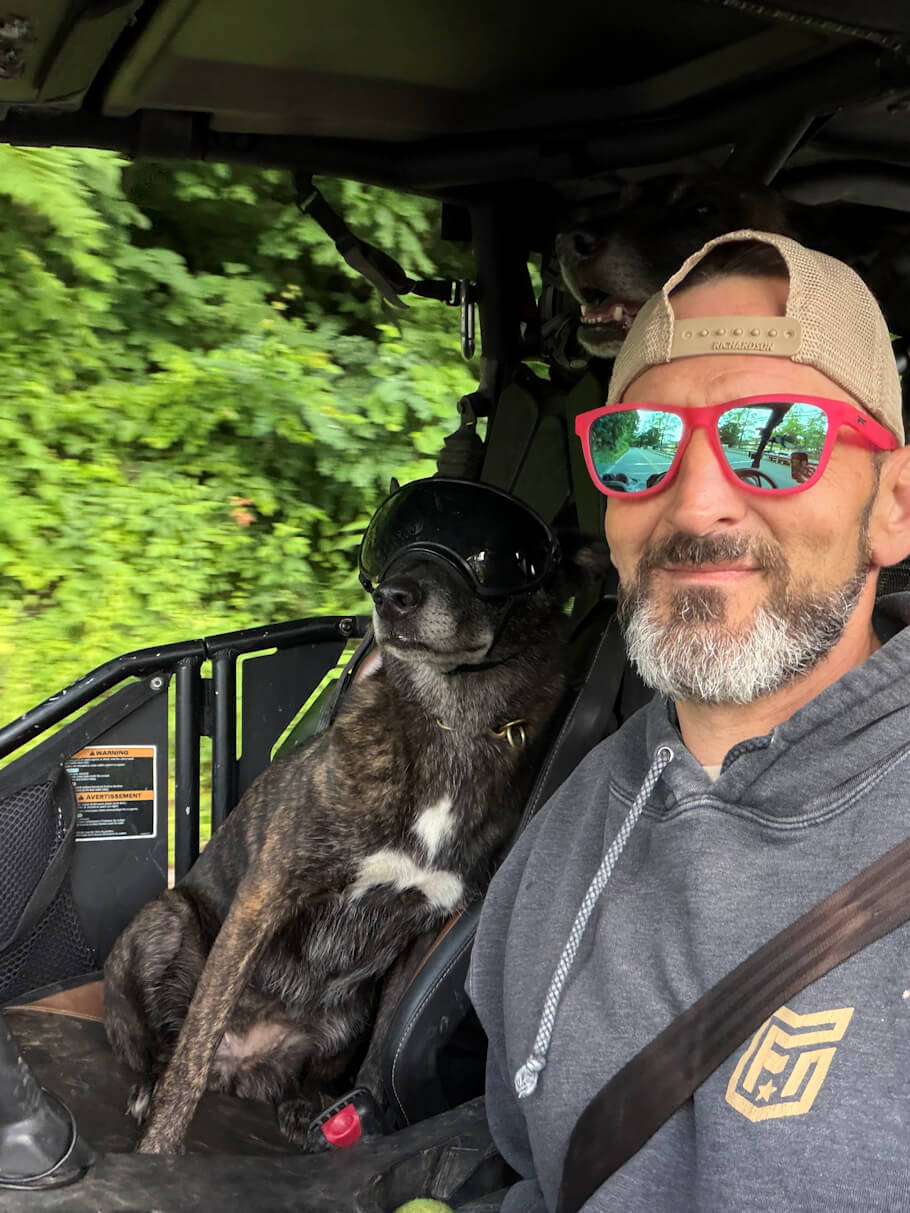
The Sanctuary is being developed as a recovery and capability platform built around adaptive outdoor access, practical field skills, working dogs, stewardship, faith, responsibility, and measurable usefulness. It is not designed as inspiration-only storytelling, a therapy brand, or tactical entertainment.
The purpose is to create environments where disabled people, veterans, first responders, and others rebuilding after disruption can practice real skills, solve problems, contribute to useful work, and regain agency.
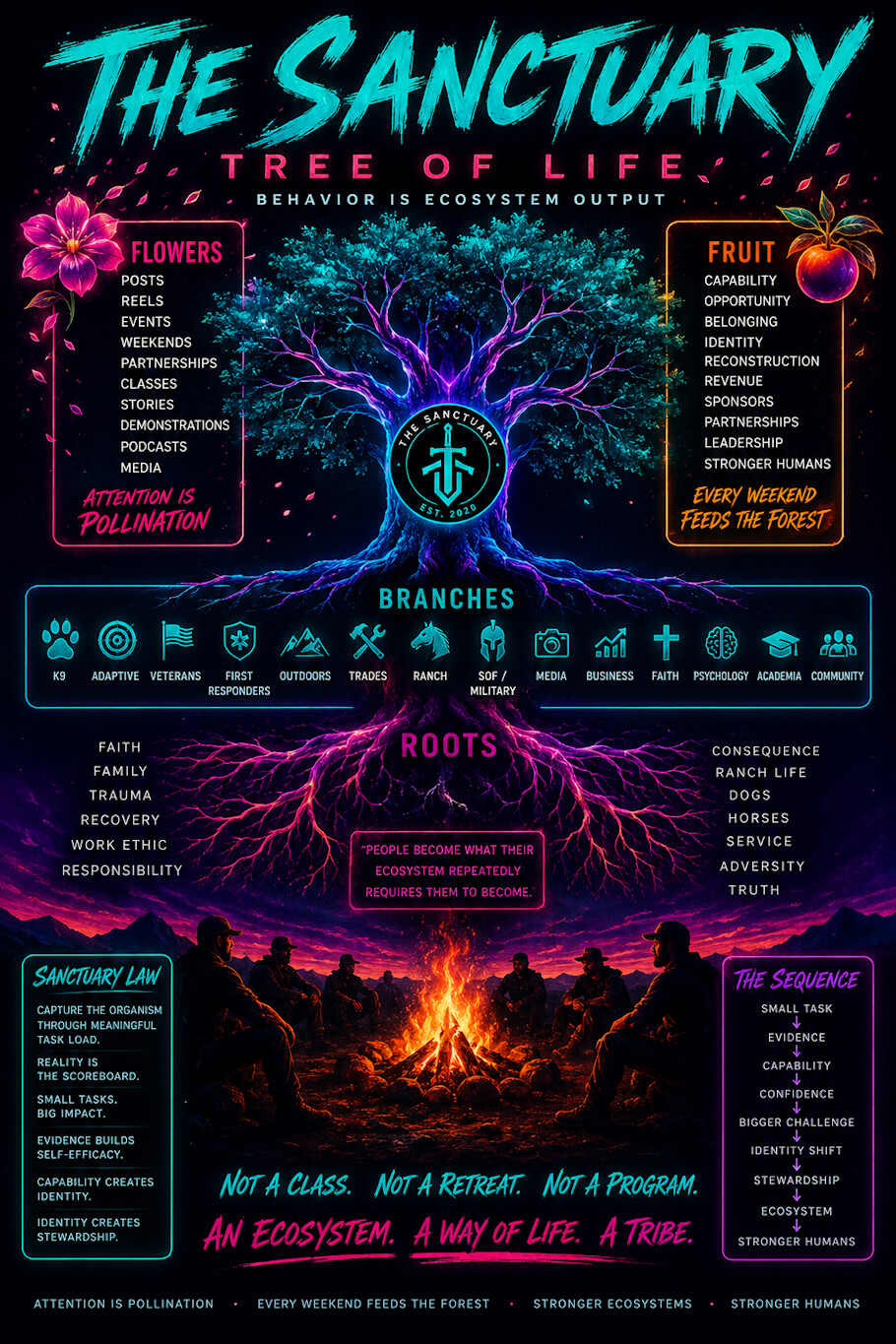
Working dogs are part of that process because they demand timing, awareness, consistency, and responsibility. Outdoor terrain matters because it provides immediate feedback. Stewardship matters because recovery becomes stronger when a person is contributing to something beyond themselves.
Adaptive capability does not mean pretending impairment is irrelevant. It means identifying the actual limitation, building a safe and lawful method around it, testing that method, and measuring what the person can now accomplish.
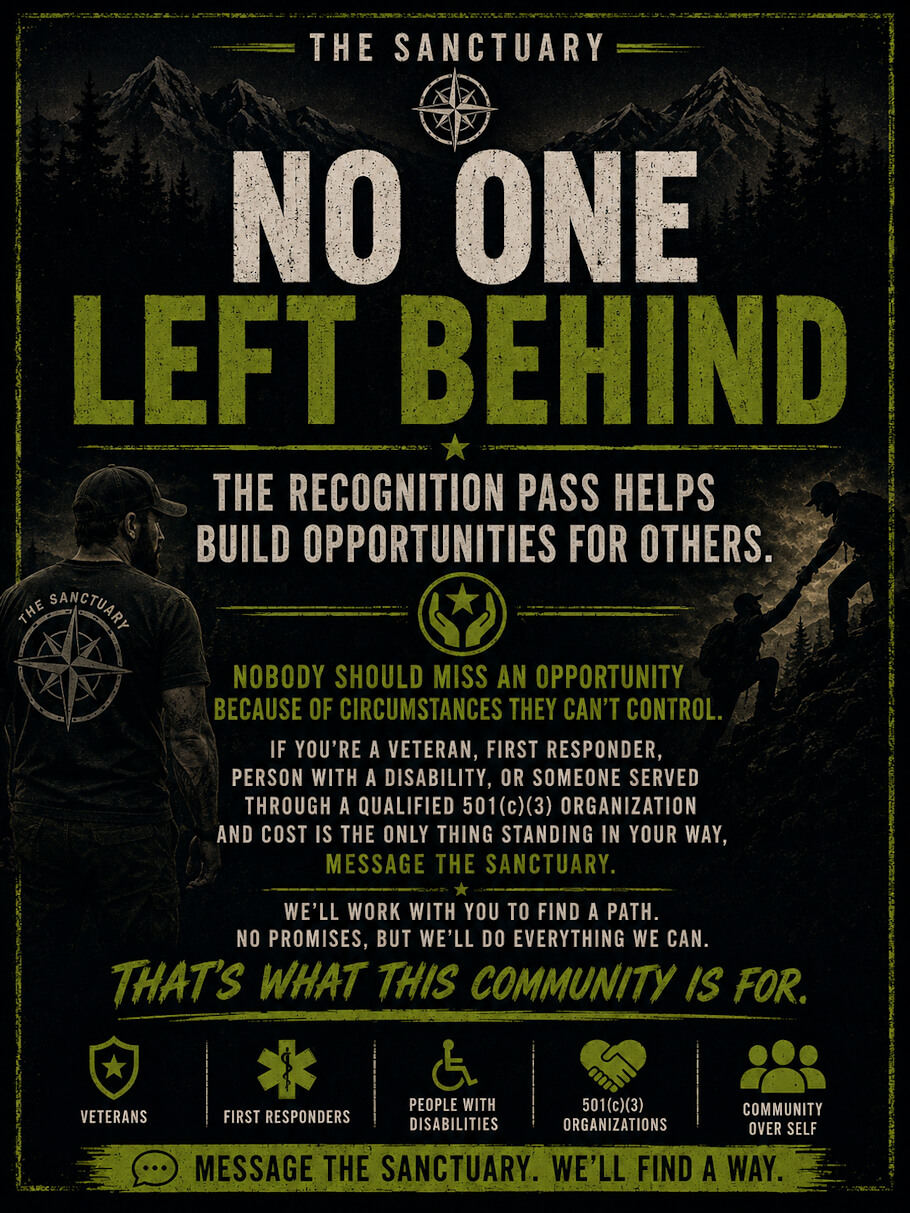
The Sanctuary is still in development. Its land and host-site process is not finalized, and no public-agency authority, rescue role, medical claim, or finalized physical campus is being claimed.
The work begins with a simple standard: disabled does not mean finished. Recovery should create capability, responsibility, connection, and a reason to become useful again.
Frequently Asked Questions
NOTE: Researched FAQs by Disabled World (DW)
Is The Sanctuary currently open to the public?
No, The Sanctuary is still in development, and its land and host-site process has not been finalized, so there is no open campus to visit at this time.
Who is The Sanctuary intended to serve?
It is being built for disabled people, veterans, first responders, and others rebuilding after disruption who want to practice real skills and regain a sense of agency.
Does The Sanctuary provide medical treatment or therapy?
No, it is not designed as a therapy brand or medical service, and no medical claim, rescue role, or public-agency authority is being claimed.
Where in East Tennessee is The Sanctuary being developed?
It is being developed in the Sevierville, Gatlinburg, and Pigeon Forge area within the broader Smokies region of East Tennessee.
How can someone follow the project or get involved as it develops?
Because the project is still in its early stages, the best approach is to watch for updates from Adam Watson directly as the host-site process and future plans are announced.
Insights, Analysis, and Developments
Editorial Note: What separates this account from typical recovery narratives is its refusal to treat encouragement as an endpoint, Watson makes a practical case that lasting recovery depends less on motivation and more on whether a person is placed in an environment that expects real contribution, and while The Sanctuary is still taking shape, the underlying standard he sets - identify the limitation, build a safe method around it, then measure what a person can now accomplish - gives the piece a grounded honesty that readers rebuilding their own lives are likely to find worth considering.*
* Editorial additions by Ian C. Langtree.