TactivoPlay Audio Games for Blind and Low-Vision Players
Author: TactivoPlay Audio Games
Published: 26 Apr 2026 - Updated: 20 Aug 2026
Publication Type: Gaming
Table of Contents:
Synopsis - Definition - Overview - FAQs - Insights, Updates - Related Content
Synopsis
This article introduces TactivoPlay, a Windows based collection of 20 accessible audio games designed from the start for blind and low-vision players, with the first 10 titles already in beta testing. The lineup spans racing, fishing, memory challenges, card games, trivia, and arcade style action, all built around spoken instructions, clear sound cues, stereo or positional audio, and uncomplicated controls that do not depend on screens or fine motor speed. Because the project treats sound as the primary interface rather than a retrofit, it is useful reading for blind gamers, families, teachers, accessibility advocates, support organizations, seniors who find small text and rapid visual play difficult, and disabled players who have long been pushed to the margins of mainstream gaming. Player feedback will help shape the remaining 10 games, giving the disability community a direct voice in how the collection develops.*
At a Glance
- 1 - Titles span racing, fishing, memory, cards, trivia, and arcade action.
- 2 - Bug Basher uses stereo sound to help players locate bugs across an arena.
- 3 - Creator Ben Tyers previously built One Button Controlled Games, a set of more than 50 single-input titles.
- 4 - Tyers is the author of GameMaker Fundamentals and GameMaker Programming Challenges, the latter offering 500 coding exercises.
Topic Definition
- Accessible Audio Games
Accessible audio games are computer or mobile games designed to be played primarily through sound rather than visual graphics, using spoken instructions, music, sound effects, and stereo or positional audio cues to convey gameplay information. They are built so that players who are blind, have low vision, or otherwise prefer non-visual interaction can play independently without relying on screen readers patched onto a sighted experience. Genres range from action and racing to card games, quizzes, memory puzzles, and adventure titles, and most run on standard Windows PCs, Macs, or mobile devices using ordinary headphones or speakers.
Overview
TactivoPlay: The Audio Games Collection Designed for Blind and Low-vision Players
Ben Tyers is the creator of TactivoPlay, a new collection of accessible audio-based games for Windows PCs and laptops. Instead of treating accessibility as an extra option added later, the games are being designed from the beginning around spoken instructions, clear sound cues, simple controls, and non-visual gameplay.
Gaming is often described as something for everyone, but for blind and low-vision players, many games still rely too heavily on screens, visual menus, fast reactions, and tiny on-screen details. TactivoPlay aims to change that by putting sound at the heart of play.
The Audio Games Collection
The collection will include 20 audio games in total. The first 10 are already in beta testing, with the remaining 10 planned to be shaped by feedback and suggestions from players. Current games include:
- Audio Racer
- Beat Tapper
- Black Jack
- Bug Basher
- General Knowledge Quiz
- Hi-Low Card Game
- Pizza Maker Plus
- Sequence Memory
- Soundcast Fishing
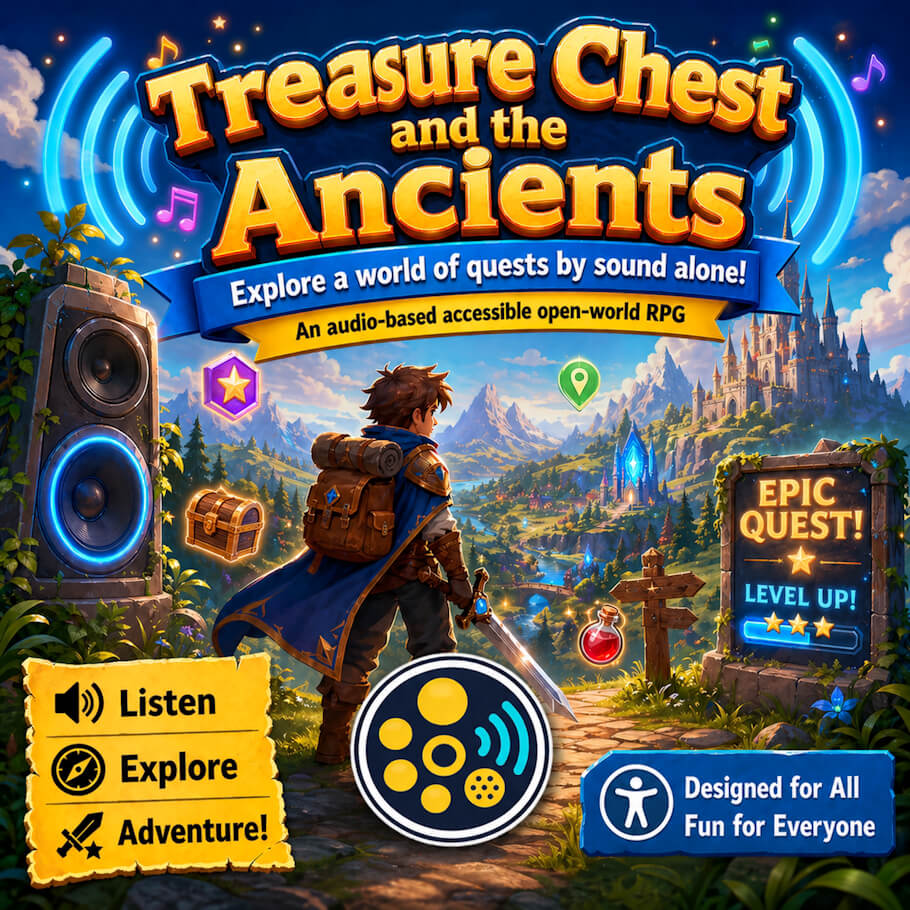
- Treasure Chest and the Ancients
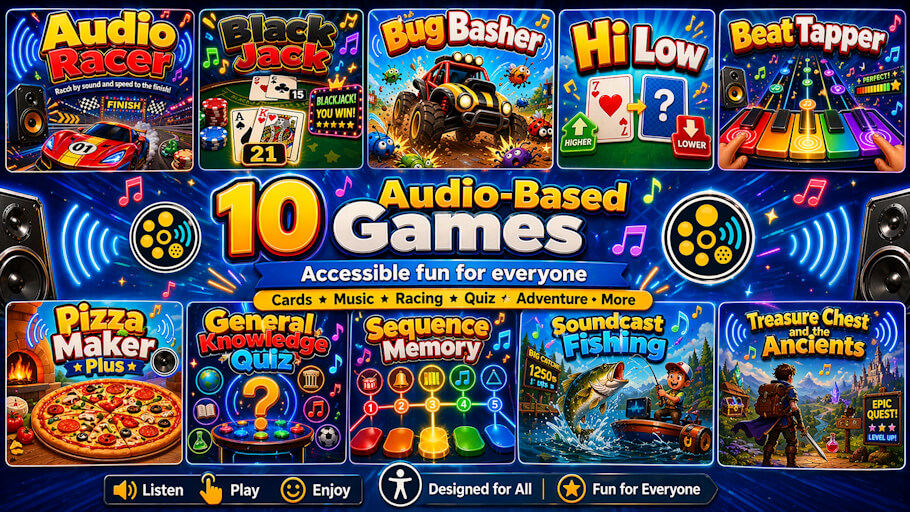
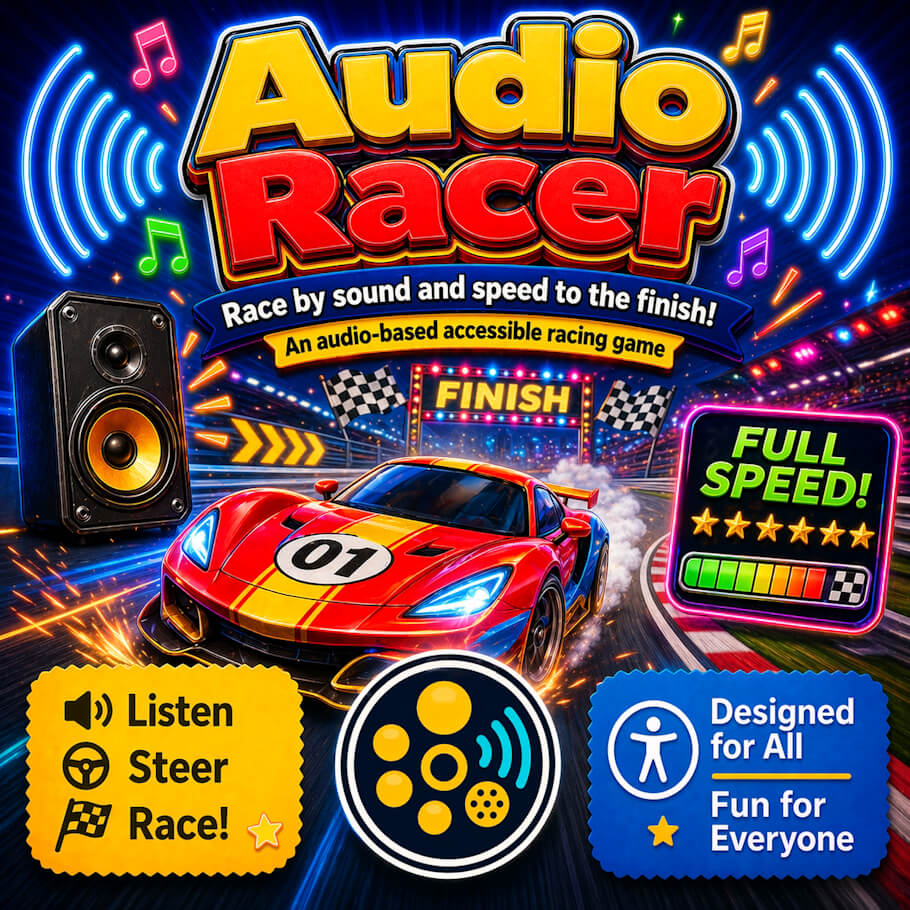
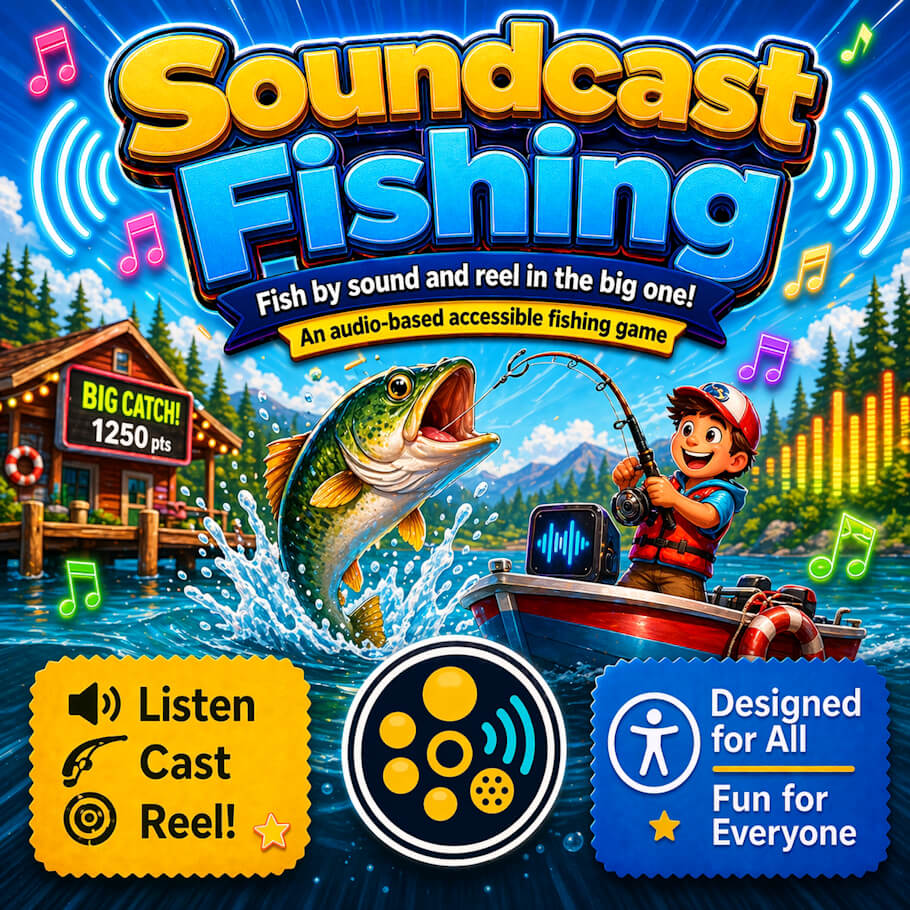
Each game explores a different style of play. In Audio Racer, players listen for engine sounds, warning cues, and directional audio to stay on the track. In Bug Basher, players use stereo sound to locate bugs in an arena. Sequence Memory challenges players to remember and repeat patterns of sounds, while Soundcast Fishing uses splashes, movement, and bite cues to guide the player through each catch.
The idea is not simply to make games that can be played without sight, but to make games that feel natural, enjoyable, and rewarding when played through sound. Spoken instructions explain what is happening, audio feedback confirms actions, and selected games use stereo or positional audio to help players understand direction and distance.
TactivoPlay is especially aimed at blind and low-vision gamers, but the project also has wider appeal. It could be useful for families, schools, accessibility groups, support organizations, and anyone interested in inclusive game design. The games are intended to be easy to learn, quick to play, and friendly for players who may not use traditional visual interfaces.
At a time when accessibility in games is becoming an increasingly important topic, TactivoPlay offers a simple but powerful idea: games do not always need to be seen to be played. Sometimes, the adventure can begin by listening.
A Word from Ben Tyers, TactivoPlay Creator
My name is Ben Tyers, and I am the creator of TactivoPlay.
TactivoPlay grew from a long-standing passion for game design, accessibility, simple controls, and the idea that games should be enjoyable for as many people as possible. I have always loved making small, focused games that are quick to understand, fun to play, and built around clear feedback. Over the years, that interest has developed into a much bigger mission: creating games that do not depend entirely on sight, complex controls, or traditional game interfaces.
TactivoPlay is my latest accessible gaming project. It is a collection of audio-based games designed especially for blind and low-vision players, using spoken instructions, sound cues, simple controls, and clear audio feedback. Rather than taking existing visual games and trying to adapt them afterwards, TactivoPlay is being designed around sound from the beginning. The aim is to make games that feel natural to play without needing to rely on a screen.
My Background In Accessible Games
Over the years, I have created hundreds of mini games for PC, tablets, and phones. These have included puzzle games, reaction games, arcade games, memory games, card games, quiz games, racing games, and many other small game ideas.
One of my biggest accessible gaming projects before TactivoPlay was One Button Controlled Games, a collection of more than 50 accessible games that can be played using a single input. These games were designed so players could use a mouse button, spacebar, or accessible switch controller. The idea was simple: reduce the control barrier and make gameplay possible for people who may find standard keyboard, mouse, touchscreen, or controller layouts difficult to use.
That project taught me a huge amount about accessibility, game flow, player feedback, difficulty design, and the importance of keeping controls simple. It also showed me that accessible games do not need to be boring, limited, or treated as an afterthought. With the right design, a simple input method can still support a wide range of game types and experiences.
TactivoPlay builds on that same belief, but with a stronger focus on audio-first play. Instead of asking, "How can this visual game be made accessible?" the better question is, "What kind of game becomes possible when sound is the main way to play?"
Why I Created TactivoPlay
Many games still rely heavily on visuals. Menus, maps, enemies, scores, warnings, instructions, progress, and results are often shown on screen first, with accessibility added later if it is added at all. This can make many games difficult or impossible to enjoy for blind and low-vision players.
TactivoPlay was created to explore a different approach. The games are being designed around:
- Clear spoken instructions.
- Useful sound effects.
- Audio cues that help guide the player.
- Simple controls.
- Game ideas that work without needing visual reactions.
- Feedback that tells the player what happened, what is happening, and what to do next.
- Fun, repayable gameplay that can be understood through sound.
- The goal is not just to make games "accessible enough." The goal is to make games that are genuinely enjoyable as audio games.
TactivoPlay includes a range of different game types, including card games, racing games, memory challenges, music-based games, quizzes, adventures, and more. The first games are currently being shaped through testing and feedback, with the final collection planned to include 20 audio-based games.
Designed With Players, Not Just For Players
One of the most important parts of TactivoPlay is feedback.
The project is currently being developed with input from beta testers. This means players can help shape how the games work, what audio cues are needed, how instructions are delivered, how menus should behave, and what kinds of games should be added next.
This matters because accessibility is not something that should be guessed from a distance. The best ideas often come from the people who will actually use the games. By listening to players, TactivoPlay can become clearer, more useful, and more enjoyable.
The final 10 games in the collection will also be shaped by player suggestions, which means the project can grow in a direction that reflects what players actually want.
My GameMaker Experience
Alongside making games, I have also written several books about game programming and GameMaker.
I am the author of GameMaker Fundamentals: Learn GML Programming to Start Making Amazing Games, published by Apress. This book teaches the core programming skills needed to create games using GameMaker, including important topics such as variables, layers, sprites, levels, GUI design, and publishing games.
I also wrote GameMaker Programming Challenges, a book containing 500 programming challenges designed to help GameMaker users improve their GML knowledge. The challenges cover a wide range of game development topics, from simple beginner tasks to more advanced programming ideas.
Writing these books helped me think deeply about how games are built, how beginners learn programming, and how small game mechanics can be broken down into clear, understandable steps. That same approach is part of TactivoPlay. Each game needs to be simple enough to understand, but interesting enough to enjoy. Each sound needs a purpose. Each control needs to make sense. Each player action needs clear feedback.
My Design Philosophy
My approach to game design is based on a few simple ideas.
- Games should be easy to start. Players should not have to fight through confusing menus, unclear instructions, or complicated controls before they can enjoy the experience.
- Games should provide clear feedback. When a player presses a button, makes a choice, wins a round, loses a life, catches a fish, answers a question, crashes a car, or collects an item, the game should tell them clearly what happened.
- Games should respect different players. Not everyone plays in the same way, at the same speed, or with the same needs. Good design should make room for that.
- Games should be fun first. Accessibility should not remove the excitement, challenge, humor, surprise, or satisfaction of playing. It should help more people reach those experiences.
TactivoPlay is built around these ideas.
A Project Built Around Sound
Audio game design is an exciting challenge because sound can do so much more than simply replace visuals. Sound can create atmosphere, direction, tension, timing, rhythm, reward, danger, movement, space, and personality.
- A racing game can use engine sounds, lane cues, crashes, countdowns, and finish-line feedback.
- A fishing game can use water ambiance, splashes, casting sounds, bite alerts, reel tension, and catch sounds.
- A quiz game can use spoken questions, answer options, countdown cues, correct and incorrect sounds, and score announcements.
- A memory game can use patterns of tones, voices, instruments, or effects.
- An adventure game can use footsteps, doors, treasure sounds, character voices, environmental audio, and spoken narration.
This is what makes TactivoPlay exciting to develop. Each game is not just a visual game with the screen removed. Each game is an opportunity to design around listening, memory, timing, reaction, and imagination.
What I Hope TactivoPlay Will Achieve
My hope is that TactivoPlay becomes a fun, useful, and affordable collection of audio games for blind and low-vision players, families, schools, support organizations, accessibility groups, and anyone interested in non-visual play.
I want it to be something people can pick up, understand, enjoy, and share.
I also hope it encourages more discussion about accessible game design. Accessibility should not be treated as a small extra feature hidden in a settings menu. It can be a starting point for creative design. It can lead to new ideas, new mechanics, and new ways to play.
TactivoPlay is still growing, and player feedback will continue to shape the project. Every suggestion, test session, comment, and idea helps make the games better.
Thank You For Supporting TactivoPlay
TactivoPlay is a project built from years of making mini games, experimenting with accessible controls, writing about game development, and listening to what players need.
Thank you for visiting the site, supporting the project, sharing it with others, or becoming part of the beta testing process.
Whether you are a blind or low-vision player, a family member, teacher, accessibility supporter, game developer, or someone who simply believes games should be more inclusive, I hope TactivoPlay gives you something fun, useful, and different to explore.
TactivoPlay is about simple controls, clear sound, accessible fun, and games designed to be played by listening.
Frequently Asked Questions
NOTE: Researched FAQs by Disabled World (DW)
What equipment do I need to play accessible audio games
Most accessible audio games run on a standard Windows PC or laptop with ordinary headphones or speakers, and stereo or positional audio titles benefit from headphones that help convey direction and distance.
Are audio games only for blind and low-vision players
No, audio games are designed with blind and low-vision players in mind but appeal to families, schools, seniors, accessibility groups, and anyone who enjoys sound-driven play without needing to watch a screen.
How much will the TactivoPlay collection cost
Pricing has not been fixed on this page, though the creator states a goal of keeping the collection affordable, so interested players should check the official TactivoPlay site for current pricing details.
Can I join the TactivoPlay beta testing program
The project is being developed with beta testers who help shape gameplay, audio cues, and menus, so players interested in testing should reach out through the official TactivoPlay website to learn how to take part.
Do accessible audio games work with screen readers
Many accessible audio games include built-in spoken instructions and audio feedback so they do not require a separate screen reader, though some titles may still work alongside one depending on their design.
What game genres are included in the TactivoPlay collection
The collection includes racing, fishing, memory challenges, card games, trivia quizzes, rhythm play, a pizza-making game, and an open-world audio adventure, giving players a broad mix of styles built around sound.
How can I support the TactivoPlay project financially
The creator has set up a crowdfunding campaign to help fund development, and supporters can contribute, share the project, or take part in testing to help the collection grow.
Why is designing games around sound different from adding accessibility later
Designing around sound from the start shapes gameplay, controls, and feedback for non-visual play, while adding accessibility later often patches a visual game and can leave the experience awkward or incomplete.
Insights, Analysis, and Developments
Editorial Note: For decades, blind and low-vision players have been quietly told that gaming is mostly someone else's hobby, with accessibility bolted on after the fact when it is included at all. TactivoPlay flips that pattern by starting with sound, voice, and intuition instead of pixels, and by inviting the very players the industry routinely overlooks to help finish the work. Whether the second half of the collection lives up to the promise of the first will depend on how seriously that feedback is taken, but the premise itself, that a game does not need to be seen to be worth playing, is one the wider games industry would do well to sit with.*
Attribution/Source(s): This quality-reviewed publication was selected for publishing by the editors of Disabled World (DW) due to its relevance to the disability community. Originally authored by TactivoPlay Audio Games and published on 26 Apr 2026, this content may have been edited for style, clarity, or brevity.
* Editorial additions by Ian C. Langtree.