Ketone Bodies: Roles in Health and Disability
Author: Ian C. Langtree - Writer/Editor for Disabled World (DW)
Published: 9 Jun 2026 - Updated: 17 Aug 2026
Publication Type: Paper, Essay
Table of Contents:
Synopsis - Definition - Overview - FAQs - Insights, Updates - Related Content
Synopsis
This paper explains what ketone bodies are, how the liver produces them from fat when glucose is scarce, and why the brain leans on them so heavily during fasting, then connects that biology to real disability and chronic health contexts. It covers the three ketone bodies - acetoacetate, beta-hydroxybutyrate, and acetone - and clarifies the often confused difference between controlled nutritional ketosis and life threatening diabetic ketoacidosis. The material matters for people with drug resistant epilepsy, glucose transporter type 1 deficiency syndrome, inherited disorders of ketone metabolism, and fatty acid oxidation disorders, as well as seniors and caregivers weighing dietary options, because the same molecules that treat one condition can endanger someone with a different diagnosis. Drawing on established metabolic research and clinical studies, including a randomized controlled trial of the ketogenic diet in childhood epilepsy published in The Lancet Neurology, it offers a plain language, medically grounded account that helps readers understand ketone testing, safety, and when to seek professional guidance.
At a Glance
- 1 - Acetone cannot be used for energy and is simply exhaled through the lungs.
- 2 - The liver makes ketone bodies but cannot burn them, as it lacks the enzyme needed to convert them back into usable energy.
- 3 - Nutritional ketosis usually stays between about half a millimole and three millimoles per litre of blood, while ketoacidosis climbs far higher and turns the blood dangerously acidic.
- 4 - Blood meters measure beta-hydroxybutyrate for the most accurate reading, urine strips detect acetoacetate, and breath analysers estimate acetone, giving three separate ways to track ketone levels.
Topic Definition
- Ketone Bodies
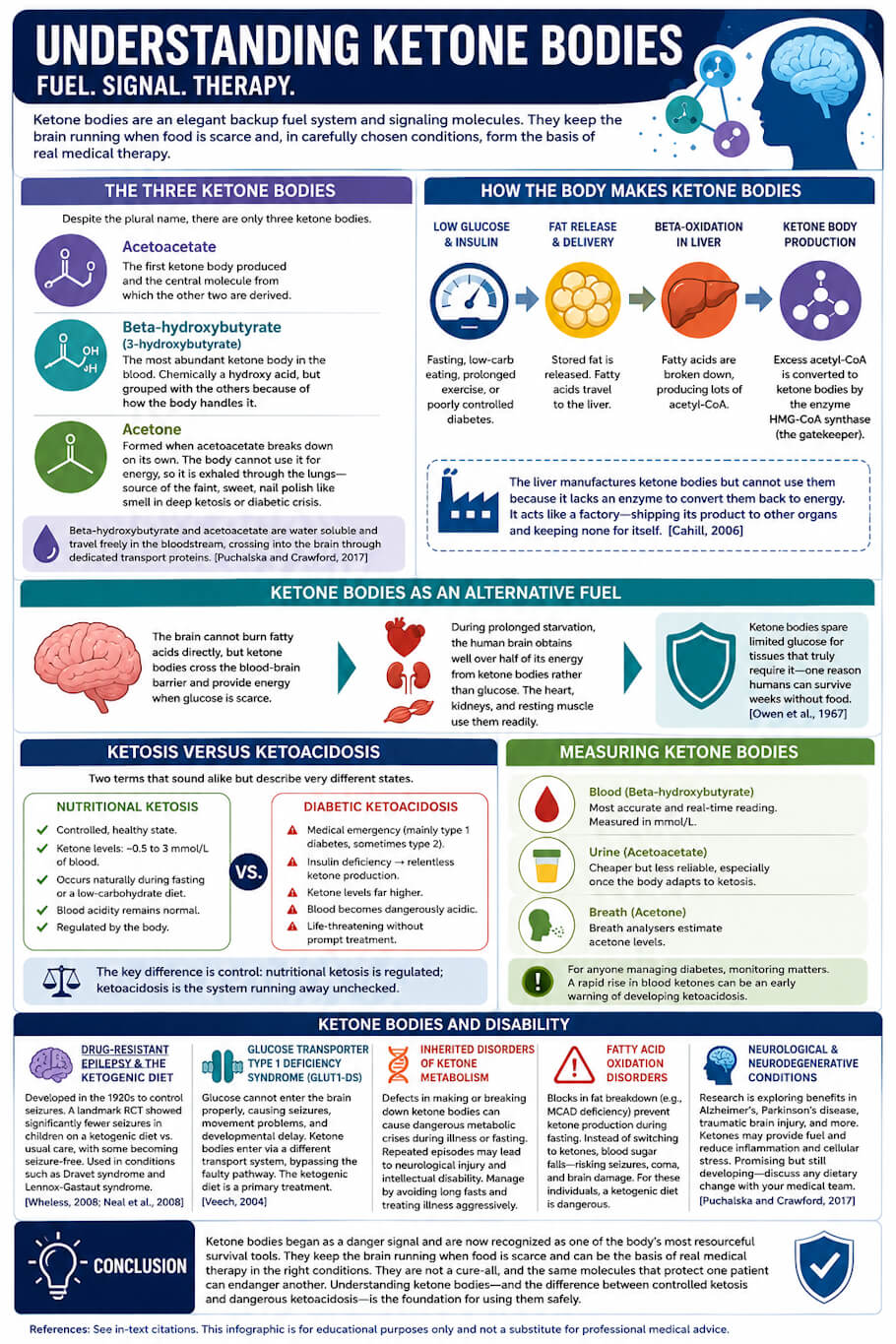
Ketone bodies are three small, water soluble molecules - acetoacetate, beta-hydroxybutyrate, and acetone - that the liver makes from fat when glucose is in short supply, such as during fasting, prolonged exercise, a very low carbohydrate diet, or uncontrolled diabetes. Two of them, acetoacetate and beta-hydroxybutyrate, act as an alternative fuel that the brain, heart, and muscles can burn in place of sugar, while acetone is a byproduct that the body cannot use and instead breathes out. Because they travel freely in the bloodstream and cross into the brain through dedicated transporters, ketone bodies are a central part of how the human body keeps its most vital organs running through periods without food.
Overview
Understanding Ketone Bodies
Ketone bodies are among the most misunderstood molecules in human metabolism. For decades they were viewed mainly as a warning sign - something to watch for in a diabetic emergency or a sample of starvation chemistry. More recent research paints a richer picture. Ketone bodies are an elegant backup fuel system, a set of signaling molecules, and in several disabling conditions, a genuine therapeutic tool. This paper explains what ketone bodies are, how the liver produces them, why the brain depends on them during food scarcity, and how they connect to a range of disabilities, from drug resistant epilepsy to rare inherited metabolic disorders.
The Three Ketone Bodies
Despite the plural name, there are only three ketone bodies, and one of them is not chemically a ketone at all:
- Acetoacetate - the first ketone body produced and the central molecule from which the other two are derived.
- Beta-hydroxybutyrate, sometimes written as 3-hydroxybutyrate - the most abundant ketone body in the blood. In strict chemistry terms it is a hydroxy acid rather than a true ketone, but it is grouped with the others because of how the body handles it.
- Acetone - formed when acetoacetate breaks down on its own. The body cannot use acetone for energy, so it is exhaled through the lungs. This is the source of the faint, sweet, nail polish like smell sometimes noticed on the breath of people in deep ketosis or diabetic crisis.
Beta-hydroxybutyrate and acetoacetate are water soluble, which is important. Fats themselves do not dissolve in blood and cannot easily cross into the brain, but ketone bodies travel freely in the bloodstream and pass into the brain through dedicated transport proteins [Puchalska and Crawford, 2017].
How the Body Makes Ketone Bodies
The production of ketone bodies is called ketogenesis, and it happens almost entirely inside liver cells. The process switches on when glucose is in short supply - during fasting, prolonged exercise, very low carbohydrate eating, or in poorly controlled diabetes.
When blood sugar and insulin fall, the body begins releasing stored fat. Fatty acids are shuttled into the liver and broken down through a process called beta-oxidation, which generates large amounts of a molecule called acetyl-CoA. Normally acetyl-CoA feeds into the cell's energy producing cycle, but when fat is being burned faster than that cycle can handle, the surplus is redirected into making ketone bodies instead. A liver enzyme often abbreviated as HMG-CoA synthase governs this step and acts as the gatekeeper of ketone production.
There is an interesting quirk here. The liver manufactures ketone bodies but cannot use them, because it lacks a specific enzyme needed to convert them back into usable energy. In effect, the liver behaves like a factory that ships its entire product to other organs and keeps none for itself [Cahill, 2006].
Ketone Bodies as an Alternative Fuel
Most tissues prefer glucose, but the brain has a particular dependence on it and cannot burn fatty acids directly. This poses a survival problem during a long fast, when glucose runs low. Ketone bodies solve it. They cross the blood-brain barrier and supply energy that fat alone never could.
Classic metabolic studies showed that during prolonged starvation the human brain can draw the majority of its energy - well over half - from ketone bodies rather than glucose [Owen et al., 1967]. The heart, kidneys, and resting muscle also use them readily. This adaptation is one reason humans can survive weeks without food: ketone bodies spare the limited glucose supply for the few tissues that truly require it.
Ketosis Versus Ketoacidosis
The two terms sound alike but describe very different states, and confusing them causes a great deal of needless worry.
Nutritional ketosis
This is a controlled, healthy state in which ketone levels rise modestly, typically somewhere in the range of half a millimole to three millimoles per litre of blood. It occurs naturally during fasting or a carbohydrate restricted diet. Blood acidity remains normal because the body regulates the process carefully.
Diabetic ketoacidosis
This is a medical emergency seen mainly in people with type 1 diabetes and occasionally type 2. Without enough insulin, the body cannot signal that fuel is available, so it produces ketone bodies relentlessly. Levels climb far higher than in nutritional ketosis, the blood turns dangerously acidic, and the result can be life threatening without prompt treatment. The key difference is control: nutritional ketosis is regulated, while ketoacidosis is the system running away unchecked.
Ketone Bodies and Disability
For people living with certain disabilities and chronic conditions, ketone bodies are far more than a textbook curiosity. In some cases they are the basis of established treatment, and in others a disorder in how the body makes or uses them is the cause of disability itself.
Drug resistant epilepsy and the ketogenic diet
The most well documented disability link is epilepsy. The ketogenic diet - very high in fat, very low in carbohydrate, designed to keep the body producing ketone bodies - was developed in the 1920s specifically to control seizures, and the name itself dates to that era [Wheless, 2008]. It fell out of fashion once anti-seizure medications arrived, then returned to mainstream use when doctors recognized that a meaningful share of patients do not respond to drugs.
A landmark randomized controlled trial found that children with hard to treat epilepsy had significantly fewer seizures on a ketogenic diet than children receiving usual care, with some becoming seizure free [Neal et al., 2008]. The diet is now a recognized option for drug resistant epilepsy, particularly in children, and is used in conditions such as Dravet syndrome and Lennox-Gastaut syndrome. Researchers continue to debate exactly how ketone bodies calm an overactive brain, with theories pointing to steadier energy supply, changes in brain chemistry, and reduced inflammation.
Glucose transporter type 1 deficiency syndrome
In this rare genetic disorder, the protein that carries glucose into the brain does not work properly. The brain is effectively starved of its usual fuel, leading to seizures, movement problems, and developmental delay. Because ketone bodies enter the brain through a completely different doorway, a ketogenic diet can bypass the faulty glucose transport and feed the brain directly. For this condition the diet is considered a primary treatment rather than a last resort [Veech, 2004].
Inherited disorders of ketone metabolism
Some children are born unable to make or break down ketone bodies correctly. Defects in the enzymes responsible for ketogenesis, or in those that convert ketone bodies back into energy, can trigger dangerous metabolic crises during illness or fasting. Repeated or severe episodes may cause lasting neurological injury and intellectual disability if not managed. These conditions are usually identified in infancy and managed by avoiding long gaps without food and treating illness aggressively.
Fatty acid oxidation disorders
This group deserves special mention because it highlights an important caution. People with disorders that block the breakdown of fat - such as medium chain acyl-CoA dehydrogenase deficiency - cannot generate ketone bodies during fasting. Instead of switching to ketones when glucose runs low, their blood sugar simply falls, which can cause seizures, coma, and brain damage. For these individuals a ketogenic diet is not just unhelpful but actively dangerous, illustrating that ketone based therapy must always be matched to the specific diagnosis.
Neurological and neurodegenerative conditions
A growing body of research is examining whether ketone bodies might help in conditions where brain energy use is impaired, including Alzheimer's disease, Parkinson's disease, and traumatic brain injury. The reasoning is that aging or injured brain cells often struggle to use glucose efficiently, and ketone bodies may offer a fuel they can still process. Beyond fuel, beta-hydroxybutyrate appears to act as a signaling molecule that can dampen inflammation and reduce cellular stress [Puchalska and Crawford, 2017]. This work is promising but still developing, and ketone based approaches are not yet established treatments for these conditions. People should be cautious of overstated claims and discuss any dietary change with their medical team.
Measuring Ketone Bodies
There are three practical ways to measure ketone bodies, each reflecting a different molecule. Blood meters measure beta-hydroxybutyrate and give the most accurate, real time reading. Urine strips detect acetoacetate and are cheaper but less reliable, especially once the body adapts to ketosis. Breath analysers estimate acetone. For anyone managing diabetes, monitoring matters because a rapid rise in blood ketones can be an early warning of developing ketoacidosis.
Conclusion
Ketone bodies began their scientific career as a danger signal and have since been recognized as one of the body's most resourceful survival tools. They keep the brain running when food is scarce, and in carefully chosen conditions they form the basis of real medical therapy. They are not a cure all, and the same molecules that protect one patient can endanger another with a different diagnosis. Understanding what ketone bodies are, and respecting the difference between controlled ketosis and dangerous ketoacidosis, is the foundation for using them safely.
References:
Cahill, G. F. (2006). Fuel metabolism in starvation. Annual Review of Nutrition, 26, 1-22.
Neal, E. G., Chaffe, H., Schwartz, R. H., Lawson, M. S., Edwards, N., Fitzsimmons, G., Whitney, A., and Cross, J. H. (2008). The ketogenic diet for the treatment of childhood epilepsy: A randomized controlled trial. The Lancet Neurology, 7(6), 500-506.
Owen, O. E., Morgan, A. P., Kemp, H. G., Sullivan, J. M., Herrera, M. G., and Cahill, G. F. (1967). Brain metabolism during fasting. The Journal of Clinical Investigation, 46(10), 1589-1595.
Puchalska, P., and Crawford, P. A. (2017). Multi-dimensional roles of ketone bodies in fuel metabolism, signaling, and therapeutics. Cell Metabolism, 25(2), 262-284.
Veech, R. L. (2004). The therapeutic implications of ketone bodies. Prostaglandins, Leukotrienes and Essential Fatty Acids, 70(3), 309-319.
Wheless, J. W. (2008). History of the ketogenic diet. Epilepsia, 49(Suppl. 8), 3-5.
Frequently Asked Questions
Are ketone bodies the same as ketones in food or supplements
No, ketone bodies are molecules the liver makes internally from fat, while exogenous ketone supplements are products taken by mouth that aim to raise blood ketone levels without fasting or carbohydrate restriction, and they do not fully replicate the metabolic state of natural ketosis.
How long does it take to enter ketosis when fasting or cutting carbohydrates
Most people begin producing meaningful amounts of ketone bodies within two to four days of sharply limiting carbohydrates or fasting, though the exact timing varies with activity level, prior diet, and individual metabolism.
Can people without diabetes develop ketoacidosis
It is uncommon but possible, with rare cases linked to prolonged starvation, heavy alcohol use, or certain medications, which is why unexplained symptoms should always be assessed by a medical professional rather than self diagnosed.
Does the brain rely on ketone bodies under normal eating conditions
Under a typical diet with enough carbohydrate the brain runs mainly on glucose, and it only shifts toward drawing large amounts of energy from ketone bodies during fasting, starvation, or sustained carbohydrate restriction.
Is the smell of acetone on the breath always a cause for concern
A faint sweet odor can occur during ordinary nutritional ketosis and is usually harmless, but a strong fruity smell combined with symptoms like excessive thirst, nausea, or confusion in someone with diabetes can signal ketoacidosis and needs urgent care.
Can pregnant or breastfeeding people safely follow a ketogenic diet
This is a situation that calls for medical supervision, since nutritional needs shift during pregnancy and lactation and any significant dietary change should be discussed with a doctor or dietitian first.
Do athletes benefit from being in ketosis
Evidence is mixed, as some endurance athletes report steady energy from fat adaptation while others find high intensity performance suffers without readily available carbohydrate, so results depend heavily on the sport and the individual.
How is a ketogenic diet for epilepsy different from a popular weight loss keto diet
A medical ketogenic diet for epilepsy is carefully calculated and monitored by a clinical team with precise ratios and supplementation, whereas a general weight loss keto diet is far less regulated and is not designed to manage a neurological condition.
Insights, Analysis, and Developments
Editorial Note: What makes ketone bodies so worth understanding is that they refuse to fit into a single storyline - once dismissed as a mere warning sign of starvation or diabetic crisis, they turn out to be a finely regulated survival fuel and, in the right hands, a legitimate medical tool with roots stretching back to the 1920s. The stakes are highest for people living with epilepsy, rare inherited metabolic conditions, and glucose transport disorders, where a ketogenic approach can be either a primary therapy or, for those with fatty acid oxidation disorders, a genuine danger. Emerging work on Alzheimer's disease, Parkinson's disease, and traumatic brain injury adds interest without yet delivering proven treatment, which is precisely why the sensible takeaway is caution over hype and a conversation with a medical team before changing anything.
 Author Credentials: Ian is the founder and Editor-in-Chief of Disabled World, a leading resource for news and information on disability issues. With a global perspective shaped by years of travel and lived experience, Ian is a committed proponent of the Social Model of Disability, a transformative framework developed by disabled activists in the 1970s that emphasizes dismantling societal barriers rather than focusing solely on individual impairments. His work reflects a deep commitment to disability rights, accessibility, and social inclusion. To learn more about Ian's background, expertise, and accomplishments, visit his full biography.