SnapSlide: One-Handed Child-Resistant Prescription Vial
Author: SnapSlide
Published: 10 Oct 2026
Publication Type: Product Release, Update
Table of Contents:
Synopsis - Definition - Overview - FAQs - Insights, Updates - Related Content
Synopsis
This product is a newly launched prescription vial closure called SnapSlide, built to give the more than 60 million Americans with limited dexterity, or the use of only one hand, a simpler way to get to their medication. Standard child-resistant caps require pushing down and twisting at the same time, a motion that can be painful or impossible for people living with arthritis, multiple sclerosis, Parkinson’s disease, fibromyalgia, amputation, stroke, or paralysis. SnapSlide swaps that motion for a one-handed sliding mechanism that still meets official child-resistance standards. The cap stays attached to the vial to help with dosing and prevent spills, and an audible snap confirms it is locked. It is now sold through independent pharmacies across the U.S. and an online store. The design matters for seniors, people with disabilities, and caregivers who handle medications every day, since a cap that is hard to open can lead to missed doses or unsafe workarounds like leaving bottles unsecured. The details come from the company that developed the product, and they are useful for anyone looking at safer, more accessible medication packaging.*
At a Glance
- 1 - Focus group testing found nearly 90% of participants preferred SnapSlide over standard amber prescription vials.
- 2 - Before its full launch, the product drew more than 100,000 Facebook followers, and independent pharmacy owners in early states reported strong interest from customers.
- 3 - The low-profile cap uses less plastic and weighs 27% less than conventional push-and-twist caps, earning the 2025 Plastics Industry Association People’s Choice Award for Sustainability Innovation.
- 4 - SnapSlide won Gold in the Pharmaceutical and Nutraceutical category at the 2026 National Association of Container Distributors Packaging Awards, along with two Institute of Packaging Professionals awards.
Topic Definition
- Child-Resistant Prescription Vial
A child-resistant prescription vial is a medication container with a closure designed to be hard for young children to open while remaining usable by adults. In the United States, these containers are required for most oral prescription drugs under the Poison Prevention Packaging Act of 1970, which is enforced by the U.S. Consumer Product Safety Commission. To qualify, a design must pass standardized testing: most children under five years old must be unable to open it within a set time, and the large majority of adults between 50 and 70 years old must be able to open it and close it properly. The most common version uses a push-and-twist cap, though newer designs use sliding, squeezing, or other mechanisms that meet the same safety standard with less hand strength. Patients may ask their pharmacist for non-child-resistant packaging, but doing so removes an important layer of protection in homes where children live or visit.
Overview
With Millions Struggling to Open Prescription Bottles, A New Child-Resistant Vial Offering One-Handed Operation Launches at Independent Pharmacies Nationwide
SnapSlide expands into pharmacies across the U.S., giving more than
60 million Americans with limited dexterity – or the use of just one hand – a far simpler way to access prescription medication.
For tens of millions of Americans, taking a prescription medication begins with a challenge most people take for granted: opening and closing the child-resistant bottle. Now, a new solution represents the first meaningful advancement in medication access in decades for consumers with disabilities.
Traditional child-resistant prescription vials require users to push down and twist the cap at the same time. This can be a significant obstacle for people living with arthritis, multiple sclerosis, Parkinson's disease, fibromyalgia or other conditions affecting dexterity. Those challenges can be even greater for people without the use of one hand or arm, including amputees and those affected by stroke or other forms of paralysis.
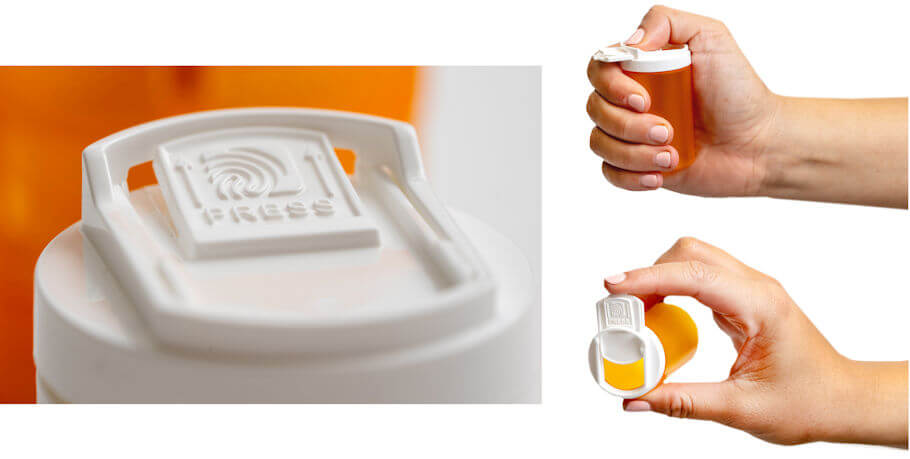
Now available at independent pharmacies nationwide, as well as directly to consumers via an online store, SnapSlide™ is an attempt to address this longstanding medication access inequity. Rather than reinventing the prescription bottle itself, SnapSlide amounts to a reengineering of what has long been considered its weakest link: the child-resistant cap. Designed to be opened, closed and used with one hand, SnapSlide replaces the traditional push-and-twist motion with a single-handed sliding mechanism that still maintains official levels of child resistance.
The closure remains attached to the vial – offering easy dosage and spillage prevention – and an audible, namesake "snap" provides confirmation that the vial is securely closed and child-resistant.
"We tend to think of opening a prescription bottle as a two-second task. But if you have arthritis, have had a stroke, lost the use of an arm or simply can't generate the strength needed to push and twist, that two-second task can become a daily obstacle," said Rocky Batzel, inventor and CEO of SnapSlide. "We wanted to rethink the bottle around the person taking the medication - not around the package. What resulted was a simple, long overdue fix that should have been adopted years ago."
Notably, SnapSlide's potential appeal extends beyond people with physical limitations. In focus groups, nearly 90% of participants preferred the SnapSlide vial to conventional amber prescription vials. Considering this, the design meets the needs of those who struggle to open and close conventional vials, even while being more attractive to those without dexterity issues. The result is an innovation that straddles a unique intersection: "Better for all, life-changing for many."
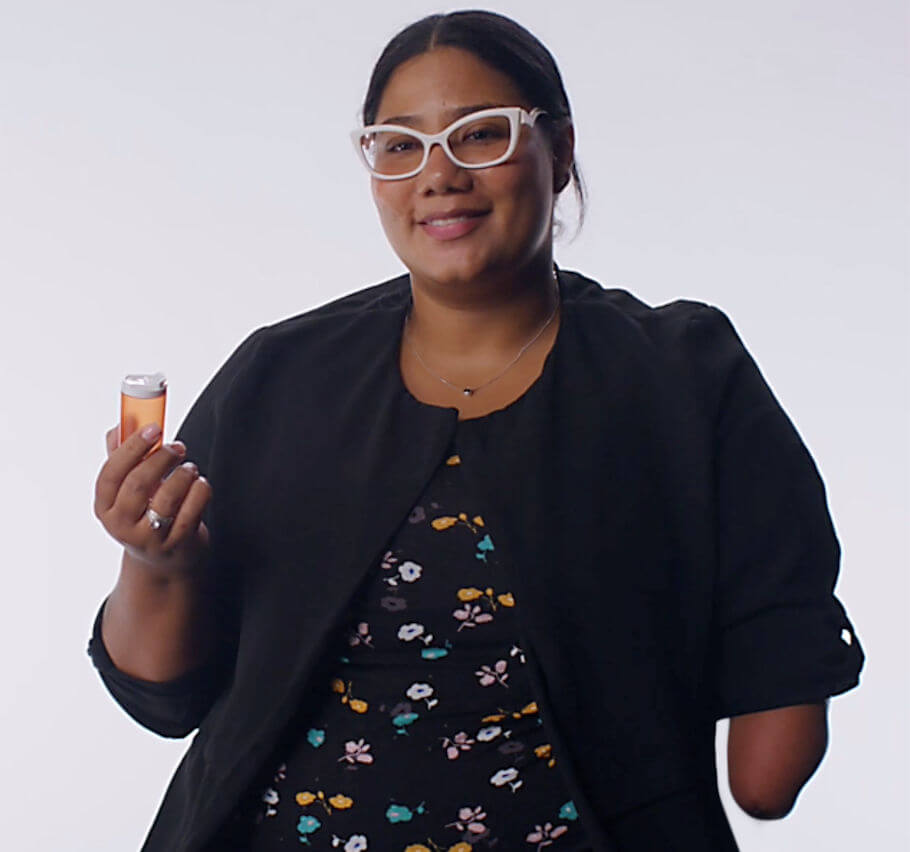
The nationwide expansion follows SnapSlide's initial introduction through independent pharmacies in several states, where owners reported strong interest from consumers who face difficulty using traditional prescription vial closures. Public enthusiasm has also manifested in social media, where SnapSlide accrued more than 100,000 followers on Facebook alone as the company prepared for the product's full launch.
SnapSlide has received official praise from pharmaceutical, plastics and packaging trade organizations. It earned Gold in the Pharmaceutical and Nutraceutical category at the 2026 National Association of Container Distributors Packaging Awards and, earlier, claimed two awards from the Institute of Packaging Professionals. Testament to SnapSlide's lower-material, low-profile design that makes it 27% lighter than conventional push-and-twist caps, it also received the 2025 Plastics Industry Association People's Choice Award for Sustainability Innovation.
For more information and to hear directly from patients and caregivers about their experiences with SnapSlide, visit the company's customer testimonials page.
About SnapSlide
SnapSlide, LLC, headquartered in Jessup, Pennsylvania, designs and produces a range of patented packaging solutions that make opening and closing profoundly easier for all users, while still maintaining official levels of child resistance. This platform of solutions includes products for a wide range of industries, including prescription and over-the-counter pharmaceuticals, household products, chemicals, and cannabis.
Frequently Asked Questions
NOTE: Researched FAQs by Disabled World (DW)
Can I ask my pharmacist for a prescription bottle that is not child-resistant?
Yes. Under federal rules, a patient or prescriber can request non-child-resistant packaging, and some pharmacies let patients sign a blanket waiver that covers all future prescriptions. This option should be weighed carefully in homes where children live or visit.
What federal law requires child-resistant medication packaging?
The Poison Prevention Packaging Act of 1970 requires child-resistant packaging for most oral prescription drugs and many household products. The U.S. Consumer Product Safety Commission enforces the law and sets the testing standards.
How is a container tested to be considered child-resistant?
Testing uses panels of young children who try to open the package within a set time, along with panels of adults ages 50 to 70 who must be able to open and properly reclose it. A design must meet both thresholds to qualify.
Does child-resistant mean a medicine bottle is childproof?
No. Child-resistant packaging slows down most young children but cannot stop every child, so medications should still be stored up high, out of sight, and ideally in a locked cabinet.
What can help people with arthritis manage medications besides easier caps?
Options include pill organizers with large compartments, jar and bottle openers with rubber grips, blister packs prepared by the pharmacy, and medication reminder apps or alarms. An occupational therapist can also recommend adaptive tools for specific needs.
Are pharmacy blister packs a good alternative to prescription vials?
Many pharmacies offer blister or multi-dose packs that organize pills by day and time, which can help with complicated schedules. Some styles can still be difficult to push open, so it helps to test a sample before switching.
Is it safe to move pills into a different container for easier access?
Moving medication out of its labeled pharmacy container can cause mix-ups and removes child-resistant protection. If a different container is needed, talk with a pharmacist about labeled options that keep dosing information with the medicine.
How should unused or expired prescription medications be disposed of?
The safest route is a drug take-back program, such as a pharmacy kiosk or a DEA National Prescription Drug Take Back Day event. If none is available, FDA guidance explains how to dispose of most medicines in household trash, with a short list approved for flushing.
Insights, Analysis, and Developments
Editorial Note: Medication packaging rarely gets much attention, yet it is where safety rules and everyday usability meet. Child-resistant caps have prevented countless accidental poisonings since they became standard. But the push-and-twist design has long forced people with weak grip strength or limited hand function into a hard choice: struggle with the bottle, or ask for a non-child-resistant cap that leaves grandchildren and visiting kids at risk. SnapSlide keeps the vial and changes only the closure, which suggests that trade-off may not be necessary at all. Inventor and CEO Rocky Batzel describes it as designing around the person instead of the package. The recognition the cap has received from packaging and plastics groups shows that others in the field see real merit in the engineering. For older adults managing several daily prescriptions, stroke survivors relearning routines with one hand, and caregivers handling medications for others, a closure that opens easily while staying secure is a practical improvement. Readers who use independent pharmacies may want to ask whether SnapSlide is available locally. Anyone now using easy-open caps for convenience should consider whether a child-resistant option that is just as simple to use makes more sense for their household.*
Attribution/Source(s): This quality-reviewed publication was selected for publishing by the editors of Disabled World (DW) due to its relevance to the disability community. Originally authored by SnapSlide and published on 10 Oct 2026, this content may have been edited for style, clarity, or brevity.
* Editorial additions by Ian C. Langtree.