George Mendoza: Blind Artist and Spirit Man Novelist
Author: Ian C. Langtree - Writer/Editor for Disabled World (DW)
Published: 25 Jul 2026 - Updated: 7 Aug 2026
Publication Type: Literature / Review
Table of Contents:
Synopsis - Definition - Overview - FAQs - Insights, Updates - Related Content
Synopsis
This article profiles George Mendoza, the Las Cruces, New Mexico painter and novelist who began losing his sight at fifteen to juvenile macular degeneration and built a full-time career in the visual arts anyway, and it traces the working parts of that career - the touring Colors of the Wind exhibition, the four-book Spirit Man series, two nationally televised documentaries, and current projects including an immersive digital arts collaboration - in enough detail to be genuinely useful to anyone researching adaptive art practice, planning accessible programming, or looking for a documented example of how vision loss and professional creative work sit together; people living with macular degeneration, seniors facing age-related sight changes, parents of newly diagnosed children, and educators who want disability history with substance behind it will find specifics here on technique, exhibition venues, athletic records, and the accessible formats such as the recent audiobook edition that open his writing to readers who cannot use print.
At a Glance
- 1 - He describes his vision as "kaleidoscope eyes," with floating shapes, multiplied objects, and unusual colors.
- 2 - Mendoza set a world record in the mile for blind runners and competed in the 1980 and 1984 Olympics for the Disabled.
- 3 - Beyond painting, he designs fabric collections for FreeSpirit Fabrics and is developing an immersive digital arts project with Ideum.
- 4 - His paintings are permanently installed at Manhattan Eye, Ear and Throat Hospital in New York and the UCLA School of Dentistry in Los Angeles.
Topic Definition
- Blind Artist
A blind artist is a person who is legally blind or has severe vision loss and who works professionally or seriously in a visual medium such as painting, sculpture, photography, or digital art. Legal blindness rarely means total darkness, and most blind artists retain some usable sight, whether peripheral vision, light perception, or patches of color and shape, which they combine with memory, touch, spatial reasoning, and adaptive methods like raised outlines, textured surfaces, magnification, strong directional lighting, labeled or systematically arranged paints, and assistance with tasks such as color verification. The term describes a working condition rather than a style, since blind artists produce everything from realism to abstraction, and their output is judged by the same standards applied to any other professional in the field.
Overview
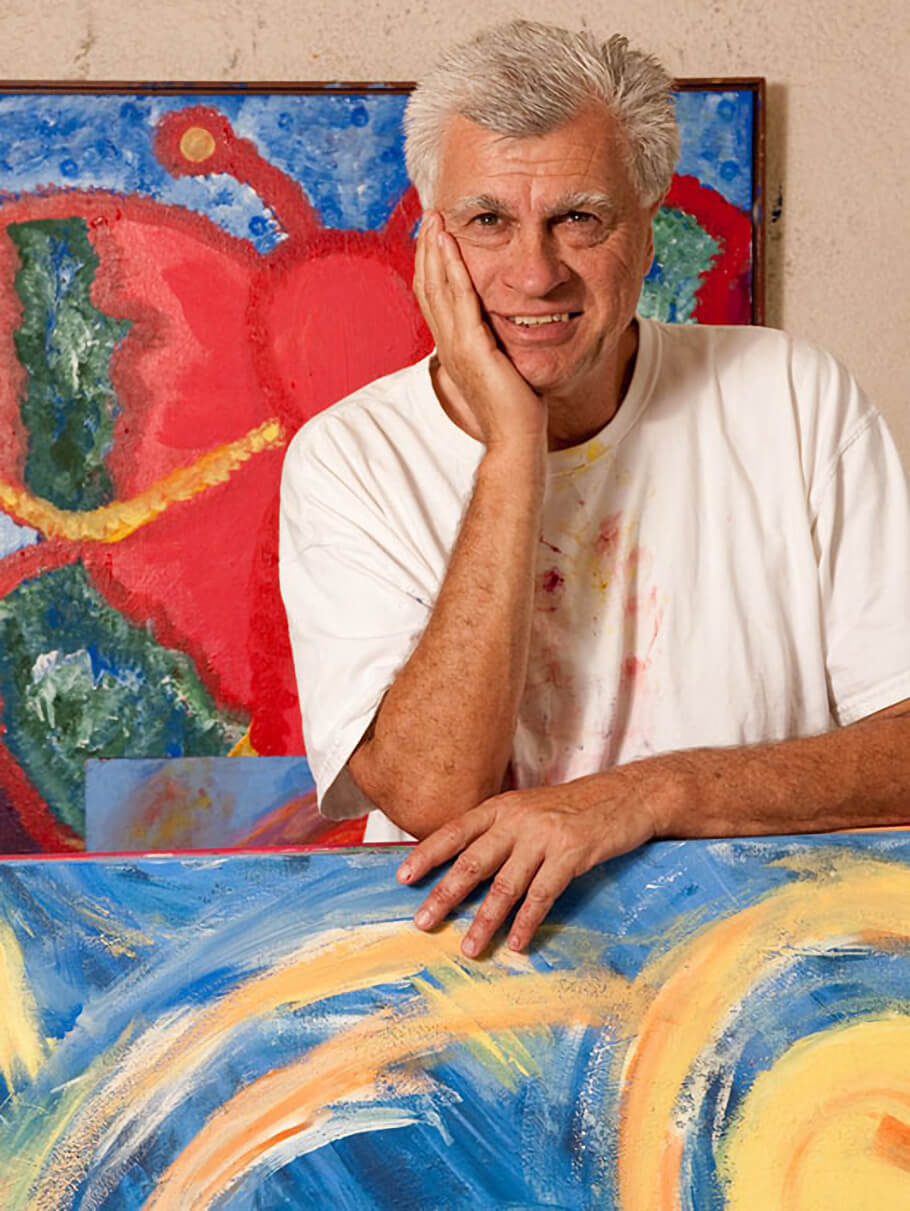
George Mendoza is a world-renowned artist, author, motivational speaker, and advocate for the arts. Based in Las Cruces, New Mexico, Mendoza lost his sight at age fifteen and went on to become an internationally recognized artist whose acclaimed exhibition Colors of the Wind has toured the United States for more than twenty years through Smithsonian-affiliated traveling exhibition programs. Mendoza is the author of the Pulitzer Prize-nominated novels Journey of the Spirit Man and Heart of the Spirit Man. His life and work have been featured in two nationally televised documentary films, The George Mendoza Story, featuring Robert Duvall, and Vision of the Soul, written by Mark Medoff.
George began losing his sight at age fifteen due to juvenile macular degeneration. Rather than stepping away from the visual arts, he developed adaptive techniques that enabled him to continue painting professionally. Today, he is a celebrated contemporary artist whose work has been exhibited nationally through Smithsonian-affiliated touring programs and is permanently installed at Manhattan Eye, Ear and Throat Hospital in New York and UCLA School of Dentistry in Los Angeles.
His work challenges conventional assumptions about blindness and what it means to create visual art with significant vision loss. Through his artwork, speaking engagements, and writing, George explores how accessibility, adaptation, and creative problem-solving can expand opportunities and reshape perceptions of disability. His story has also been featured in the documentaries The George Mendoza Story and Vision of the Soul.
In addition to his artistic career, George is the author of Journey of the Spirit Man, a novel inspired by his experiences with loss, transformation, and resilience. An audiobook edition was recently released, reflecting his commitment to making storytelling accessible to a wider audience.
Currently, Mendoza is developing an immersive digital arts experience in partnership with Ideum and producing Spirit Man: The George Mendoza Story, an upcoming documentary about his life and artistic journey. He continues to work full-time as an artist, writer, bestselling designer for FreeSpirit Fabrics, and motivational speaker.
Books By George Mendoza
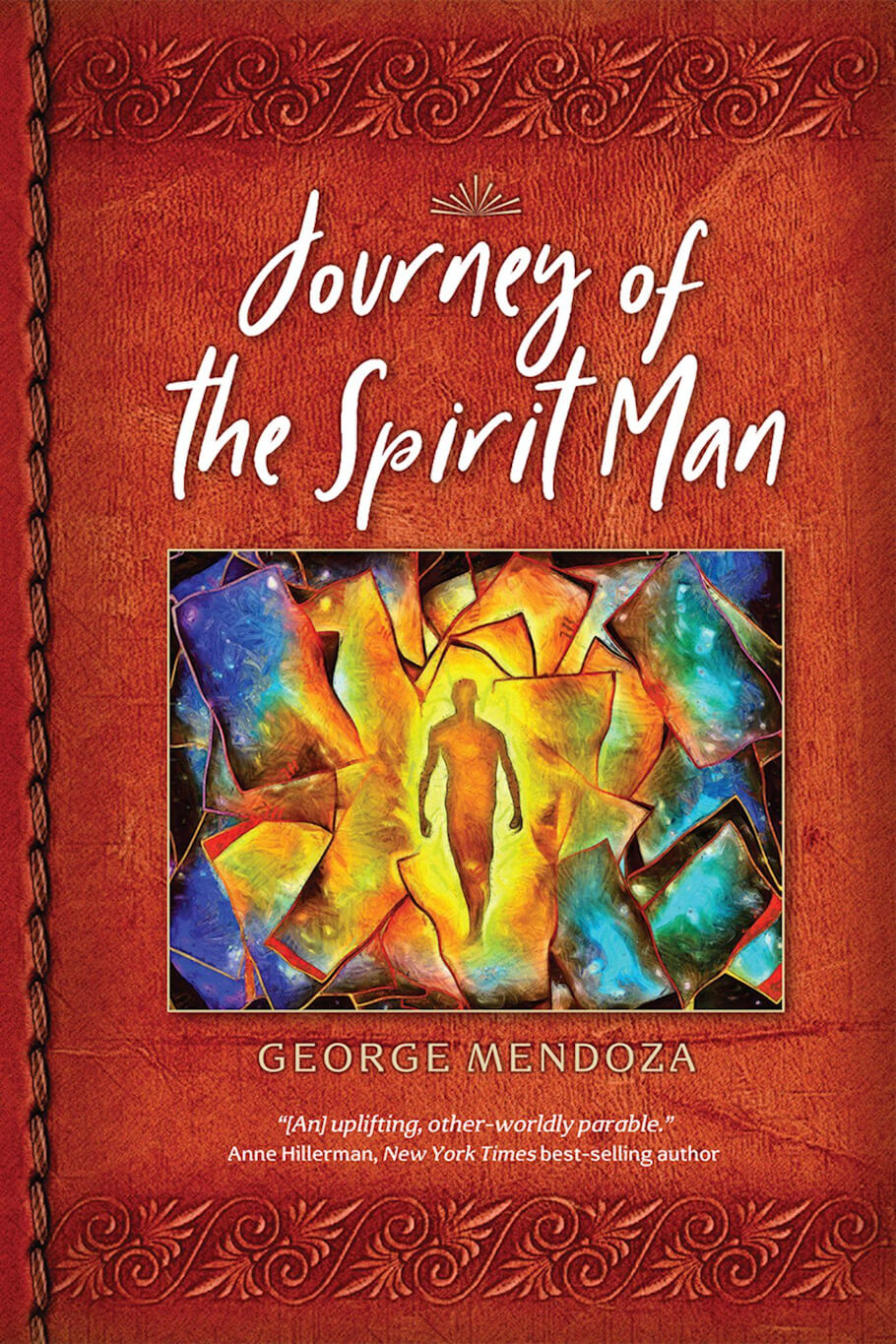
Journey Of The Spirit Man
BOOK 1 in the Spirit Man Series
A young man named Michael stumbles upon an alternate reality, encountering a series of strange lands where he must conquer his own selfish past.
Plagued by memories of his best friend's death, for which he believes himself to be the cause, Michael goes for a long run in the desert hills of New Mexico, pushing himself to the brink of dehydration and exhaustion. Not sure if what he is experiencing is real or a hallucination, Michael passes through a set of magical gates and enters into an alternate reality. In this new world, he faces a series of challenges-from Gehenna, where deepest fears are realized in Coliseum-style fights to the death, to the Holy Mountain of the Cup of All Good Things, where he is revered as a prophet, and Paradisa, where a labyrinth of rooms makes dreams come true-that force him to look critically at his own behavior.
When at last Michael reaches his final destination, where he achieves self-realization and becomes a leader known as The Spirit Man, he is able to return to his own world-physically depleted but spiritually reborn, and able to view others around him with empathy and compassion for the first time.
Journey of the Spirit Man is Book 1 in the Spirit Man series, a vibrant anti-hero's epic rich with quiet, urgent truths reminiscent of the great parables.
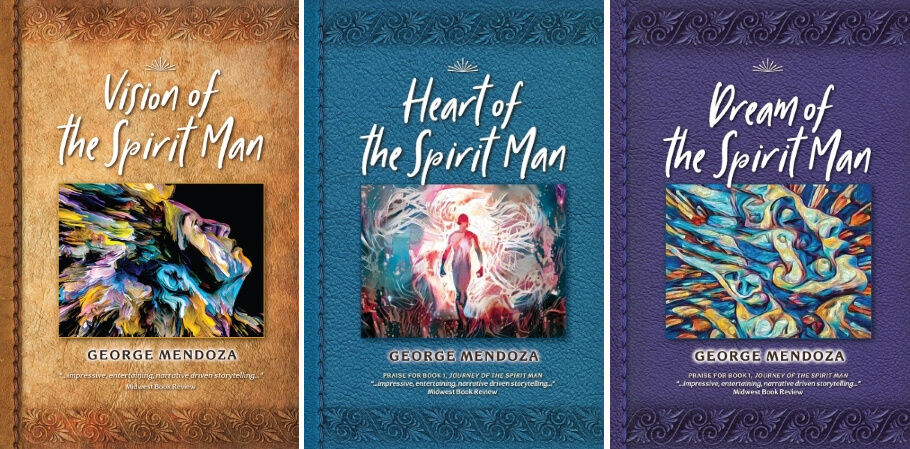
Vision Of The Spirit Man
BOOK 2 in the Spirit Man Series
Five years after the events of Journey of the Spirit Man, Michael Seymour finds himself back in the alternate reality from which he had been so eager to escape, but to where he has recently been desperate to return. But the land he discovers upon arrival has changed. A great war rages, and Michael is revered as a warrior and a killer, although he has no recollection of being either of those things.
Charged with finding and destroying the Annihilator, a force intent on bringing doom to the land of Shoot, Michael must battle the world around him-human, creature, and natural-and trek through desolate wastelands, where he encounters a series of allies and foes. Along the way, he discovers that The Spirit Man's warrior spirit sits at bay within him. But The Spirit Man is not the only spirit lying in wait inside Michael-and he'll need help from them all to save the land he's come to love and honor the fatal sacrifices his friends have made for him.
Vision of the Spirit Man is the second installment in George Mendoza's captivating Spirit Man series.
Heart Of The Spirit Man
BOOK 3 in the Spirit Man Series
Michael Seymour's fantastical journey through the dream world continues when a mysterious figure reaches across the veil between planes and steals his heart-literally. In a race against time, Michael gives chase to this mad god across the ever-twisting realm of Shook in a desperate bid to reclaim his stolen organ before it stops beating for good. As the elaborate game of cat and mouse unfolds across blazing deserts and frigid mountain peaks, Michael must face the possibility that his may be his last adventure unless destiny has something else in mind.
Heart of the Spirit Man is the third installment in George Mendoza's captivating Spirit Man series.
Dream Of The Spirit Man
BOOK 4 in the Spirit Man Series
Dream of the Spirit Man follows Michael as he continues his journey through the Dream World, seeking the young girl with the third eye and the white stone. As he travels, he is forced to confront his doubts about the substantiality of the mission he has been tasked with, his capabilities, and the other side of the coin many men seek to hold so desperately - immortality. What price does man pay for his actions when his life is no longer for trade? A familiar yet engaging tale of love, loss, growth, and perseverance, Dream of the Spirit Man sees Michael undergoing radically edifying transformations as he pursues something greater than himself.
Dream of the Spirit Man is the fourth installment in George Mendoza's captivating Spirit Man series.
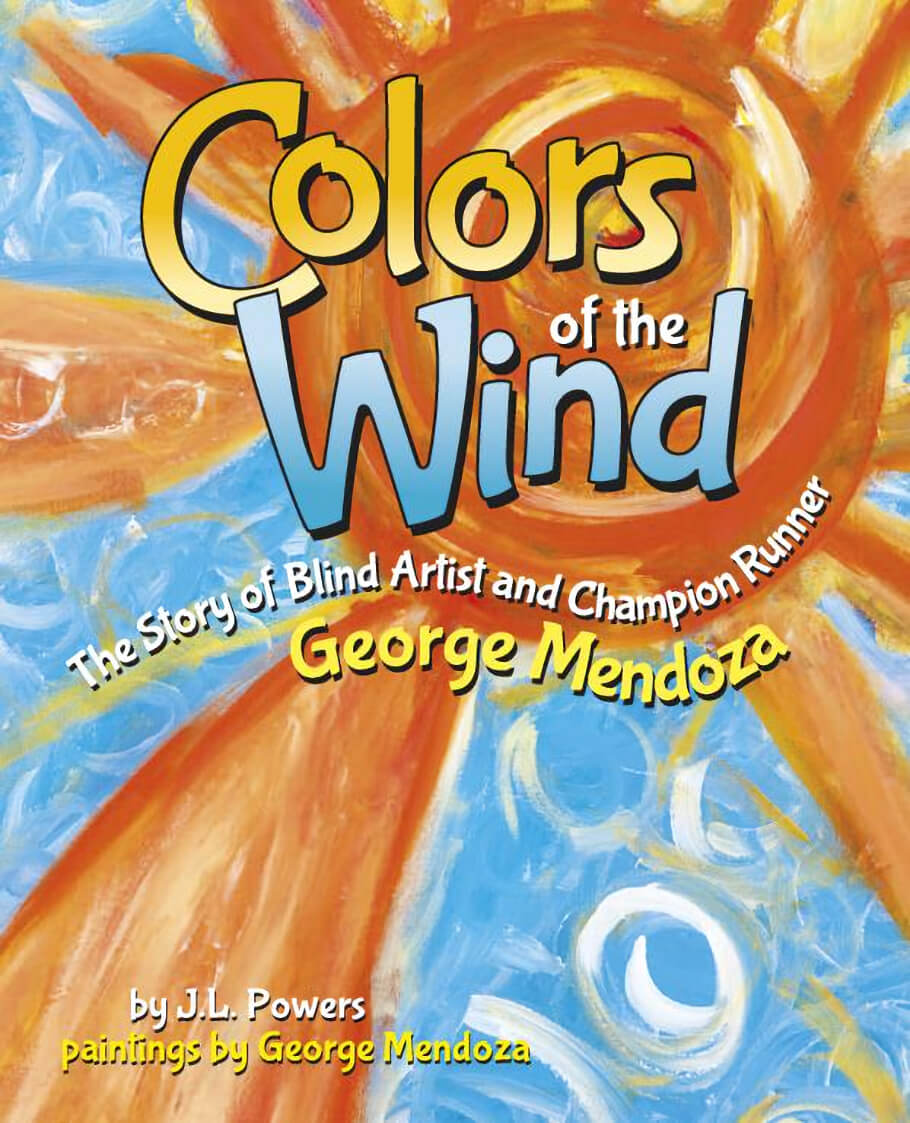
Colors Of The Wind: The Story Of Blind Artist And Champion Runner George Mendoza
An illustrated children's book about George Mendoza's colorful life.
George was one of those kids. You know, the kind that never stays still. And then one day, the doctor said he was going blind. Did that slow George down? Not for a single second. In fact, he was so fast, he went on to break a world record for blind runners. And now he is breaking more barriers because ironically, George Mendoza, blind painter, paints what he sees.
George Mendoza started going blind at age 15 from a degenerative eye disease. It wasn't the sudden onset of blindness that many people experience. George lost his central vision and started seeing things that weren't there-eyes floating in the air, extraordinary colors, objects multiplied and reflected back. George describes this condition as having "kaleidoscope eyes."
He triumphed over his blindness by setting the world record in the mile for blind runners, and later competing in both the 1980 and 1984 Olympics for the Disabled. Now a full-time artist, Mendoza's collection of paintings, also titled Colors of the Wind, is a National Smithsonian Affiliates traveling exhibit.
Story by J.L. Powers, paintings by George Mendoza.
Praise for Journey of the Spirit Man
"This uplifting, other-worldly parable about loss and despair, struggle and success, has much to offer our time of challenges and possibility. George Mendoza writes from his heart and his own hard lessons in life." - Anne Hillerman, New York Times best-selling author.
"A parable about living and dying that draws inspiration from various cultures and fables. Michael Seymour has his life planned out: He's going to finish school, run in the Olympics, and life will be smooth sailing. But after injuring himself during an important race featuring athletic scouts, Michael doesn't know what to do; he's never lost before.
"Then his girlfriend, Wendy, breaks up with him, and when he drags his best friend, Mark, out for a few drinks, the night ends with Mark getting stabbed by a man whom Michael hustled at pool. In no time at all, Michael has lost nearly everything. In a fit of anger and pain, he runs out of his house and follows trails that he and Mark used to run. He falls, hits his head, and passes out; he wakes up and sees a gate on the trail that he's never seen before. He steps through it and finds himself in another world, in the middle of a desert, and the gate vanishes.
"It's the start of a long journey that takes him to Gehenna, a hellish place where people are punished for sins; the Altar of the Cup of All Good Things, where worshipers believe that when a cup, now laying on its side, is righted, all the wrongs of the world will disappear; Paradisa, where Michael could possibly have everything he wants; and finally, Aegypt, where he must face Death.
"In this brief, inspirational novel, author Mendoza uses aspects of different belief systems, including Christianity, and multiple civilizations, apparently in an attempt to get readers to see their lives in a larger context and to encourage them to live to the fullest. The story moves along briskly, quickly shifting from one culture to the next as Michael pursues his journey. But the speed of the story never hampers the protagonist's character development, and he shows true growth as it proceeds.
"The setting descriptions are well thought out and give the novella a solid sense of place even when the shifts between them are dramatic, such as the transition from grim Gehenna to the more peaceful Altar. A spiritually minded novel with fine description and characterization." - Kirkus Reviews.
"An inherently absorbing read from cover to cover, Journey of the Spirit Man by author George Mendoza is an extraordinary and original novel by an author with an impressive, entertaining, narrative driven storytelling style making this an especially and unreservedly recommended for community library collections and the personal reading lists of those who appreciated a deftly crafted and memorable read that will linger in the mind and memory long after the book itself is finished and set back upon the shelf." - Midwest Book Reviews.
Frequently Asked Questions
What is juvenile macular degeneration?
Juvenile macular degeneration is a group of inherited retinal conditions, including Stargardt disease, that damage the macula and erode central vision during childhood or the teenage years. Peripheral vision usually remains, so most people affected are legally blind rather than completely sightless.
How does a painter keep working after losing central vision?
Artists commonly rely on remaining peripheral sight, high contrast palettes, magnification, tactile guides, textured surfaces, and strong studio lighting. Memory and practiced hand movement carry much of the work, and an assistant may help with color verification, labeling, and framing.
What does a Smithsonian affiliated traveling exhibition mean?
Smithsonian Affiliations is a national outreach program that partners with museums and cultural organizations across the country. An exhibition circulating through those programs travels to regional venues instead of staying in Washington, DC, which brings the work within reach of smaller communities.
Are the Spirit Man novels available in accessible formats?
Journey of the Spirit Man has an audiobook edition, and e-book versions can generally be read with screen readers, enlarged type, and text to speech on standard tablets and phones. Local libraries can also advise on talking book and braille lending services.
What were the Olympics for the Disabled?
That was the name widely used in 1980 and 1984 for the international games now known as the Paralympic Games. Blind and visually impaired athletes competed in classified events, including track races at distances such as the mile.
How can museums make exhibitions easier for blind and low vision visitors?
Useful measures include audio description, tactile reproductions, large print and braille labels, high contrast signage, guided touch tours, and staff trained to describe artwork on request. Contacting the venue a few days ahead usually secures these services.
Where are George Mendoza paintings on permanent display?
Works are permanently installed at Manhattan Eye, Ear and Throat Hospital in New York and at the UCLA School of Dentistry in Los Angeles. Additional pieces travel with the Colors of the Wind exhibition or are held in private collections.
Insights, Analysis, and Developments
Editorial Note: What makes Mendoza's record worth attention is not the familiar arc of a setback overcome, but the sheer length of the working life behind it - decades of canvases, four novels, a world record, hospital commissions, fabric design, and an exhibition that has been on the road for more than twenty years, all produced by someone the art world might have quietly written off in 1970; the paintings themselves argue the point better than any biography can, since they render a way of seeing that most viewers will never experience firsthand, and in doing so they ask galleries, schools, and audiences to widen what they expect an artist to look like before the work is even hung.
 Author Credentials: Ian is the founder and Editor-in-Chief of Disabled World, a leading resource for news and information on disability issues. With a global perspective shaped by years of travel and lived experience, Ian is a committed proponent of the Social Model of Disability, a transformative framework developed by disabled activists in the 1970s that emphasizes dismantling societal barriers rather than focusing solely on individual impairments. His work reflects a deep commitment to disability rights, accessibility, and social inclusion. To learn more about Ian's background, expertise, and accomplishments, visit his full biography.