New Book Teaches the World to Listen to People Who Stutter
Author: Ian C. Langtree - Writer/Editor for Disabled World (DW)
Published: 18 Jun 2026 - Updated: 12 Aug 2026
Publication Type: Literature / Review
Table of Contents:
Synopsis - Definition - Overview - FAQs - Insights, Updates - Related Content
Synopsis
This information reviews 100 Questions and Answers About People Who Stutter: A Listener's Guide, a new title from the Michigan State University School of Journalism's Bias Busters series that flips the usual approach by addressing the people around those who stutter rather than the stutterers themselves. It is authoritative because it was researched and reviewed alongside more than a dozen speech-language pathologists and researchers, many holding Ph.D.s and many who stutter, and it carries a foreword from Dr. J. Scott Yaruss, a professor of communicative sciences and disorders at Michigan State. The guide is useful to friends, family members, teachers, employers, co-workers, healthcare providers and journalists because it answers the plain questions people hesitate to ask - covering what causes stuttering, whether it is genetic, what covert stuttering is, and how supportive listeners can respond - making it a practical resource for anyone who interacts with the roughly 80 million people worldwide who stutter.
At a Glance
- 1 - The 86-page guide was produced by about 20 MSU journalism students working with more than a dozen speech-language pathologists and researchers, many of whom hold Ph.D.s and stutter themselves.
- 2 - It is the 24th title in Michigan State University's Bias Busters series, which journalist and educator Joe Grimm founded in 2013 to answer everyday questions about different groups.
- 3 - The eBook editions embed videos of people who stutter explaining, in their own voices, how others can listen better.
Topic Definition
- People Who Stutter
People who stutter are individuals whose speech is regularly interrupted by repetitions, prolongations, or blocks in sound, making up roughly 1 percent of the global population, or about 80 million people. Stuttering is a neurodevelopmental difference in how speech is produced, not a sign of low intelligence, a learning disability, or a contagious condition, and it can be overt or covert, with some people working hard to hide it. For many, the most difficult part of speaking is not the act itself but the reaction of listeners who interrupt, look away, or offer unsolicited advice, which is why advocates increasingly frame stuttering as a difference to be met halfway through patient, attentive listening rather than a problem the speaker alone must fix.
Overview
The 70 Million People We Keep Interrupting
A new book from Michigan State University's Bias Busters series answers 100 plain questions about stuttering - and argues that the 99 percent of people who don't stutter are the ones who most need to learn.
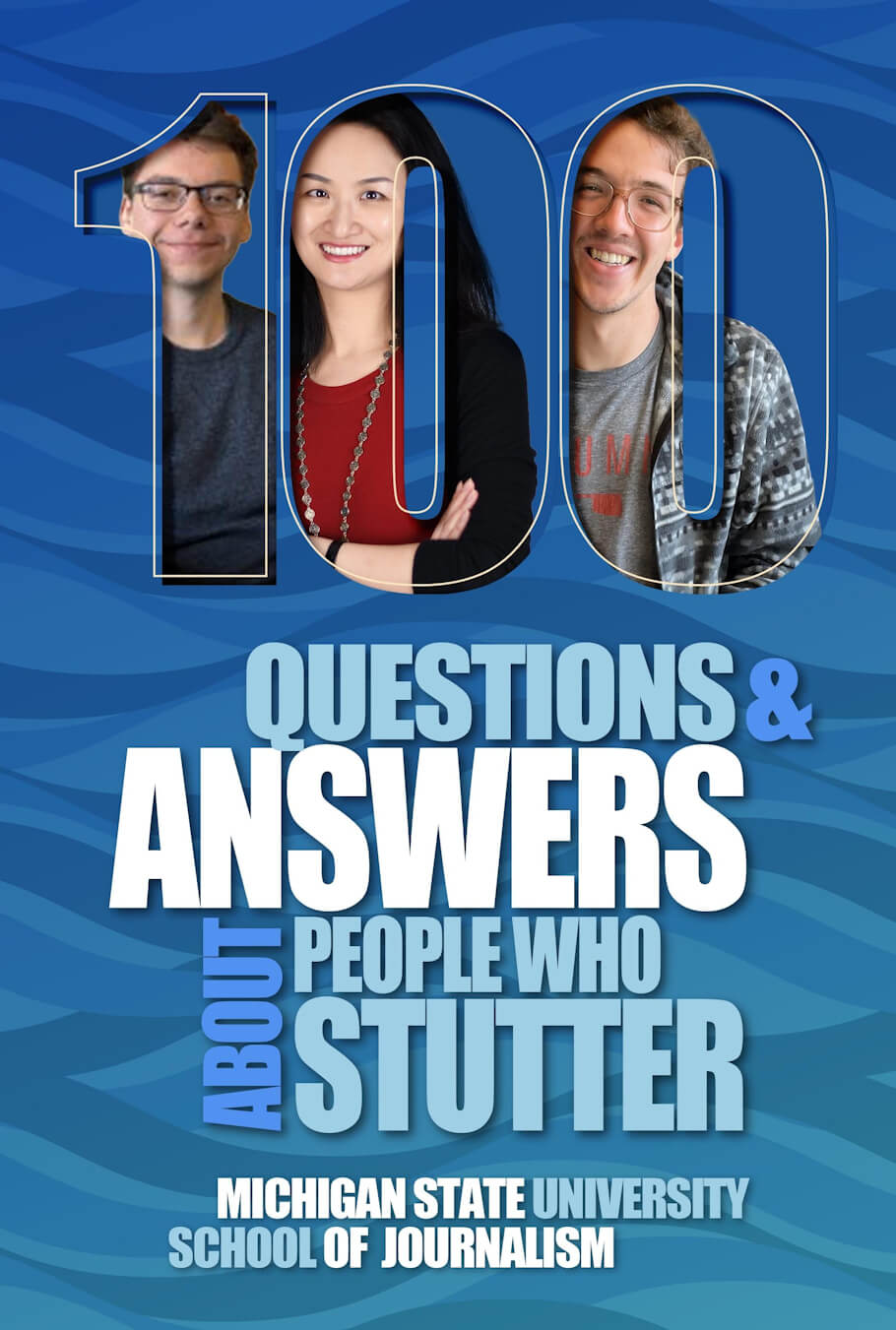
100 Questions and Answers About People Who Stutter: A Listener's Guide
Roughly 80 million people worldwide stutter - about 1 percent of the population. For most of them, the hardest part of a conversation isn't the words. It's the listener: the interruption, the finished sentence, the glance away, the well-meant advice to "just slow down." A new book argues that this is exactly where change can begin, and that the work belongs to everyone else.
100 Questions and Answers About People Who Stutter: A Listener's Guide, out July 28 from the Michigan State University School of Journalism's Bias Busters series, is built on a deceptively simple premise borrowed from the International Stuttering Awareness Day motto: "People who stutter have the unique opportunity to teach the world to listen." The other 99 percent of us, the book contends, can make a real difference simply by listening patiently.
That framing is what sets the guide apart. Rather than addressing people who stutter and telling them how to change, the 86-page book is written for the people around them - friends, family members, teachers, employers, co-workers, neighbors, healthcare providers and journalists. It is, in the truest sense, a listener's guide.
The Questions People Are Afraid to Ask
The Bias Busters model is to take the basic questions people hesitate to voice - for fear of offending someone or seeming ignorant - and answer them with research. The stuttering guide collects 100 of them. Some are practical: What do supportive listeners do? Is it rude to ask someone to repeat themselves? What happens when listeners interrupt someone who is stuttering? Is it better to just ignore stuttering?
Others get at the experience itself and the science behind it: What does it feel like to stutter? What is covert stuttering? What causes stuttering, and is it genetic? Does anxiety cause it? Is it mental or physical? A few puncture persistent myths outright - no, stuttering is not contagious, and no, it is not a learning disability. The guide also covers stuttering pride, whether culture shapes how stuttering is accepted, and even whether voice assistants such as Siri and Alexa help. A dedicated section on speech therapy speaks to people who stutter directly.
The invitation the series extends to readers is characteristically plain: "Turn your curiosity into knowledge."
Made With the People it's About
The guide was produced by about 20 MSU journalism students working alongside the people the book is about and the experts who study them - more than a dozen speech-language pathologists and researchers, many of whom hold Ph.D.s and many of whom stutter themselves. They researched the questions, then the answers, and edited the whole guide for accuracy.
Two contributors anchor the book. The foreword comes from Dr. J. Scott Yaruss, a professor of communicative sciences and disorders at Michigan State and a speech-language pathologist. He frames the stakes directly:
"The authors and editors of this book seek to create a world in which people who stutter do not face hardships imposed by societal stigma... a world in which they can be appreciated and valued for what they say rather than how they say it. By reading this book, you are taking an important step in bringing that dream to reality." - Dr. J. Scott Yaruss, from the foreword
The introduction is written by Sharon Emery - a journalist, university instructor and public relations consultant who stutters, and the author of It's Hard Being You: A Primer on Being Happy Anyway. Her case is that a good conversation is a shared act of accommodation, with responsibility on both sides:
"The extent to which confident speakers and attentive listeners can adapt our various abilities during a single conversation can be our contribution to making the world a better place. No kidding." - Sharon Emery, from the introduction
The eBook editions push that idea further, embedding videos of people who stutter describing, in their own voices, how others can listen better. The MSU students behind the project - among them Alison Garon, Sadie Carlson, Sophia Gorman, Nicolas Fardella, Maxwell Waier and a dozen more - worked with assistants from the university's Communicative Sciences and Disorders program.
The book at a Glance
- Title
- 100 Questions and Answers About People Who Stutter: A Listener's Guide
- Author
- Michigan State University School of Journalism (Bias Busters series, No. 24)
- Publisher
- Front Edge Publishing
- Publication date
- July 28, 2026 · 86 pages
- Formats
- Softcover $15.95 (ISBN 978-1-64180-252-9)
- Apple Books $9.99 (ISBN 978-1-64180-247-5)
- EPUB $9.99 (ISBN 978-1-64180-254-3)
- Learn more
- BiasBusterGuides.com
A Series With a Track Record
The stuttering guide is the 24th title in the Bias Busters series, which journalist and educator Joe Grimm founded at Michigan State in 2013. The series produces cultural competence guides that answer everyday questions about ethnic, racial, religious, occupational and other groups, with the aim of moving people past awkwardness and toward better conversations. Most are built the same way: MSU journalism students working directly with members of a community and with expert reviewers.
Grimm, now a professor emeritus at MSU, has been a journalist or a teacher - usually both - since 1976. He was an editor at The Oakland Press in Michigan and later an editor and the newsroom recruiter at the Detroit Free Press before joining the MSU School of Journalism faculty in 2008. Beyond the Bias Busters guides he has published 10 books since 1987, including Faygo Detroit, a Michigan Notable Book, and Windjammers: Songs of the Great Lakes Sailors. He is a member of the Michigan Journalism Hall of Fame and has served on its board. As he puts it, the project "dares to answer basic questions that people don't ask for fear of offending others or seeming ignorant."
Evergreen, and Timely
While the subject never goes out of season, the book pairs naturally with International Stuttering Awareness Day on October 22 - a built-in hook for the conversation the authors hope it will start. The dozens of people who worked on the guide, Grimm says, see it as a chance to teach the world to listen. A book trailer is available at youtube.com/watch?v=HZZmqvhu8Ks.
The deeper argument is one the guide returns to again and again: a stutter is not a problem to be tolerated but a difference to be met halfway. Listen without finishing the sentence. Keep natural eye contact. Don't rush. Give the speaker the same thing everyone wants in a conversation - the chance to be heard for what they say, not how they say it. As the guide's creators frame the offer: people who stutter have the unique opportunity to teach the world to listen. Take them up on it.
Famous People Who Have or Had Speech Differences or Stutter: Discover famous figures who overcame speech differences, like stuttering, proving that communication challenges don't limit success.
Frequently Asked Questions
What is the difference between stuttering and cluttering
Stuttering involves repetitions, prolongations, or blocks that interrupt the flow of speech, while cluttering is a separate fluency difference marked by rapid or irregular speech rate that can make words sound merged or unclear.
At what age does stuttering usually begin
Stuttering most often appears in early childhood, commonly between the ages of two and five as language rapidly develops, though it can persist into adulthood or in some cases begin later.
Can stuttering be cured
There is no universal cure, but speech therapy and support can help many people manage their speech, reduce tension, and communicate with greater ease and confidence.
How should a teacher support a student who stutters in the classroom
A teacher can allow extra time to speak, avoid finishing words or sentences, not force a student to speak under pressure, and create a calm and accepting environment for all forms of participation.
Is it okay to tell someone who stutters to slow down or relax
Well meaning advice like slow down or relax is generally unhelpful and can add pressure, so it is better to listen patiently and give the person time to finish their own way.
Does stuttering affect a person in a job interview or workplace
Stuttering does not reflect a person ability to do a job, and supportive employers can help by allowing time to speak, focusing on the content of what is said, and offering reasonable accommodations.
Where can people who stutter find support and community
Support is available through speech language pathologists, national stuttering associations, local support groups, and online communities that connect people who stutter and share resources.
Insights, Analysis, and Developments
Editorial Note: The guide's quiet provocation is that the burden of a good conversation has always been shared, and that the simplest accommodations - not finishing the sentence, holding natural eye contact, refusing to rush - cost the listener almost nothing while meaning a great deal to the speaker, which is why pairing the book with International Stuttering Awareness Day on October 22 feels less like a marketing hook and more like an open invitation to change how the other 99 percent of us behave.
 Author Credentials: Ian is the founder and Editor-in-Chief of Disabled World, a leading resource for news and information on disability issues. With a global perspective shaped by years of travel and lived experience, Ian is a committed proponent of the Social Model of Disability, a transformative framework developed by disabled activists in the 1970s that emphasizes dismantling societal barriers rather than focusing solely on individual impairments. His work reflects a deep commitment to disability rights, accessibility, and social inclusion. To learn more about Ian's background, expertise, and accomplishments, visit his full biography.