Unseen: Voices of Visually Impaired South Africans
Author: Ian C. Langtree - View Credentials
Published: 4 Aug 2026 - Updated: 6 Aug 2026
Publication Type: Literature / Review
Table of Contents:
Synopsis - Definition - Overview - FAQs - Insights, Updates - Related Content
Synopsis
About This Book
This book, Unseen by artist and writer Joanne Bloch, gathers her own account of serious sight loss alongside the reflections of 20 other South Africans, each speaking in their own words, making it a valuable read for people living with visual impairment, their families, caregivers, seniors facing age-related vision loss, and anyone working in disability access or advocacy, because it moves past the common assumption that sight is simply full vision or total blindness and instead explores the wide spectrum of partial sight that is rarely discussed, describing the sensory and bodily adaptations people make, the systemic barriers to basic rights they encounter, and the social discomfort and isolation they often face, while presenting these experiences not as stories of victimhood but as candid, personal expressions of courage, humor, solidarity, and resilience.At a Glance
- 1 - The book draws on the voices of 20 South African contributors.
- 2 - Joanne Bloch exhibited her art internationally, including at the 2013 Venice Biennale.
- 3 - More than a million South Africans live with visual impairment, yet the author notes no comparable book has been published in the country.
- 4 - Bloch faced irreversible sight loss in 2011, six months into her PhD in Fine Art, later shifting from art making to writing and interview-based life writing.
Topic Definition
- Visual impairment
Visual impairment refers to a reduced ability to see that cannot be fully corrected with glasses, contact lenses, medication, or surgery, and it covers a broad spectrum rather than a single condition. It ranges from mild and moderate low vision through severe partial sight to total blindness, meaning that many people described as visually impaired retain some usable sight that varies by lighting, distance, contrast, or field of view. This spectrum is often misunderstood by fully sighted people, who tend to picture vision as an all-or-nothing state, when in reality partial sight is the most common experience and calls for its own forms of adaptation, accommodation, and understanding.
Overview
After artist Joanne Bloch experienced serious sight loss, she felt called to explore what it means to be visually impaired in our society. Unseen gives both her own reflections and those of 20 other South Africans, each told in the unique voice of its contributor. The conversations and stories in Unseen reveal many hidden complexities. They describe sensory and bodily adaptations, as well as the systemic barriers to basic rights that are built into our society. They show the constant need to counter ignorance and hostility and describe the social discomfort and isolation that often comes with visual impairment. Yet these are not narratives of passive victims. Instead, they are idiosyncratic, compelling expressions of courage, humor, solidarity and resilience. Most of all, they reflect a determination to live a rich and fulfilling life despite every difficulty.
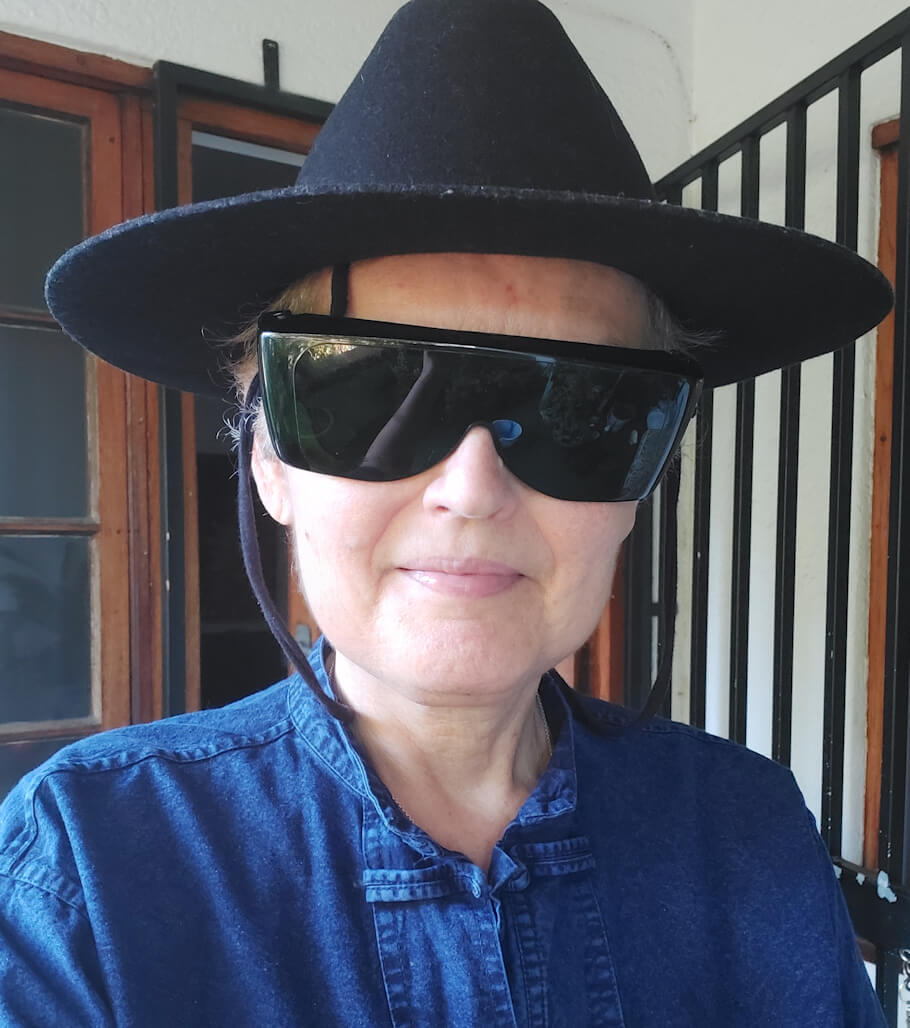
Joanne is a Cape Town-based artist and writer. For most of her adult life she was an exhibiting visual artist, showing her work in both solo and group exhibitions locally and internationally, including at the 2013 Venice Biennale. In parallel with her art practice, she worked as a freelance writer specializing in human rights-related and educational materials - journalism, handbooks, manuals and articles for NGOs, as well as South African school textbooks. She has always been especially interested in life writing, working as interviewer, photographer and writer on several interview-based books for young adults and children. Several of her children's books have been published, and many of her children's stories have been broadcast on radio for Nal'ibali, a national program aimed at encouraging a love of stories and reading in South African children. In 2011, six months into her PhD in Fine Art, Joanne was faced with irreversible sight loss. After she completed her PhD, her deteriorating vision forced her to abandon art making and concentrate entirely on writing, though more recently she has produced a series of fabric-based artworks. Unseen, her first book for adults, emerged as a response to her own experience of visual impairment, a growing awareness of the ignorance, stigma and discrimination confronting visually impaired South Africans, and a strong desire for marginalized voices to be more widely heard.
What Makes the Book Unique and Interesting?
"Visual impairment and particularly partial sight are under explored and much misunderstood. There have been no similar books published in South Africa that I'm aware of. Although there are more than a million visually impaired South Africans, in my experience, our fully sighted compatriots know little about what it is to be partially sighted, and have way too many incorrect assumptions and stereotypes about sight. Sight is conceived of as a binary, i.e. full sight versus total blindness, with no understanding of the vast spectrum in between. This has several consequences for their visually impaired compatriots. There is also a noticeable sense of discomfort, sometimes aversion from fully sighted people who perhaps feel challenged by the situation of dealing with somebody whose conditions they don't fully understand. The experience of partial sightedness and how people adapt sensorially to access the world around them is very much hidden. The book seeks to address these issues via in depth conversations and interviews with visually impaired South Africans from many different backgrounds, and these insights are presented in their own unique words. Unseen also has a potential crossover to readers interested in life writing of all kinds." - Joanne Bloch
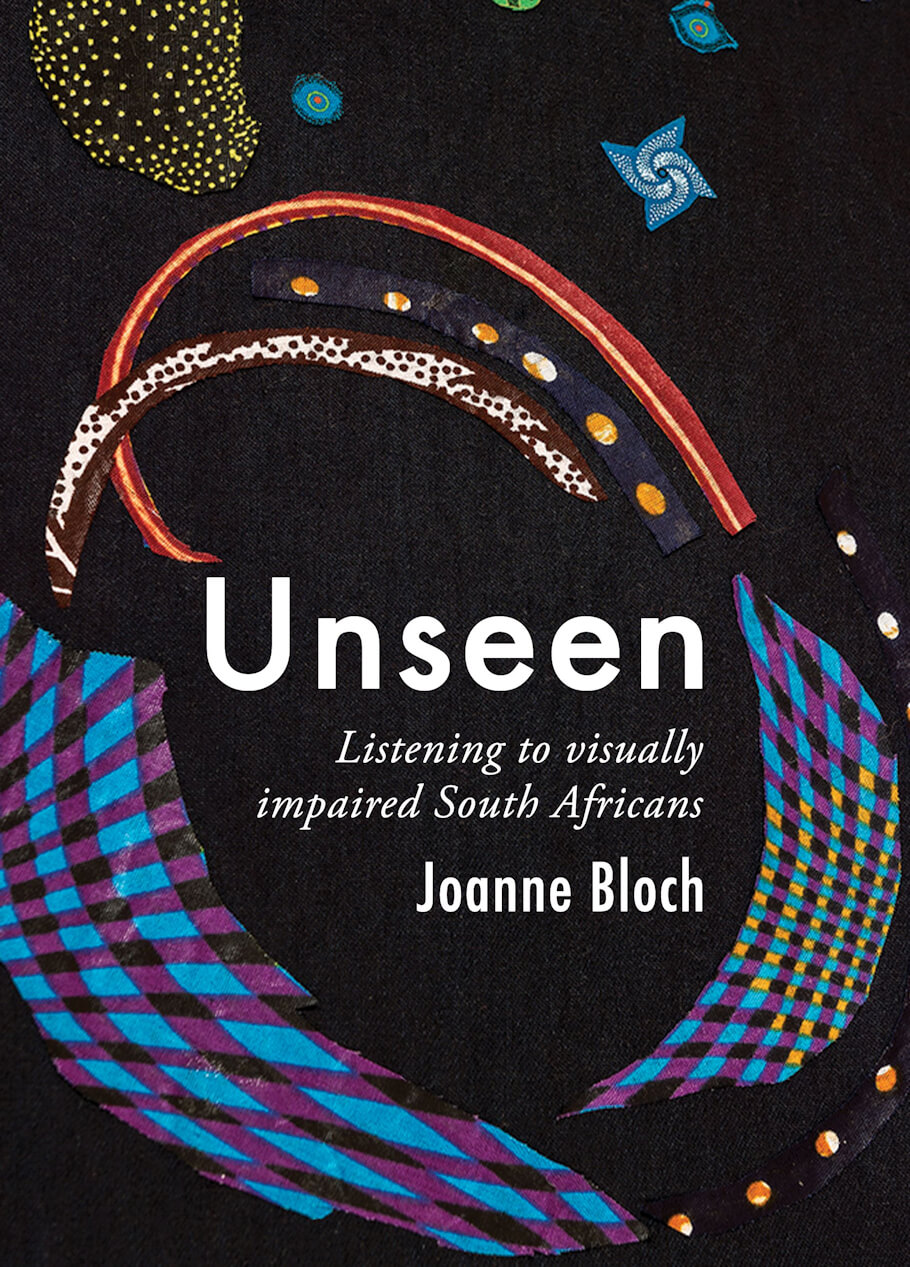
"In her moving personal account of sight loss, combined with interviews with a range of partially sighted and non-sighted South Africans, Joanne Bloch presents a devastating indictment of the systemic barriers to access and accomplishment that confront people living with disabilities in our society." - Kobus Moolman (award-winning writer and academic).
You can find Unseen on the Catalyst Press website, through booksellers and distributors that stock South African titles, or by asking your local bookstore or library to order a copy for you.
Frequently Asked Questions
How many contributors are featured in the book Unseen
The book gathers the voice of Joanne Bloch alongside 20 other South African contributors, giving a total of 21 first-person perspectives on living with visual impairment.
What event triggered Joanne Bloch to write Unseen
Bloch experienced irreversible sight loss in 2011, six months into her PhD in Fine Art, and this personal experience together with her awareness of stigma and discrimination led her to create the book.
Was Joanne Bloch a writer before she lost her sight
Yes, alongside her career as an exhibiting visual artist she also worked as a freelance writer on human rights and educational material, including journalism, handbooks, manuals, and South African school textbooks.
Roughly how many South Africans live with visual impairment
According to the author more than one million South Africans live with visual impairment, yet she notes that no comparable book had previously been published in the country.
What kinds of experiences do the contributors describe in the book
They describe sensory and bodily adaptations, systemic barriers to basic rights, the need to counter ignorance and hostility, and the social discomfort and isolation that can accompany visual impairment.
Did Joanne Bloch stop making art after her sight loss
Her deteriorating vision forced her to abandon art making and focus on writing, though more recently she has produced a series of fabric-based artworks.
Has Joanne Bloch exhibited her artwork internationally
Yes, she showed her work in solo and group exhibitions both locally and internationally, including at the 2013 Venice Biennale.
Insights, Analysis, and Developments
Editorial Note: As an editorial note, Unseen stands out because it treats partial sight as the complex, lived reality it is rather than a footnote between seeing and blindness, and by letting each contributor speak in an unfiltered voice, Bloch turns personal testimony into something closer to a public record, one that award-winning writer Kobus Moolman describes as a searching account of the barriers facing people with disabilities in South African society, which makes the book as useful to policymakers, educators, and health workers as it is to readers simply drawn to honest life writing.
 Author Credentials: Ian C. Langtree is a writer, editor, and the founder and Editor-in-Chief of Disabled World, which he established in 2004 as one of the longest-running independent resources for disability news and information. Over more than two decades, he has written and edited thousands of articles on disability rights, health, accessibility, and assistive technology. Drawing on a global perspective shaped by extensive travel and lived experience, Ian is a committed advocate of the Social Model of Disability, the framework developed by disabled activists in the 1970s that focuses on removing societal barriers rather than on individual impairments. His writing is grounded in that framework and in a lasting commitment to disability rights, accessibility, and social inclusion. To learn more about Ian's background, expertise, and accomplishments, visit his full biography.