Apple Electric Wheelchair Design Concepts and Features
Author: Ian C. Langtree - View Credentials
Published: 23 Nov 2023 - Updated: 27 Aug 2026
Publication Type: Informative
Table of Contents:
Synopsis - Definition - Overview - FAQs - Insights, Updates - Related Content
Synopsis
This speculative design concept explores how Apple's signature minimalist aesthetic and advanced technology integration could transform electric wheelchair design for users with mobility disabilities. The concept wheelchairs feature touch-sensitive controls, voice recognition systems, seamless integration with existing Apple devices like iPhones and Apple Watches, and compatibility with Apple's assistive technologies including VoiceOver and Switch Control. Advanced safety sensors would detect obstacles and adjust speed automatically, while smart home connectivity would enable users to control their environment remotely. The designs prioritize both form and function, addressing practical needs like extended battery life and fast-charging capabilities while maintaining Apple's characteristic sleek appearance. These AI-generated concepts, created in collaboration with patient handling specialists, serve as thought-provoking examples of how consumer technology companies might approach assistive mobility device design when combining cutting-edge features with user-centered accessibility principles.
At a Glance
- 1 - The concepts imagine compatibility with Apple assistive tools like VoiceOver and Switch Control. Gesture and facial recognition are also floated as possible input methods.
- 2 - Sustainability ideas include a long-lasting battery for extended usage time and fast charging to reduce downtime. These aim to keep the chair ready throughout a full day.
- 3 - The designs favor a crisp white body with glossy black accents, contoured seating, and a curved headrest. Clean lines and hidden wiring give the chairs a sculptural, premium feel.
- 4 - Smart home connectivity would let users control their environment and connect with healthcare providers for remote monitoring. The concepts frame the chair as a hub rather than standalone medical equipment.
Topic Definition
- Apple Electric Wheelchair Concept
An Apple electric wheelchair concept is a speculative design study that imagines how Apple's minimalist styling and technology ecosystem might shape a powered mobility chair for people with mobility disabilities. Instead of showing a real product, the concept explores ideas such as touch-sensitive and voice controls, tight integration with an iPhone or Apple Watch, and support for existing accessibility features. It pairs those tech ideas with practical goals like obstacle-detecting safety sensors, extended battery life, and fast charging, all wrapped in a clean white body with glossy black accents. The exercise sits where consumer electronics meet assistive technology, using familiar brand cues to prompt a broader conversation about what mobility aids could become if a major tech company applied the resources it devotes to everyday devices.
Overview
What a Futuristic Apple Electric Wheelchair May Look Like
This is a multi-page series showing various speculative electric wheelchair designs. The cover page with links to various brand designs can be found at Electric Wheelchair Concept Designs.
NOTE: These are speculative design ideas based on general observations of Apple devices. The actual design of an electric Apple branded wheelchair would require careful consideration, collaboration with experts, and input from the disability community to ensure it met the diverse needs of wheelchair users.
If Apple Were to Design Electric Wheelchairs
Apple is known for its sleek and aesthetic designs. An Apple wheelchair could have a modern and minimalist appearance, incorporating high-quality materials and an attention to detail.
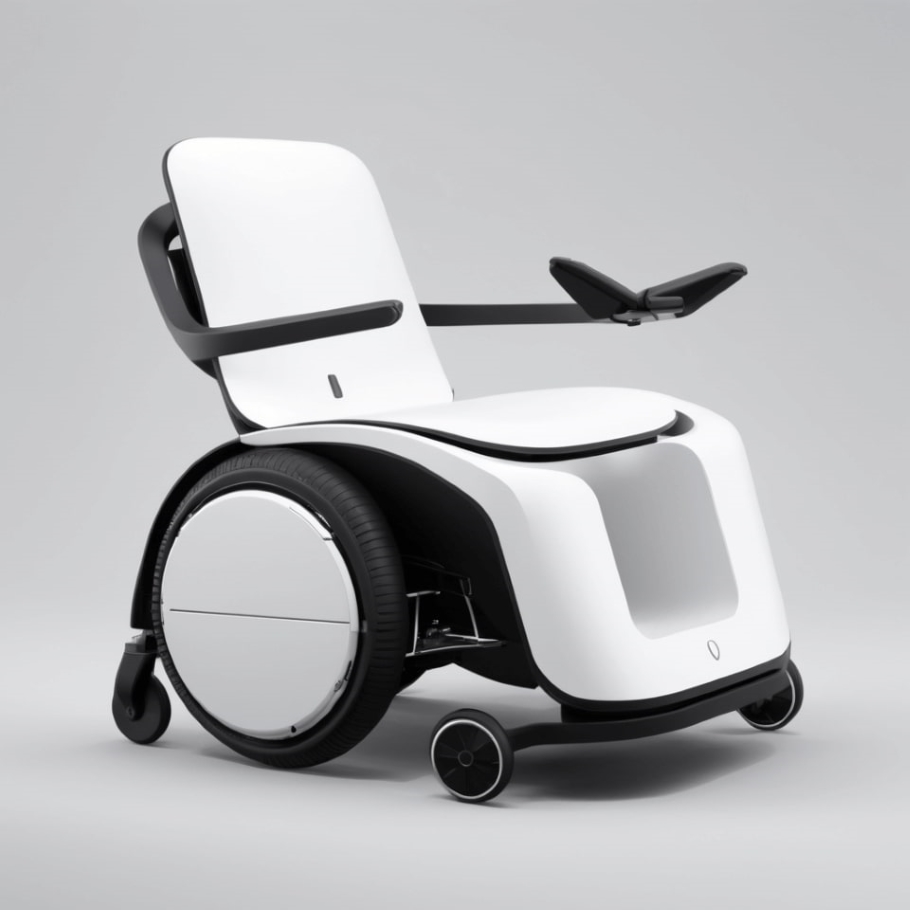
Apple may develop an intuitive control system that adapts to the individual needs and preferences of wheelchair users. This could include touch-sensitive controls, voice recognition, or even integration with Apple's existing devices like iPhones or Apple Watches. A concept wheelchair might seamlessly integrate with Apple's existing assistive technologies, such as VoiceOver, Switch Control, or even advanced features like facial recognition or gesture control.
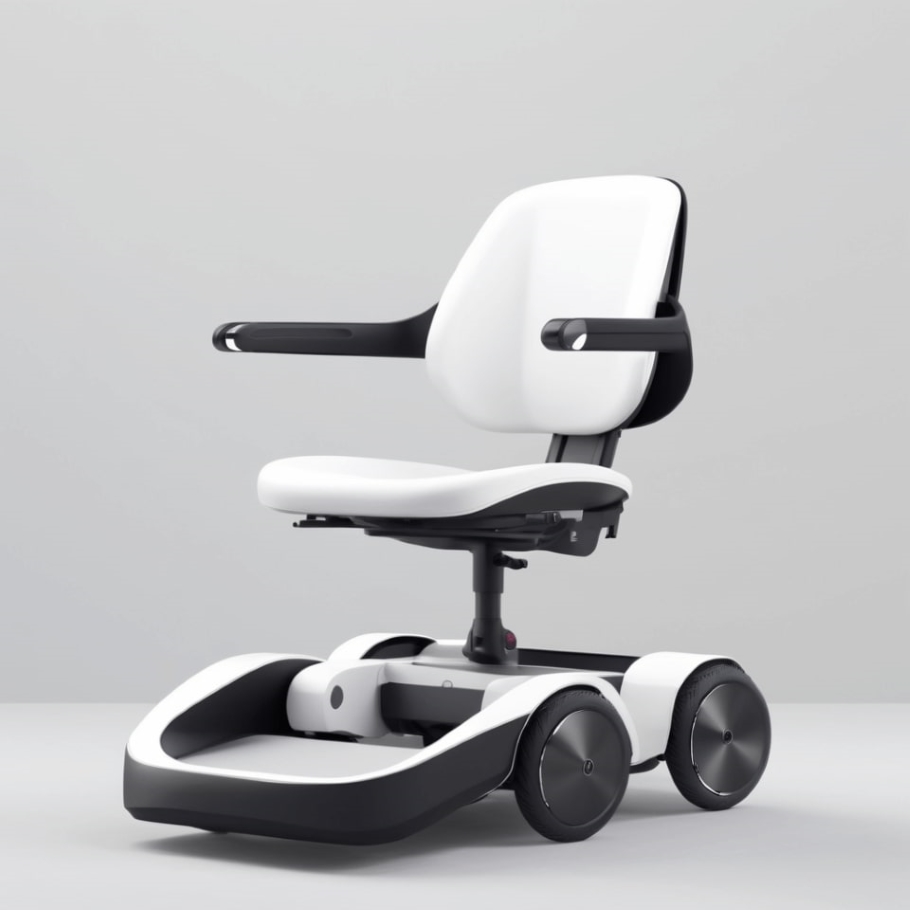
Apple could incorporate advanced sensors into the wheelchair to enhance safety and navigation. These sensors could detect obstacles, adjust speed, and provide real-time feedback to the user, ensuring a smooth and secure riding experience. Conceptually, an Apple wheelchair might be designed to connect to other smart devices and platforms. This could enable wheelchair users to access various apps, control smart home devices, or connect with healthcare providers for remote monitoring and assistance.
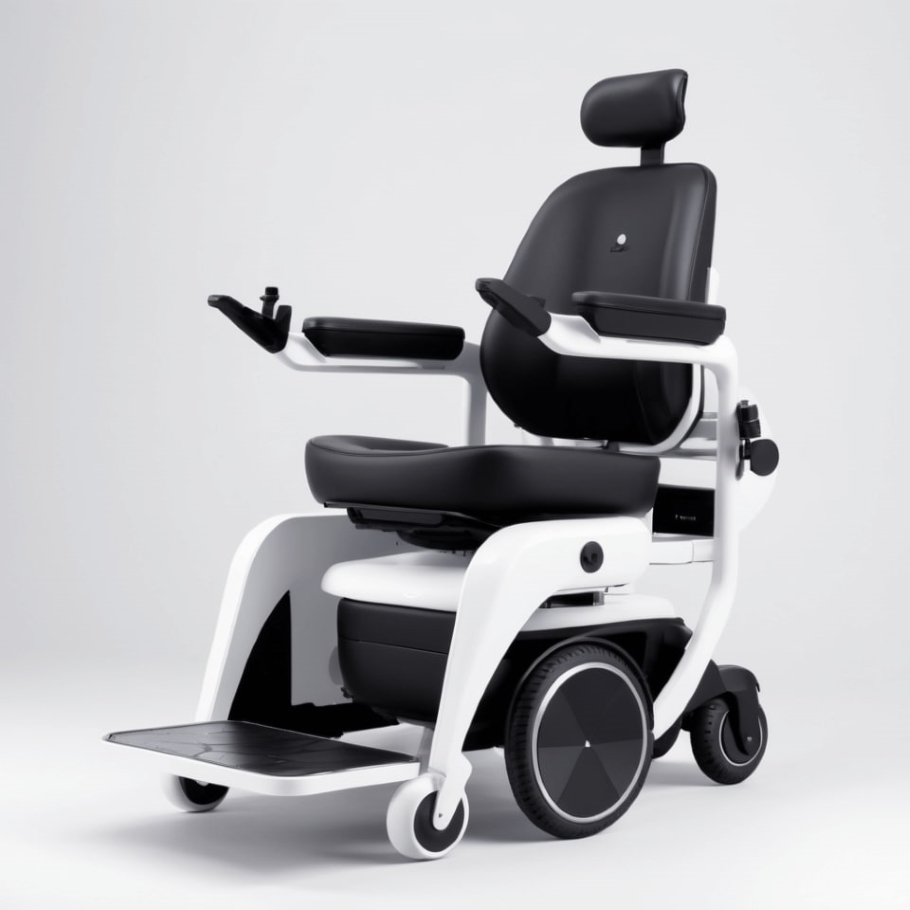
In line with Apple's commitment to sustainability and energy efficiency, an Apple-designed electric wheelchair might feature a long-lasting battery that offers extended usage time. Additionally, a fast-charging capability could minimize downtime.
View Other Electric Wheelchair Design Concepts
Important Context
The pictured wheelchairs are not real products nor has anyone worked with any brands to create these concepts. These images were created using a 3rd party AI platform, as well as a professional designer. These are speculative ideas only.
Original concept images and design ideas are used with permission courtesy of Patient Handling Australia's leaders in patient lifting, mobility, rehabilitation and disability equipment.
Frequently Asked Questions
Can you buy an Apple electric wheelchair
No, it is not a real product and is not sold anywhere. Apple has not entered the mobility device market, and these are speculative concept ideas only.
Does Apple make wheelchairs or mobility aids
Apple does not manufacture wheelchairs or powered mobility devices as of this article. The concept only imagines how the company might approach such a device.
What Apple accessibility features are referenced in the concept
The concept references existing tools such as VoiceOver and Switch Control. It also imagines newer input options like gesture control and facial recognition.
Would an Apple wheelchair work with an iPhone or Apple Watch
The concept envisions seamless pairing with existing Apple devices for control and feedback. This would let users manage the chair through hardware they already own.
How would safety sensors work on this concept
The proposed sensors would detect obstacles, adjust speed automatically, and give the user real-time feedback. Together these aim to support a smoother and more secure ride.
Who created the Apple wheelchair concept images
The images were made with a third party AI platform alongside a professional designer. They are used with permission courtesy of Patient Handling Australia.
Why are these concepts described as speculative
No brand collaborated on the designs and no working chair exists. They are illustrative ideas meant to spark discussion rather than represent planned products.
Where can I view wheelchair concepts for other brands
This page is part of a larger series covering many brands. A cover article links to concepts for companies such as Amazon, Tesla, and BMW.
Insights, Analysis, and Developments
Editorial Note: While these Apple-inspired wheelchair concepts remain purely speculative, they raise important questions about the future intersection of consumer electronics and assistive technology. The gap between mainstream tech innovation and mobility device development has historically been significant, with wheelchair users often waiting years for features that smartphone users take for granted. If major technology companies were to seriously enter the mobility aid market with the same resources they devote to consumer electronics, the resulting innovations could substantially improve quality of life for millions of wheelchair users worldwide. The real value of these design exercises isn't in their immediate practicality, but in their ability to challenge both manufacturers and consumers to reimagine what's possible when cutting-edge technology meets genuine accessibility needs.
 Author Credentials: Ian C. Langtree is a writer, editor, and the founder and Editor-in-Chief of Disabled World, which he established in 2004 as one of the longest-running independent resources for disability news and information. Over more than two decades, he has written and edited thousands of articles on disability rights, health, accessibility, and assistive technology. Drawing on a global perspective shaped by extensive travel and lived experience, Ian is a committed advocate of the Social Model of Disability, the framework developed by disabled activists in the 1970s that focuses on removing societal barriers rather than on individual impairments. His writing is grounded in that framework and in a lasting commitment to disability rights, accessibility, and social inclusion. To learn more about Ian's background, expertise, and accomplishments, visit his full biography.