Google Electric Wheelchair Concept Designs and Features
Author: Ian C. Langtree - View Credentials
Published: 24 Nov 2023 - Updated: 27 Aug 2026
Publication Type: Informative
Table of Contents:
Synopsis - Definition - Overview - FAQs - Insights, Updates - Related Content
Synopsis
This information presents speculative electric wheelchair design concepts imagined through Google's design philosophy, offering valuable insights into how technology-focused companies might approach mobility aid innovation. The content provides useful context for wheelchair users, occupational therapists, and assistive technology professionals interested in future mobility solutions. By examining how Google's expertise in user interface design, artificial intelligence, and smart device connectivity could translate to wheelchair technology, the piece addresses practical considerations including customizable seating positions, intuitive controls, terrain navigation, and safety features like obstacle detection. The concept designs showcase vibrant color schemes inspired by Google's branding alongside minimalist gray and white aesthetics, helping readers visualize potential directions for next-generation mobility devices that prioritize both function and user experience.
At a Glance
- 1 - The concept images were produced using a third party AI platform alongside a professional designer. They are presented as speculative ideas only, not actual Google products.
- 2 - One design uses the recognizable Google color palette with bright yellow, blue, and red accents on a dark modern frame. It pairs this with a high back ergonomic seat and integrated side bolsters for stability.
- 3 - A rugged all terrain concept features heavy tread tires and five spoke orange rims for outdoor exploration. It blends mobility device functionality with the bold design language of a modern performance vehicle.
- 4 - The original concept images and design ideas are used with permission courtesy of Patient Handling Australia, a specialist in patient lifting and mobility equipment. This design sits within a wider multi page series covering many brand inspired wheelchair concepts.
Topic Definition
- Google Electric Wheelchair Concept
A Google electric wheelchair concept is a speculative design study that imagines how a technology company known for user interface design, artificial intelligence, and smart device connectivity might approach the creation of a powered mobility aid. Rather than describing a real product, the concept asks what a wheelchair could look like if it borrowed Google's user centered philosophy and applied it to seating, controls, and everyday navigation. Typical ideas explored in this space include intuitive joystick controls, adjustable seating positions, obstacle detection, collision avoidance, and connectivity with smart devices for navigation and health monitoring. The purpose is to spark discussion about how mainstream engineering and design thinking could advance assistive technology, while making clear that any genuine product would require close collaboration with wheelchair users, clinicians, and the wider disability community.
Overview
Google Innovative Electric Wheelchair Concept Designs
Step into the world of possibilities with this captivating multi-page series, showcasing a plethora of speculative electric wheelchair concept designs. For your convenience, the main cover page features links to explore the diverse range of brand-inspired designs where you can embark on an journey of creativity and envision the future of electric wheelchairs.
NOTE: These are speculative design ideas based on general observations of Google products and designs. The actual design of an electric Google branded wheelchair would require careful consideration, collaboration with experts, and input from the disability community to ensure it met the diverse needs of wheelchair users.
If Google Were to Design Electric Wheelchairs
A concept Google-designed electric wheelchair would likely prioritize user feedback and incorporate features tailored to the specific needs and preferences of wheelchair users. Google, known for its user-centric approach and emphasis on innovation, would likely take a comprehensive and inclusive approach to create an electric wheelchair that truly addresses the challenges faced by individuals with mobility limitations.

To prioritize user feedback, Google may employ various strategies such as conducting extensive user research, engaging with the wheelchair community, and collaborating with experts in the field of disability and mobility. This would ensure that the wheelchair's design and features are informed by real-world experiences and insights from electric wheelchair users themselves.
In terms of design, a Google-inspired electric wheelchair may integrate user-friendly interfaces and intuitive controls. The emphasis would be on simplicity, allowing users to navigate the wheelchair effortlessly and adjust settings based on their specific requirements. Customization options, such as adjustable seating positions, backrest angles, and armrest heights, could be incorporated to address individual preferences and comfort.

Furthermore, Google's expertise in technology could be leveraged to incorporate advanced features into the electric wheelchair design. For instance, connectivity options could enable seamless integration with smart devices, allowing users to access navigation assistance, health monitoring, and other relevant applications. Additionally, the wheelchair may incorporate sensors and artificial intelligence to enhance safety, obstacle detection, and collision avoidance capabilities.
Another area of focus for a Google-designed wheelchair would be accessibility. The design may prioritize ease of ingress and egress, ensuring that individuals with varying levels of mobility can comfortably and safely transfer in and out of the wheelchair. Consideration for different terrains and environments would also be vital, allowing the electric wheelchair to navigate diverse conditions with ease.
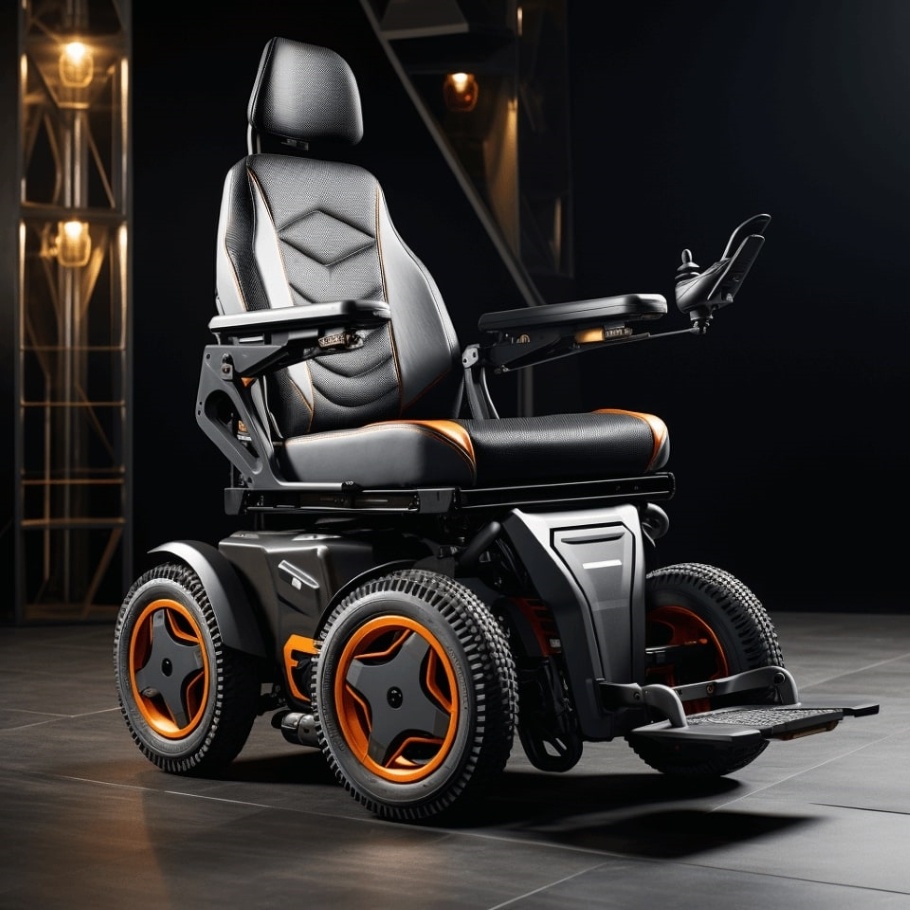
The concept Google-designed electric wheelchair would aim to redefine the mobility experience for wheelchair users, promoting inclusivity, and independence. By incorporating user feedback and addressing specific needs and preferences, Google would strive to create a wheelchair that truly enhances the quality of life for individuals with mobility limitations.
View Other Electric Wheelchair Design Concepts
Important Context
Please keep in mind that these features and images are purely conceptual and based on the notion of a Google inspired electric wheelchair. These images were created using a 3rd party AI platform, as well as a professional designer. These are speculative ideas only.
Original concept images and design ideas are used with permission courtesy of Patient Handling Australia's leaders in patient lifting, mobility, rehabilitation and disability equipment.
Frequently Asked Questions
Is the Google electric wheelchair a real product you can buy
No, it is not a real product and cannot be purchased anywhere. It is a speculative concept created to explore how a technology focused company might approach mobility aid design.
Has Google announced any plans to make wheelchairs
There is no announcement from Google indicating it plans to enter the mobility aid market. The designs are independent thought experiments and are not connected to any official Google project.
Who created the Google wheelchair concept images
The images were created using a third party AI platform together with a professional designer. They are shared with permission courtesy of Patient Handling Australia.
What features might a technology company add to an electric wheelchair
Possible features include smart device connectivity, navigation assistance, health monitoring, and sensor based obstacle detection. Artificial intelligence could also support collision avoidance and improved safety.
Why do designers create concept wheelchairs that are not for sale
Concept designs help people visualize future possibilities and encourage discussion about innovation. They can also inspire manufacturers to prioritize new ideas over small incremental changes.
Are there other brand inspired wheelchair concepts to view
Yes, this concept is part of a larger multi page series. Other designs are inspired by brands such as Tesla, Apple, BMW, Ferrari, and many more.
How could artificial intelligence improve wheelchair safety
Artificial intelligence can process sensor data to detect obstacles and help avoid collisions. It can also assist with terrain awareness so the chair adapts to different environments.
Should real wheelchair design involve wheelchair users
Yes, genuine mobility aid development should include direct input from wheelchair users and clinicians. This ensures the design meets diverse real world needs rather than assumptions.
Insights, Analysis, and Developments
Editorial Note: While these Google-inspired wheelchair designs remain purely conceptual, they raise important questions about the role major technology companies could play in advancing mobility aid innovation. The gap between what current assistive technology offers and what modern engineering could potentially deliver continues to widen, making these thought experiments particularly relevant. As smartphones became more sophisticated and accessible, they fundamentally changed how millions of people navigate daily life - a similar transformation in wheelchair technology isn't just possible, it's overdue. Whether Google or other tech giants will actually enter the mobility aid market remains uncertain, but the features outlined here - smart navigation, customizable controls, AI-assisted safety systems - represent realistic goals that could significantly improve independence and quality of life for wheelchair users if manufacturers choose to prioritize innovation over incremental improvements.
 Author Credentials: Ian C. Langtree is a writer, editor, and the founder and Editor-in-Chief of Disabled World, which he established in 2004 as one of the longest-running independent resources for disability news and information. Over more than two decades, he has written and edited thousands of articles on disability rights, health, accessibility, and assistive technology. Drawing on a global perspective shaped by extensive travel and lived experience, Ian is a committed advocate of the Social Model of Disability, the framework developed by disabled activists in the 1970s that focuses on removing societal barriers rather than on individual impairments. His writing is grounded in that framework and in a lasting commitment to disability rights, accessibility, and social inclusion. To learn more about Ian's background, expertise, and accomplishments, visit his full biography.