Kids' Cartoons and Disability: An Autistic Creator's View
Author: Dylan E. Paul
Published: 23 Nov 2026
Publication Type: Product Release, Update
Table of Contents:
Synopsis - Definition - Overview - FAQs - Insights, Updates - Related Content
Synopsis
This information is a first-person account by Dylan E. Paul, an autistic former K-8 art and music teacher who is developing the independent animated children's series DR. APPLE, on how children's television portrays disability and how lessons from a sensory-busy classroom can shape better shows. Drawing on the Geena Davis Institute's 2026 Children's TV Representation Report, which found that only 1% of characters in new 2025 children's programming were disabled and that disability representation has stalled below 2% for eight consecutive years, the author argues that disabled characters too often exist only to teach others acceptance. The author makes the case for characters who are funny, stubborn, curious and ordinary, for accommodation shown as routine rather than generous, and for predictable, low-pressure pacing that helps every child follow along. The piece is useful for parents, teachers, animators, writers and disabled viewers of all ages because it pairs current industry data with practical classroom experience from someone who has lived with the same overstimulation they once helped students manage.*
At a Glance
- 1 - CAST released version 3.0 of its Universal Design for Learning Guidelines in July 2024.
- 2 - In popular children's programming, the share of disabled characters fell to 1.3% in 2025, down from 2.9% in 2024.
- 3 - Disabled leads made up 2.1% of leads in new 2025 children's TV programming, a record share for the Geena Davis Institute.
- 4 - The author found that explaining what comes next, giving visual cues and allowing processing time could turn an overwhelming class activity into a manageable one.
Topic Definition
- Disability Representation in Children's Media
Disability representation in children's media refers to how often, and how accurately, disabled people appear as characters in television, film, books and other content made for young audiences. Good representation shows disabled characters as full individuals with their own goals, humor, flaws and friendships, rather than as plot devices whose disability exists mainly to teach other characters a lesson. It also covers who creates the content, since involving disabled writers, animators and consultants tends to produce more authentic portrayals. Researchers such as the Geena Davis Institute track representation by counting the share of characters and leads with a cognitive, learning, behavioral or physical disability, and they consistently find disabled people appear far less often on screen than in the real population.
Overview
What Kids' Cartoons Get Wrong About Disability, and What I'm Doing Differently
The Classroom Wasn't Always Quiet
When I taught art and music in K-8, some days the classroom got absolutely noisy. Really noisy. I'd introduce a new activity, and the students would be all over the place. They'd be buzzing with excitement, the conversations would overlap, and then it would be very difficult to get the room back in any kind of order.
As an autistic educator, I wasn't immune to that noise at all. There were times when I experienced the very same overstimulation I was trying to help my students cope with.
I worked hard to create a classroom where kids could be calm and focused as they discovered art and music they might not otherwise have come across. That said, it wasn't always easy to strike the right balance between excitement, creativity and sensory needs.
Those experiences taught me something vital: an overstimulated child isn't necessarily misbehaving, and an environment that's perfect for one child may be utterly exhausting for another. That understanding has followed me from the classroom into children's animation.
Disability Isn't a Plot Twist
Growing up autistic, I didn't always have the language to explain why certain environments would overwhelm me, or why things that were trivial for other kids felt impossible for me. Children's TV has made progress in disability representation, but there's still a long way to go.
According to the Geena Davis Institute's 2026 Report on Children's TV Representation, which covers 2025 programming, only 1% of characters in new children's TV shows were disabled, down from 1.8% in 2024. Disability representation in new shows has stalled below 2% of characters for eight consecutive years.
And when disabled characters do appear, their disability often becomes the central feature of their story. The disabled character exists to help everyone else learn to accept them. Their disability drives the episode's conflict. Their difference is something everyone else has to come to terms with, explain, get over or celebrate through their reactions.
Those stories can have value, but disabled children deserve far more than being someone else's lesson. They deserve to be funny, stubborn, imaginative, curious, occasionally annoying and completely ordinary. They deserve characters who are more than their diagnosis. They deserve stories where accommodation isn't some incredible act of generosity; it's just the normal thing you do to make the world accessible.
Representation should do more than simply teach children that there are different people in the world. It should help them understand that those differences are part of being human.
What Children's Television Can Learn From the Classroom
One of the most important things I learned while teaching was that children don't necessarily need every uncomfortable experience eliminated. They need the chance to understand what's going on, ask questions and feel some control over their world.
I wanted my students to get the thrill of discovery. I wanted them to try different kinds of music, encounter different artistic techniques and feel at ease with their creativity. At other times, the excitement became overwhelming. The classroom would get very loud, the transitions were a nightmare, and I was just as much at the end of my rope in that same sensory environment I was trying to manage.
I didn't always get it right. But those experiences led me to think more deliberately about how the environment affects our capacity to learn.
Predictability makes a massive difference. If you explain what comes next, provide visual cues and give a child time to process instructions, you can turn an overwhelming activity into something quite manageable.
Similar principles appear in CAST's Universal Design for Learning Guidelines, which encourage teachers to reduce threats and distractions, make routines and transitions predictable and create a flexible learning environment. And those approaches don't only benefit disabled children. They benefit all children.
Humor Matters, Too
Kids don't always respond to information delivered as a lecture. A bit of silliness from a character, a small unexpected mistake or an over-the-top reaction can go a long way toward making a tricky subject more accessible. I think children's media can apply these same principles.
A character can ask a question a child would be embarrassed to ask. A story can show what to expect before something unusual happens. A bit of humor can make an otherwise frightening situation seem less so.
Accessibility doesn't mean you have to remove the fun, the humor or the spontaneity. It's about thinking through how different children will experience those things.
A classroom can be welcoming and creative, yet still difficult for some students to navigate. The same is true of children's entertainment.
Why I'm Making DR. APPLE
These experiences have shaped how I'm developing DR. APPLE, an independent animated children's series featuring August "Auggie" Apple, a nine-year-old medical prodigy on the team at the Young Minds Institute. The series blends light comedy, character-driven storylines and accessible health education.
I want medical environments to be understandable rather than mysterious. I want the characters to ask questions, make mistakes, feel and learn without any sense of shame. I also want to create a more relaxed viewing experience, where the humor doesn't have to be all noise and the educational parts don't have to feel like a lecture.
Auggie may be a prodigy, but he's still a child. His intelligence doesn't mean he knows it all, and his mistakes don't diminish his ability in any way.
I don't want to make a show that talks down to kids or assumes that being educational means being dull. I want to create something that recognizes their intelligence, takes their feelings into account and gives them space to be curious.
DR. APPLE isn't exclusively a disability show. But my experiences as an autistic person and as an educator have a huge bearing on how I write the characters, pace the episodes and tell the story. Accessibility shouldn't have to be the topic of an episode to be part of how a show is made.
Every Child Deserves to Belong
I don't think one cartoon is going to fix the problems with disability representation. But I do think children's media can go some way toward helping young people understand themselves and each other.
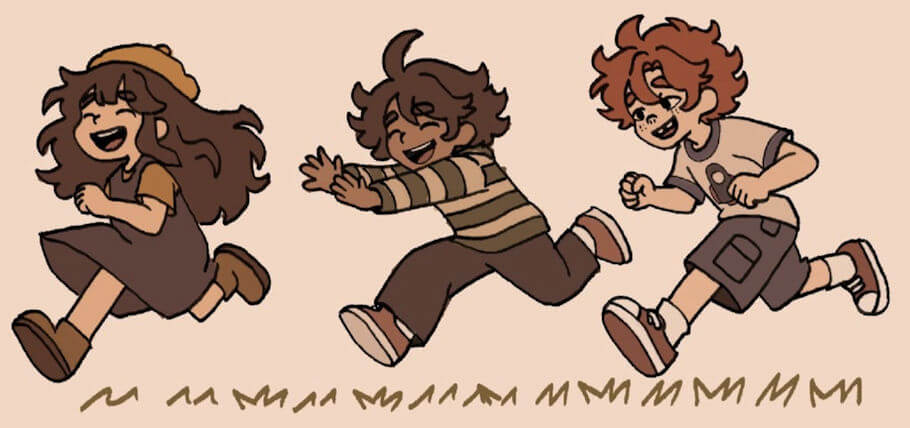
As an educator, I wanted my students to feel that the classroom was a place where they could explore, make mistakes and find out something new. As a creator, I want children to feel that same sense of belonging when they're watching my work.
Children shouldn't have to see themselves as a problem to be solved before they can see themselves as someone worth celebrating.
Frequently Asked Questions
NOTE: Researched FAQs by Disabled World (DW)
What is the Geena Davis Institute?
The Geena Davis Institute is a nonprofit research organization founded by actor Geena Davis that studies how gender, race, disability, age and other identities are portrayed in film, television and other media. It publishes yearly reports on children's programming and offers guides that help writers and producers create more balanced and authentic characters.
How can parents choose shows that portray disability well?
Look for shows where disabled characters have their own goals, friendships and sense of humor, and where their disability is not the only thing the story is about. Check whether disabled writers, voice actors or consultants were involved, and watch an episode with your child so you can talk about what you both noticed.
What is a relaxed or sensory-friendly viewing experience?
A relaxed viewing experience uses calmer pacing, fewer sudden loud sounds, gentler color and lighting changes and clear signals about what is coming next. These choices help autistic children and others with sensory sensitivities follow a story without becoming overwhelmed, while still keeping it fun for everyone.
What does authentic disability representation mean in animation?
Authentic representation means disabled characters look, move, communicate and use assistive tools in ways that match real experience, and that their disability is shown accurately rather than as a stereotype. It usually depends on research and input from disabled people, including creators who share the same disability as the character.
Why does it matter for disabled children to see themselves on screen?
Seeing characters like themselves can help disabled children feel that they belong and that their experiences are normal and worth sharing. It also helps non-disabled children understand and accept differences early, which can reduce teasing and exclusion at school and in the community.
What is Universal Design for Learning?
Universal Design for Learning, or UDL, is a framework from the nonprofit CAST that helps educators plan lessons that work for the widest range of learners from the start. It encourages multiple ways to engage students, present information and let students show what they know, instead of adding fixes for individual students later.
How can teachers reduce sensory overload in art and music classes?
Teachers can post a visual schedule, warn students before transitions, set clear volume signals and offer a quiet corner or noise-reducing headphones. Breaking activities into short, predictable steps and letting students take brief breaks can help both students and staff who are sensitive to noise and crowding.
Should disabled creators be involved in making children's TV?
Yes, involving disabled writers, animators, voice actors and consultants tends to produce more accurate and natural portrayals and helps avoid common stereotypes. Their lived experience can shape small details such as pacing, dialogue and how accommodations appear on screen, which audiences often notice even when they cannot name it.
References
- Geena Davis Institute. (2026). 2026 Report on Children's TV Representation.
- Geena Davis Institute. How Disability Stories Change the World: A Quick Guide for Creators.
- CAST. (2024). Universal Design for Learning Guidelines, Version 3.0.
- Geena Davis Institute. (2024). Representation in Family Films: 2024 Study.
Insights, Analysis, and Developments
Editorial Note: Dylan E. Paul's essay lands at a moment when the numbers are moving the wrong way: the Geena Davis Institute recorded a drop in disabled characters across both new and popular children's programming between 2024 and 2025, even as disabled leads in new shows reached a small record high. That gap suggests a few prominent characters are carrying the load while background casts, classrooms and friend groups on screen remain almost entirely non-disabled. The author's point that accessibility belongs in how a show is made, through pacing, predictability and humor that does not depend on noise, applies well beyond autism and could help children with ADHD, anxiety, sensory processing differences or hearing and vision disabilities follow a story on their own terms. For writers and producers, the takeaway is practical rather than symbolic: cast disabled characters as everyday members of the story, involve disabled creators early, and treat accommodation on screen the way good teachers treat it in class, as ordinary.*
* Editorial additions by Ian C. Langtree.