Accessible Tourism in Nepal: Lessons from South Korea
Author: Sarita Lamichhane
Published: 14 Sep 2026
Publication Type: Paper, Essay
Table of Contents:
Synopsis - Definition - Overview - FAQs - Insights, Updates - Related Content
Synopsis
This report is a first person policy account by Sarita Lamichhane, a visually impaired Nepali participant in the 2026 UN CRPD Training for the Asia-Pacific, who traveled to South Korea in September 2026 and looked at how Seoul organizes tourism for disabled visitors. Key facts include the Seoul Danurim Accessible Tourism Center, run by the Seoul Metropolitan Government and Seoul Tourism Organization, which supplies accessibility information, accessible vehicles, travel assistive device rental and a tour guide service for visually impaired visitors, and the Korea Disabled People's Development Institute, which in 2026 connected disabled jobseekers to hotel, exhibition and convention roles through recruitment tied to a Tourism Job Fair. The account carries weight because the author tested these services as a blind traveler rather than reading about them, and because she anchors her argument in Article 19 of the UN Convention on the Rights of Persons with Disabilities, which recognizes equal choice and full participation in community life. It affects disabled and older travelers who need reliable access information before booking, along with guides, hotels, trekking agencies and tourism officials, and its main finding is blunt: Nepal has the tourism assets but not the system around them, and accessibility should be treated as a trained profession and a source of employment rather than as a favor extended to a guest.*
At a Glance
- 1 - Nepal's tour guide association could publish a public list of certified disability-inclusive guides, letting travelers book a trained professional before they arrive.
- 2 - Hotels are urged to drop the phrase accessible room available and publish a detailed profile covering entrance, lift dimensions, bed height, grab bars, alarms and service animal policy.
- 3 - Trekking agencies should never label a route accessible without stating accessible for whom, since a trail a blind trekker can manage with a guide may be impossible for a wheelchair user.
- 4 - The article sets out a five step start for Nepal: pilot major destinations, train tourism staff now, publish reliable access information, hire disabled workers and include them in planning.
Topic Definition
- Accessible Tourism
Accessible tourism is the practice of designing travel services, destinations, transport, accommodation and information so that disabled people, older travelers and anyone else facing access barriers can take part on equal terms and keep control of their own decisions. It covers far more than physical features such as ramps, lifts and accessible bathrooms. It includes information published before a trip is booked, communication in formats a traveler can actually use such as audio description, sign language interpretation, captioning or plain language, transport a person can board, staff who are trained rather than merely willing, and the freedom to choose where to go, what to do and what help to accept or refuse. In its fuller sense, which reflects Article 19 of the UN Convention on the Rights of Persons with Disabilities, accessible tourism also means disabled people working inside the industry as guides, trainers, auditors, consultants, planners and policy advisers, so that the services are shaped by the people who encounter the barriers.
Overview
What Nepal Can Learn from South Korea's Accessible Tourism: From Being a Tourist to Becoming a Tourism Professional
There are some lessons that cannot be learned in a conference hall.
They have to be experienced.
They have to be learned while traveling on public transport, entering a museum, finding a hotel room, navigating a busy street, looking for a toilet, asking for information and, sometimes, simply trying to understand whether a tourist destination was designed with people like you in mind.
For a person with a disability, these ordinary experiences can reveal whether a society truly believes in inclusion - or whether accessibility remains only a policy statement.
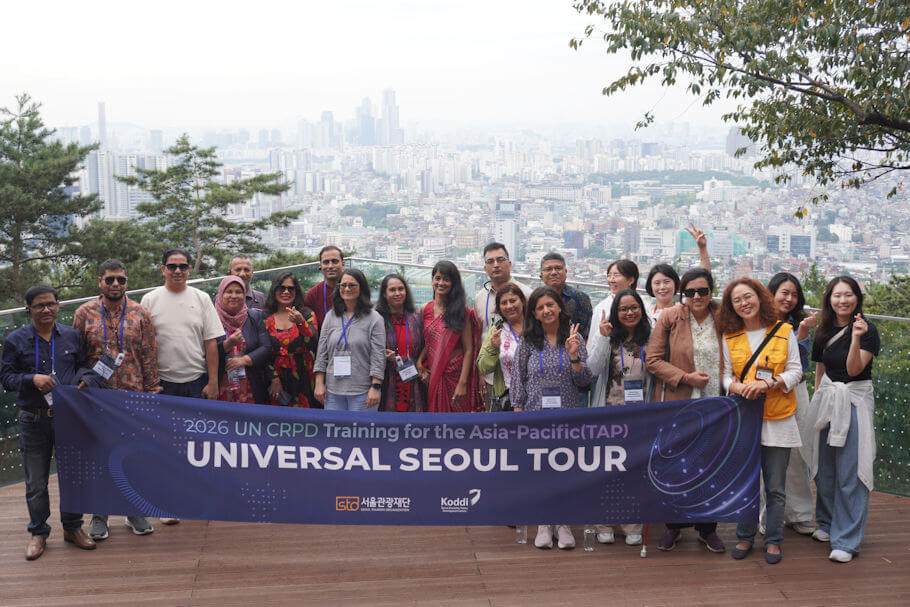
During my visit to South Korea in September 2026, as one of the participants in the 2026 UN CRPD Training for the Asia-Pacific (TAP), whose purpose was to deepen understanding of the CRPD and Korea's disability-policy practices I found myself repeatedly asking one question:
Can a person with a disability travel, explore, make choices and participate in tourism with the same dignity, independence and freedom as anyone else?
But another question gradually became even more important:
Can a person with a disability also become a tourism professional who helps other tourists experience the world?
My experience in South Korea suggests that Nepal needs to ask both questions.
A lesson from the National Museum of Korea
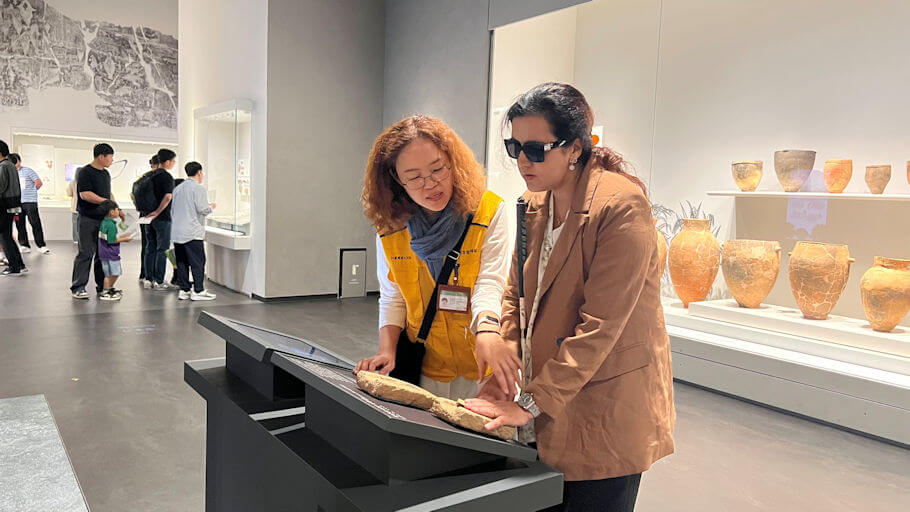
One of the experiences that stayed with me occurred during our visit to the National Museum of Korea.
As a visually impaired participant, I entered the museum with the same curiosity as any other visitor. Museums are places where information is traditionally presented through visual displays - objects, paintings, photographs, maps, written descriptions and exhibition panels. For a blind or visually impaired visitor, therefore, the quality of the experience depends greatly on how information is communicated.
During the visit, a woman who was involved in guiding us introduced herself and explained that she was certified as a tour guide for blind and visually impaired tourists.
What caught my attention was not simply the word "certified".
It was what that certification represented.
She explained that her preparation included learning how to provide information to blind and visually impaired tourists as a tour guide. In other words, her role was not simply to accompany a blind person physically from one location to another. She had specific preparation to communicate information in a way that could be meaningfully understood by a person who could not rely on visual information.
That experience made me think about Nepal.
In Nepal, we often discuss whether a tourist attraction has a ramp, accessible toilet or other physical infrastructure. These things are essential. But accessibility does not end with physical access.
For a visually impaired tourist, the question is also:
- Who will describe what is around me?
- Who will explain what I cannot see?
- Who will help me understand the historical, cultural or artistic significance of an object without making decisions on my behalf?
And perhaps most importantly:
Why should a blind person always be the person receiving assistance rather than also becoming the person providing professional tourism services?
That experience at the National Museum of Korea became one of the most important reflections I am bringing back to Nepal.
From a tourist who needs assistance to a professional who provides assistance
For decades, disability and tourism have often been discussed from the perspective of the tourist with disabilities.
The conversation usually asks:
- Can the person enter the building?
- Can the person use the toilet?
- Can the person travel safely?
- Can the hotel accommodate them?
These questions are necessary.
But they are not sufficient.
There is another dimension of inclusion that deserves much more attention:
employment.
A blind woman can be a tourist.
But she can also be a tour guide.
A Deaf person can visit a heritage site.
But a Deaf person can also work in the tourism industry.
A wheelchair user can stay in an accessible hotel.
But a wheelchair user can also become a hotel accessibility consultant, tourism entrepreneur or travel planner.
A person with a disability can be both a consumer and a contributor to tourism.
This is the shift Nepal needs to make.
Accessible tourism should not be understood merely as creating tourism services for persons with disabilities.
It should also mean creating opportunities for persons with disabilities to work, lead and make decisions within the tourism industry.
South Korea is developing a system around accessible tourism
South Korea provides several useful examples.
In Seoul, accessible tourism has been developed as part of the city's tourism system rather than being left entirely to individual businesses.
The Seoul Metropolitan Government and Seoul Tourism Organization operate the Seoul Danurim Accessible Tourism Center, which is designed to expand tourism opportunities for persons with disabilities and other people who may face accessibility barriers.
The official Seoul tourism information describes Danurim as a comprehensive support center offering accessible tourism information, vehicles and travel-assistive devices. It also provides accessibility information for tourist attractions, accommodation and food establishments.
The city's 2026 official tourist guidebook goes further. It specifically identifies a "Tour Guide for the Visually Impaired" among Danurim services, alongside airport transportation and travel-assistive-device rental.
This is significant for Nepal.
It demonstrates that accessible tourism can be organized as a professional service, rather than being treated simply as an act of kindness.
Accessibility begins before the journey
One of the most important lessons from Seoul is that accessibility begins long before the tourist arrives at a destination.
A person with a disability needs information before traveling.
- Is the destination accessible?
- Is there accessible transportation?
- Can I enter the building?
- Is there an accessible toilet?
- Can I obtain information in a format I can use?
- Is there someone trained to support my access requirements?
- Can I book an appropriate vehicle?
- Can I rent an assistive device?
- Can I find accommodation that meets my specific needs?
The Seoul Danurim system provides accessibility-related information and services designed to help tourists make these decisions before and during their journeys.
For Nepal, this raises a very basic question:
If a blind tourist wants to visit Pokhara, Chitwan, Lumbini, Mustang, Janakpur or a trekking destination, can that person obtain reliable accessibility information before leaving home?
The answer is not yet as straightforward as it should be.
Nepal has tourism resources. What is missing is the accessibility system.
Nepal does not lack tourism resources.
We have the Himalayas.
We have Mount Everest.
We have trekking routes, national parks, religious heritage, cultural sites, historical cities, forests, rivers and diverse communities.
We have adventure tourism.
We have hotels, travel agencies, trekking agencies and professional guides.
Nepal also has a well-established professional guide sector.
The issue, therefore, is not whether Nepal understands the importance of professional tourism services.
The question is:
Is our tourism industry prepared to include persons with disabilities as tourists, employees, guides, entrepreneurs and decision-makers?
A blind tourist should not have to surrender choice
There is a common misunderstanding that helping a blind tourist means deciding everything for that person.
That is not inclusion.
A guide may provide support, but the traveler should remain the decision-maker.
The tourist should be able to decide:
- Where to go
- What to see
- How long to stay
- Which activity to participate in
- Whether to enter an attraction
- Whether to change the itinerary
- When to rest
- Who to trust
- What assistance to accept
This principle is directly relevant to Article 19 of the United Nations Convention on the Rights of Persons with Disabilities (UNCRPD).
Article 19 recognizes the equal right of persons with disabilities to live in the community with choices equal to others and to participate fully in community life. It also requires access to community services and facilities on an equal basis.
Tourism is part of community life.
Travel is part of participation.
Cultural and recreational activities are part of social inclusion.
Therefore, accessible tourism should not be treated as a separate charity program.
It should be understood as part of implementing disability rights.
Article 19 is also about choice
The significance of Article 19 goes beyond physical presence.
A person can technically be taken somewhere without being genuinely included.
For example, a blind tourist may be brought to a museum but receive no accessible information.
A wheelchair user may be taken to a hotel but be unable to use the bathroom.
A Deaf tourist may enter a tourist attraction but receive no accessible communication.
A person with another disability may be physically present but unable to make meaningful choices.
That is not full participation.
The UN convention on the Rights of Persons with Disabilities has emphasized that independence includes personal autonomy and that persons with disabilities should not lose choice and control over their everyday lives. It also recognizes access to recreational, cultural and other community activities as part of inclusion.
This is why accessible tourism belongs in the Article 19 conversation.
What impressed me most was not only accessibility - but professionalism
The experience of meeting a guide prepared to provide information to blind and visually impaired tourists made me reconsider the meaning of accessibility.
There is a major difference between saying:
"We can help tourist with disability."
and saying:
"We have trained professionals who understand how to provide tourism services to tourist with disability."
The second approach is more sustainable.
It recognizes disability as a professional service requirement.
It also creates employment.
And this is where South Korea's experience offers another lesson for Nepal.
Korean organizations are connecting disability and employment
South Korea has developed disability employment initiatives in the tourism sector.
The Korea Disabled People's Development Institute (KODDI), which is also involved in disability policy, employment and development initiatives, has supported disability employment opportunities within the tourism industry.
In 2026, KODDI announced recruitment linked to the Tourism Job Fair, including positions in tourism-related companies such as hotels and exhibition and convention businesses.
This builds on earlier tourism employment initiatives in which Korean tourism-sector companies recruited persons with disabilities. Previous tourism job fairs included opportunities in hotels and tourism-related businesses.
These examples are important because they show that disability employment does not have to remain confined to a few traditional occupations.
Tourism can become a field of employment for persons with disabilities.
Nepal should learn from this approach.
Korean tourism organizations should also expand disability leadership
There is, however, an opportunity for South Korea to go even further.
If accessible tourism is to become truly inclusive, Korean tourism organizations, travel agencies, museums, hotels, tourism boards and guide organizations should not only create services for tourist for disabilities, they should actively recruit and appoint persons with disabilities as tourism professionals.
This should include:
- persons with visual impairments as tour guides and accessibility trainers
- Deaf and hard-of-hearing persons in tourism information and cultural interpretation
- persons with physical disabilities as accessibility auditors and tourism consultants
- persons with intellectual disabilities in appropriate tourism employment
- persons with disabilities as tourism content creators
- persons with disabilities as travel planners
- persons with disabilities as tourism policy advisers; and
- persons with disabilities as members of tourism planning and accessibility committees
The principle should be simple:
Nothing About Us Without Us.
A tourism system designed for persons with disabilities without persons with disabilities participating in its design will inevitably miss important realities.
The National Museum experience offers Nepal a practical model
My experience at the National Museum of Korea also demonstrates why professional preparation matters.
A conventional tour guide may know the history of an object.
But a guide trained to work with visually impaired tourists may also know how to explain:
- the shape of an object
- its size
- its texture
- its location
- its relationship to surrounding objects
- the physical environment
- changes in floor level
- the movement of people
- the layout of an exhibition
- other information that sighted visitors may receive automatically through vision
This does not mean that a blind tourist needs every visual detail described.
The guide must first understand the individual traveler's preferences.
Some people may want extensive description.
Others may prefer concise information.
Some may want to touch permitted objects.
Others may want historical explanation.
Some may use technology.
Some may use tactile information.
The central principle is therefore choice.
The guide provides information.
The tourist decides what to do with it.
Nepal should create a disability-inclusive tour-guide certification system
This is one area where Nepal can take immediate action.
The Nepal Tourism Board, in cooperation with relevant guide associations, organizations of persons with disabilities and government agencies, should establish a national Disability-Inclusive Tour Guide Training and Certification Program.
The program could have different specialist modules.
One could focus on visually impaired tourists.
Another could focus on Deaf and hard-of-hearing tourists.
Another could address tourists with physical disabilities.
Another could address intellectual and psychosocial disabilities.
A general disability-inclusive tourism module could be compulsory for professional guides.
Training for guides working with visually impaired tourists
The visual-impairment module should include practical training in:
- human-guiding techniques
- orientation and mobility
- verbal description
- environmental description
- describing artworks and museum objects
- explaining maps and physical spaces
- identifying hazards
- stairs and changes in terrain
- safe movement in crowded places
- transportation
- hotel orientation
- emergency procedures
- respectful communication
- appropriate physical assistance
- assistive technology
- accessible digital information
- confidentiality
- safeguarding
- prevention of exploitation and abuse; and
- the right of the traveler to make decisions
The course should include practical assessment, not merely classroom attendance.
A guide should demonstrate that they can actually provide quality service to a blind or visually impaired tourist.
And persons with disabilities should teach the training
This is crucial.
Nepal should not develop disability training entirely through persons without disabilities professionals.
Blind and visually impaired people should be involved as trainers.
Deaf and hard-of-hearing people should be involved in communication training.
Wheelchair users should contribute to mobility and accessibility training.
People with different disabilities should be able to evaluate whether the training actually works.
This would transform disability awareness from theory into lived experience.
TAAN can make accessible trekking a professional field
The Trekking Agencies' Association of Nepal (TAAN) has an especially important role.
Nepal's trekking industry is internationally recognized.
But accessible trekking requires more than simply saying:
" persons with disabilities are welcome."
A trekking agency should be able to provide accurate information about:
- route conditions
- terrain
- distance
- elevation
- toilet availability
- accommodation
- rest points
- transportation
- emergency procedures
- weather
- communication
- assistive devices
- guides
- porters
- medical access
- evacuation arrangements
- the level of assistance available
Most importantly, agencies should not label a route "accessible" without explaining accessible for whom and under what conditions.
A route may be feasible for a blind traveler with a trained guide but unsuitable for a wheelchair user.
Another route may be accessible for a person with limited mobility but difficult for someone with another disability.
Accessibility must therefore be specific and evidence-based.
TAAN should also recruit persons with disabilities
The discussion should not stop with training persons without disability guides.
TAAN and trekking companies should create opportunities for persons with disabilities to become tourism professionals.
For example, a visually impaired person could work as:
- a trekking-information trainer
- a travel consultant
- a cultural guide
- an accessibility adviser
- a route-information specialist
- a digital content creator
- a tourism researcher
- or, where appropriate and safely feasible, a trained guide
The question should not automatically be:
"Can a person with a disability do this job?"
The better question is:
"What support, technology, training and reasonable accommodation would enable this person to do the job?"
That is a rights-based approach.
The Tour Guide Association of Nepal also has a major role
The professional tour-guide sector can become one of the strongest advocates for inclusive tourism.
The association should work with organizations of persons with disabilities to establish a Disability-Inclusive Tour Guide Certification.
Certified guides could be listed publicly so that tourists with disabilities can choose a trained professional before traveling.
The database could identify specialist competencies.
For example:
- Visually impaired tourist support
- Deaf and hard-of-hearing tourist support
- Wheelchair-accessible tourism
- Inclusive cultural tourism
- Accessible museum guiding
- Accessible trekking
This would give tourists meaningful choice.
It would also give guides a professional incentive to gain disability-inclusive qualifications.
Hotel Association Nepal should redefine "accessible room"
Hotels are another critical part of the tourism chain.
A hotel may advertise itself as accessible because it has a ramp.
But accessibility is not one-size-fits-all.
- A hotel should provide information about:
- the entrance
- lift dimensions
- room layout
- bed height
- bathroom design
- grab bars
- shower arrangements
- floor surfaces
- lighting
- signage
- tactile information
- auditory information
- emergency alarms
- fire evacuation procedures
- digital booking
- staff assistance
- policies concerning service animals
The hotel should state clearly which features are available.
Instead of simply saying:
"Accessible room available,"
the hotel could provide a detailed accessibility profile.
This would benefit both tourists and hotels.
It would reduce uncertainty.
It would also encourage competition based on accessibility quality.
Accessibility information must be honest
One of the most important lessons Nepal can learn from accessible tourism is the importance of reliable information.
False accessibility information can be more harmful than no information.
A traveler who is told that a hotel is accessible may arrive and discover that the bathroom cannot be used.
A blind tourist may be told that a museum provides accessible information but discover that no one knows how to provide it.
A wheelchair user may be told that a trekking route is accessible and then encounter terrain that makes travel impossible.
Therefore, accessibility audits should be conducted with persons with disabilities.
Accessibility should be verified, not assumed.
Nepal Tourism Board can become the national driver
The Nepal Tourism Board should consider establishing an Accessible and Inclusive Tourism Desk or Unit.
Such a unit could coordinate government, tourism businesses and organizations of persons with disabilities.
Its work could include:
1. National accessible-tourism standards
Develop standards for hotels, attractions, transport, tour operators, trekking companies and guides.
2. Accessibility mapping
Map major destinations and record actual accessibility conditions.
3. Accessible tourism information
Develop a centralized online platform where tourists can find reliable accessibility information.
4. Guide certification
Develop disability-inclusive training and certification with professional guide organizations.
5. Employment
Promote employment of persons with disabilities throughout the tourism industry.
6. Accessibility audits
Ensure persons with disabilities participate in tourism accessibility assessments.
7. Accessible tourism packages
Develop packages for different access requirements.
8. Complaints and feedback
Create an accessible mechanism for tourists to report barriers, discrimination or poor service.
9. Disability representation
Include organizations of persons with disabilities in tourism policy and planning.
10. Data
Collect data on tourists with disabilities and disability employment in tourism.
Without data, policy remains difficult to measure.
Accessibility should become an employment strategy
There is another reason Nepal should invest in this issue.
Accessible tourism can create jobs.
Training programs can create new professional roles.
Accessibility auditing can become a consultancy field.
Accessible travel planning can become a business.
Tourism content production can create employment.
Guide training can create employment.
Assistive technology can create new tourism services.
Persons with disabilities can become entrepreneurs.
This is why accessible tourism should not be placed only within the social-welfare agenda.
It belongs within:
tourism policy, employment policy, economic development and disability rights.
Why Article 19 matters to tourism
Article 19 of the UNCRPD provides an important framework for thinking about this transformation.
It recognizes the equal right of persons with disabilities to live in the community, make choices and participate fully in community life. It also requires community services and facilities available to the general population to be accessible on an equal basis.
Tourism is one of those community activities.
A museum is a community cultural facility.
A public park is a community facility.
A hotel is part of the tourism economy.
Public transport enables community participation.
Tourism information is a public-facing service.
When these systems exclude persons with disabilities, participation is restricted.
When they become accessible, the person gains greater freedom.
Independent living is not only about where we live
The Article 19 discussion often focuses on housing, personal assistance and community-based services.
These are essential.
But independent living is also about having the freedom to participate in ordinary life.
That includes traveling.
It includes going to a museum.
It includes visiting a national park.
It includes attending a cultural event.
It includes taking a holiday.
It includes meeting friends.
It includes exploring another city.
It includes choosing one's own leisure activities.
A person with a disability should not have to give up these experiences simply because the tourism system was not designed with them in mind.
From "special tourism" to universal tourism
Nepal should be careful not to create a system in which tourists with disabilities are permanently separated from everyone else.
The goal should be inclusive tourism, not unnecessary segregation.
Where mainstream services can be made accessible, they should be.
Where specialized support is necessary, it should be available.
For example, a visually impaired tourist may use a mainstream museum but require a trained guide.
A wheelchair user may use the same tourist attraction as everyone else but require an accessible entrance.
A Deaf tourist may join the same tour but require sign-language interpretation or captioning.
The principle is:
Same tourism opportunities, with the support necessary to make equal participation possible.
Nepal should learn from Korea - but develop its own model
South Korea and Nepal have very different economic, geographical and infrastructural conditions.
Nepal cannot simply copy Seoul.
Seoul has extensive public transportation and infrastructure that Nepal cannot reproduce immediately.
But Nepal can learn from the underlying principles.
The lesson is not:
"Build Seoul in Nepal."
The lesson is:
"Build a tourism system that recognizes accessibility as part of quality, rights and professional service."
Nepal can begin with relatively practical measures.
Five actions Nepal can take immediately
First: Start with major destinations
Pilot accessible tourism in Kathmandu Valley, Pokhara, Chitwan and Lumbini.
Then expand to other destinations.
Second: Train tourism professionals
Do not wait for every building to become perfectly accessible.
Train guides, hotel staff, drivers, tourism officials and travel agents now.
Third: Create reliable information
A tourist should know the accessibility situation before traveling.
Fourth: Employ persons with disabilities
Recruit persons with disabilities as guides, trainers, consultants, auditors, tourism workers and entrepreneurs.
Fifth: Involve persons with disabilities in decision-making
Accessibility must be designed with the people who experience the barriers.
A new role for organizations of persons with disabilities
Organizations of persons with disabilities should not be invited only to attend workshops.
They should have formal roles in tourism planning.
They can:
- conduct accessibility audits
- train tourism professionals
- develop disability-specific standards
- test tourism websites
- evaluate hotels
- assess routes
- provide user feedback
- train guides
- support recruitment
- participate in tourism policy committees
This would bring the principle of "Nothing About Us Without Us" into the tourism industry.
Korea also has a lesson for Nepal about employment
The work of organizations such as KODDI demonstrates that disability employment can be actively connected with tourism-sector opportunities.
In 2026, KODDI facilitated recruitment opportunities connected with the tourism industry, including hotel and exhibition/convention positions.
Earlier tourism employment initiatives also demonstrated the possibility of linking persons with disabilities with tourism businesses.
Nepal could establish a similar Accessible Tourism Employment Initiative.
The initiative could bring together:
- Nepal Tourism Board
- Ministry of Culture, Tourism and Civil Aviation
- organizations of persons with disabilities
- tour-guide associations
- TAAN
- Hotel Association Nepal
- travel agencies
- museums
- national parks
- municipal governments
- vocational training institutions
- employers
The objective would be simple:
Create pathways from disability-inclusive training to real tourism employment.
The opportunity for blind and visually impaired women
As a woman who is visually impaired, I see another dimension of this issue.
Women with disabilities face multiple barriers to employment and public participation.
Tourism could provide opportunities for women with disabilities to become economically active and visible in public life.
A blind woman can become a tourism trainer.
She can write travel stories.
She can create accessible tourism content.
She can work as a travel consultant.
She can become an accessibility auditor.
She can advise hotels and museums.
She can participate in tourism policy.
And, with appropriate training and reasonable accommodation, she can also work as a guide where the professional requirements and safety conditions allow.
The important thing is not to decide in advance what a woman with a disability can or cannot do.
Give her the opportunity, training, reasonable accommodation and choice.
Let her decide.
That is the essence of inclusion.
What Nepal Tourism Board, TAAN and hotels should consider together
Rather than each organization developing isolated activities, Nepal needs a coordinated model.
The Nepal Tourism Board could lead national policy.
The Tour Guide Association could lead guide certification.
TAAN could lead accessible trekking.
The Hotel Association Nepal could lead accessible accommodation.
Museums and cultural institutions could develop accessible interpretation.
Organizations of persons with disabilities could provide technical expertise and user testing.
The government could establish standards and accountability.
Together, they could create a national accessible-tourism ecosystem.
The tourism industry should appoint persons with disabilities
This is perhaps the strongest recommendation I would bring home from Korea.
Nepal's tourism organizations should move beyond the idea of "serving persons with disabilities" and begin actively "employing persons with disabilities."
The Nepal Tourism Board, tour-guide associations, trekking companies, hotels, museums and travel companies should establish targets and mechanisms for recruiting qualified persons with disabilities.
This should include people with different disabilities - not only one disability group.
For example:
- Visually impaired people can contribute to guiding, tourism content, accessibility assessment and training
- Deaf and hard-of-hearing people can contribute to accessible communication, tourism content and customer services
- People with physical disabilities can contribute to accessibility assessment, tourism management, entrepreneurship and consultancy
- People with intellectual disabilities can participate in suitable tourism employment with appropriate support
The goal is not token employment.
It is meaningful employment based on skills, qualifications and reasonable accommodation.
A guide should be trained to support - not control
The experience of accessible tourism also requires us to rethink the role of the guide.
A guide's job is not to control a disabled tourist.
It is to provide information and support.
A blind tourist should not automatically be held, pushed or redirected.
The guide should ask:
"Would you like assistance?"
The tourist should be able to answer.
This simple practice reflects a much larger principle:
support should increase independence, not replace it.
That principle is consistent with the rights-based approach reflected in Article 19 and the broader UNCRPD framework.
Accessible tourism can strengthen Nepal's tourism reputation
Nepal is already internationally known for hospitality.
Imagine if Nepal could also become known for inclusive hospitality.
Imagine a blind tourist arriving in Kathmandu and knowing exactly where to find accessible information.
Imagine being able to book a trained guide online.
Imagine receiving accurate information about a heritage site.
Imagine a visually impaired Nepali woman herself working as a tourism professional.
Imagine a trekking agency employing a disability-inclusive tourism consultant.
Imagine hotels competing to become the most accessible accommodation providers.
Imagine Nepal's tourism industry saying:
"Everyone is welcome - and we have designed our services so that everyone can participate."
That would be a powerful message to the world.
The question I am bringing home from Korea
My visit to South Korea has changed the way I think about accessible tourism.
Before, it would have been easy to define accessibility in terms of infrastructure.
A ramp.
A toilet.
A lift.
A tactile path.
These remain important.
But accessibility is much larger.
It is information.
It is communication.
It is transportation.
It is professional support.
It is employment.
It is choice.
It is dignity.
It is participation.
And it is leadership.
The most important question is therefore not:
"Can we take a person with a disability to a tourist attraction?"
The better question is:
"Can a person with a disability independently choose where to go, obtain information, book the journey, travel safely, stay in appropriate accommodation, participate in tourism activities and return home with dignity?"
But there is an even more important question:
"Can that same person become the professional who helps other tourists experience the destination?"
My experience at the National Museum of Korea, together with Seoul's accessible tourism system, made that question particularly meaningful to me.
The woman guide who introduced herself as trained and certified to guide blind and visually impaired tourists represented something larger than one individual service.
She represented the possibility that accessibility can become a profession.
And that is exactly where Nepal needs to go.
From being a tourist to becoming a tourism professional
Nepal does not need to wait for every barrier to disappear before beginning.
We can start now.
We can train guides.
We can certify disability-inclusive tourism professionals.
We can recruit persons with disabilities.
We can audit destinations.
We can improve information.
We can make hotels accountable for accurate accessibility information.
We can develop accessible trekking guidelines.
We can involve persons with disabilities in tourism policy.
We can create accessible tourism employment pathways.
And we can ensure that the people who experience exclusion are part of designing the solution.
South Korea's experience demonstrates that accessible tourism can be supported through a dedicated public system, specialized services and professional preparation. Seoul's Danurim model provides accessibility information, travel support, assistive-device rental and a dedicated tour-guide service for visually impaired visitors.
Nepal has something equally valuable:
extraordinary tourism resources and a tourism industry with enormous potential.
What Nepal now needs is the system around those resources.
If the Nepal Tourism Board, government, tourism associations, trekking companies, hotels, museums, travel agencies and organizations of persons with disabilities work together, Nepal can develop a model in which persons with disabilities are not merely tourists receiving assistance.
They can be:
tourists, guides, trainers, entrepreneurs, employees, consultants, accessibility auditors, policy advisers and leaders.
That would take Nepal beyond the idea of accessibility as a facility.
It would make accessibility a right.
And it would bring tourism closer to the promise of Article 19 of the UNCRPD: a society in which persons with disabilities have choices equal to others and can participate fully in community life.
Because ultimately, accessible tourism is not simply about making travel possible.
It is about making choice possible.
And true inclusion begins when the person who once needed the tourism system to accommodate her is also given the opportunity to help design, lead and deliver that system.
From being a tourist to becoming a tourism professional - that is the next step Nepal should take.
Frequently Asked Questions
NOTE: Researched FAQs by Disabled World (DW)
What is the difference between accessible tourism and inclusive tourism?
Accessible tourism usually describes the features and services that remove barriers, such as step free entrances, accessible transport and information in usable formats. Inclusive tourism is the wider goal in which disabled people use the same mainstream services as everyone else, with support added where it is needed, instead of being routed into separate programs.
What does audio description mean at a museum or heritage site?
Audio description is a spoken account of visual detail that a blind or low vision visitor would otherwise miss, including the shape, size, texture, color and placement of an object and how it relates to the space around it. It can be delivered live by a trained guide or provided as a recording, an app or an audio guide track.
How can a traveler check whether a hotel is genuinely accessible before booking?
Ask for specifics rather than a yes or no answer, including door and lift widths, bed height, whether the bathroom has a roll in shower or a bathtub, where the grab bars are placed, and how alarms and evacuation work for people who cannot hear or cannot use stairs. Photographs of the entrance and the bathroom with a tape measure in frame are more reliable than a general accessibility label.
What is a sighted guide technique?
Sighted guide, also called human guiding, is a method in which a blind or low vision person holds just above the guide elbow and walks half a step behind, so that the traveler feels changes in direction, steps and level through the guide arm. The guide gives brief spoken warnings about stairs, doorways and narrow gaps and never pushes, pulls or steers the person from behind.
What does reasonable accommodation mean in tourism employment?
Reasonable accommodation is an adjustment that lets a qualified disabled person do a job, such as screen reading software, accessible booking systems, flexible scheduling, a sign language interpreter for briefings or a modified division of tasks within a team. It is required under the UN Convention on the Rights of Persons with Disabilities, and refusing it without good reason is treated as discrimination rather than as a business preference.
Do assistance dogs travel across international borders?
Assistance dogs can usually travel, but entry rules are set by each country and typically involve microchipping, rabies vaccination, a health certificate and sometimes a tapeworm treatment or an import permit, with some destinations requiring months of advance preparation. Airlines and hotels have their own documentation policies, so the carrier, the destination authority and the accommodation should all be confirmed separately.
What is universal design and how does it apply to a destination?
Universal design is the principle of building places, products and services that work for the widest possible range of people from the outset, rather than adding special fixes later. At a destination it shows up as level entrances that suit a wheelchair user and a parent with a stroller alike, clear signage with good contrast, seating at regular intervals along a route, and information offered in more than one format.
Are there international standards for accessible tourism?
Yes. The World Tourism Organization has published guidance on accessible tourism for all, the International Organization for Standardization issued ISO 21902 on accessible tourism in 2021, and web based booking and information services are commonly measured against the Web Content Accessibility Guidelines. Many countries also apply national building codes and disability discrimination laws that set a legal floor for tourism providers.
Insights, Analysis, and Developments
Editorial Note: What gives this piece its edge is the moment the author stops asking whether a building can be entered and starts asking who is going to describe what is inside it. That shift reframes accessibility as information and communication work, not just ramps and grab bars, and it explains why the proposed Nepali training curriculum runs from human guiding technique, orientation and mobility, and verbal description of objects and spaces through to hazard identification, emergency procedures, safeguarding and the prevention of exploitation, with practical assessment rather than classroom attendance deciding who passes. Two further points deserve attention from anyone building such a program. The first is that disabled people should be teaching it, since blind, Deaf and wheelchair using trainers are the only ones positioned to judge whether the training works in practice, which is the working meaning of Nothing About Us Without Us. The second is that false access information does more damage than none at all, because a traveler who is promised an accessible bathroom and finds an unusable one has already paid for the trip, which is why the author wants audits carried out with disabled people and access claims verified rather than assumed.*
* Editorial additions by Ian C. Langtree.